
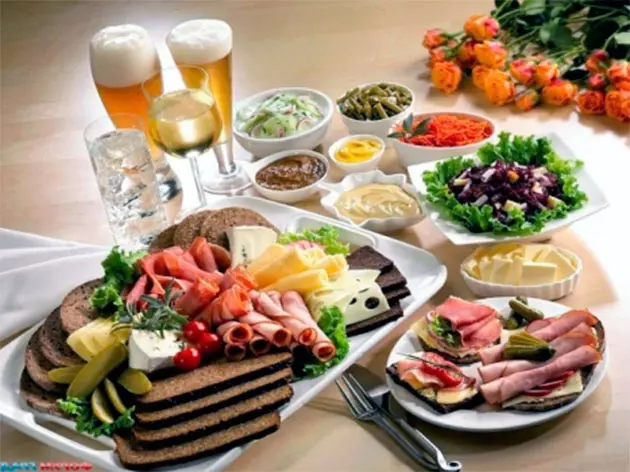
Every host dreams of a New Year’s table that wows — piled with pickled treats and an array of appetizers.
No celebration is complete without a signature main dish, which varies from home to home — goose, duck, turkey, or even a stuffed piglet.
But beyond the food, New Year’s traditions vary widely between countries.
In Japan, many delicacies are served only at New Year. The centerpiece is mochi, rice cakes. Black beans symbolize strength, chestnuts stand for success, daikon (a large white radish) and kombu (a type of seaweed) are served for happiness. Lotus root is often placed on platters because the plant is considered sacred, and dishes are sometimes garnished with candied chrysanthemums, which can even replace a salad.
In Hungary, poultry is intentionally left off the New Year’s table because people believe it will make good luck “fly away” from the home.
In the Netherlands, raisin-studded doughnuts are served at New Year — a treat traditionally made just once a year.
In Bulgaria, bakers hide a rose branch inside a pie. Whoever finds it is said to be blessed with good fortune.
