
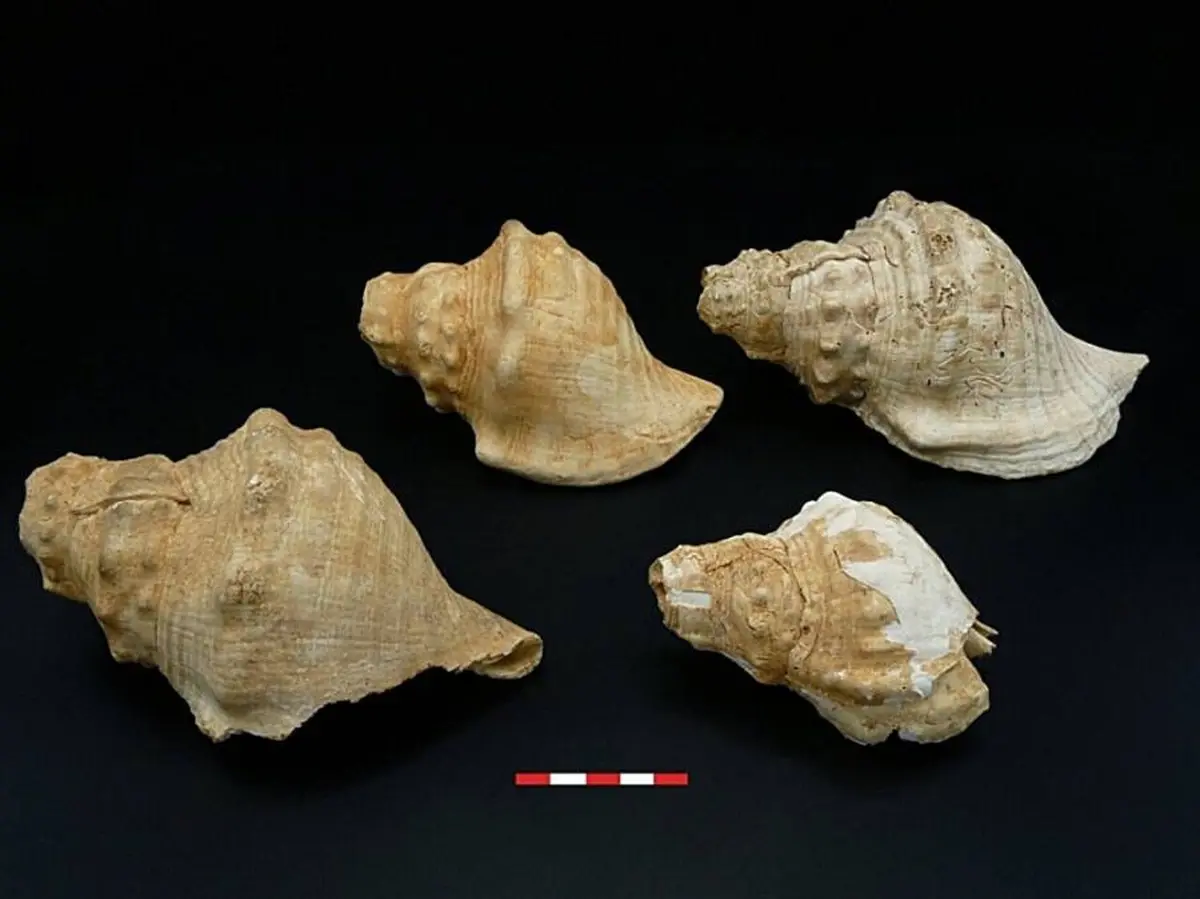
As a child, Miquel López García, a researcher at the University of Barcelona, was captivated by a shell that was kept in his bathroom. His father’s family, who lived in the southern region of Almería, would blow into the shell to warn their neighbors about rising water levels and impending floods.
Miquel—a musicologist and professional trumpeter—spent considerable time trying to replicate that powerful sound. His efforts were not in vain. He eventually played on eight prehistoric shell trumpets. He says their sound could shed light on the lives of people who inhabited northeastern Spain 6,000 years ago.
López García and his colleague Margarita Díaz-Andreu, a professor at the Catalan Institute for Advanced Research, published a paper based on their findings. They argue, “Twelve large shell trumpets found in Neolithic settlements and mines in Catalonia, dated to the end of the 5th to the beginning of the 4th millennium BCE, could have been used as musical instruments.”
The shells were likely collected after the marine snails Charonia lampas inside them had died, which suggests the mollusks were not collected for food. The removal of the pointed tip of the shells indicates that they were crafted into wind instruments.
What Did the Scientists Discover?
To test their hypotheses, the researchers obtained permission to conduct acoustic experiments with the eight shell trumpets. All of them were well-preserved enough to produce sound, as reported by The Guardian.
Ultimately, López García achieved a “truly powerful and stable tone.” “It’s amazing how you can get such a sound from a simple instrument. I think the closest instrument in tone is the horn,” the researcher noted.
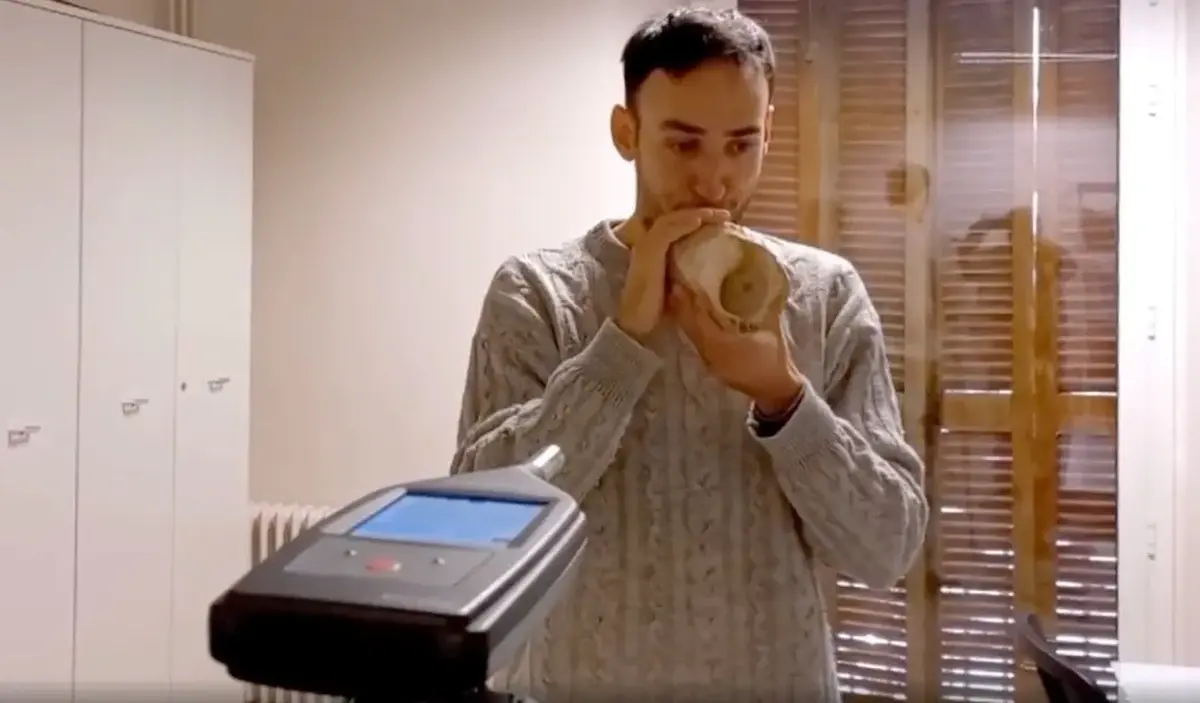
But the scientists didn’t stop there. They were interested in exploring the shells’ broader potential. “We wanted to see if there was room for improvisation or exploration of sound possibilities in the pieces we performed. So we played small improvisations on these instruments,” López García explained.
By inserting his hand into the shell’s opening, he discovered he could alter the pitch. Additionally, by making consonant sounds like “t” and “r,” he could also change the timbre.
“Essentially, these are some of humanity’s earliest instruments—examples of early sound technology. They operate through lip vibration, and in terms of sound production they closely resemble modern brass instruments like trumpets and trombones; these shells are therefore among their oldest ancestors,” he clarified.
In a paper published in the journal Antiquity, the authors suggested that the shell trumpets may have been used “as a means of communication between different communities inhabiting the region, or between these settlements and people working in nearby agricultural lands.” The researchers believe that workers in the variscite mines may have also used the shells: six such artifacts were found there.
López García, a trumpeter who plays a variety of music, shared his thoughts inspired by his encounter with the new instrument: “These shell trumpets made me reflect on the origins of human musical expression. Was it related to the need for survival, as some studies on the evolution of music suggest? Or was it a matter of non-material needs, which are also important for humans—self-realization, creating social bonds, and expressing love and emotions?”