
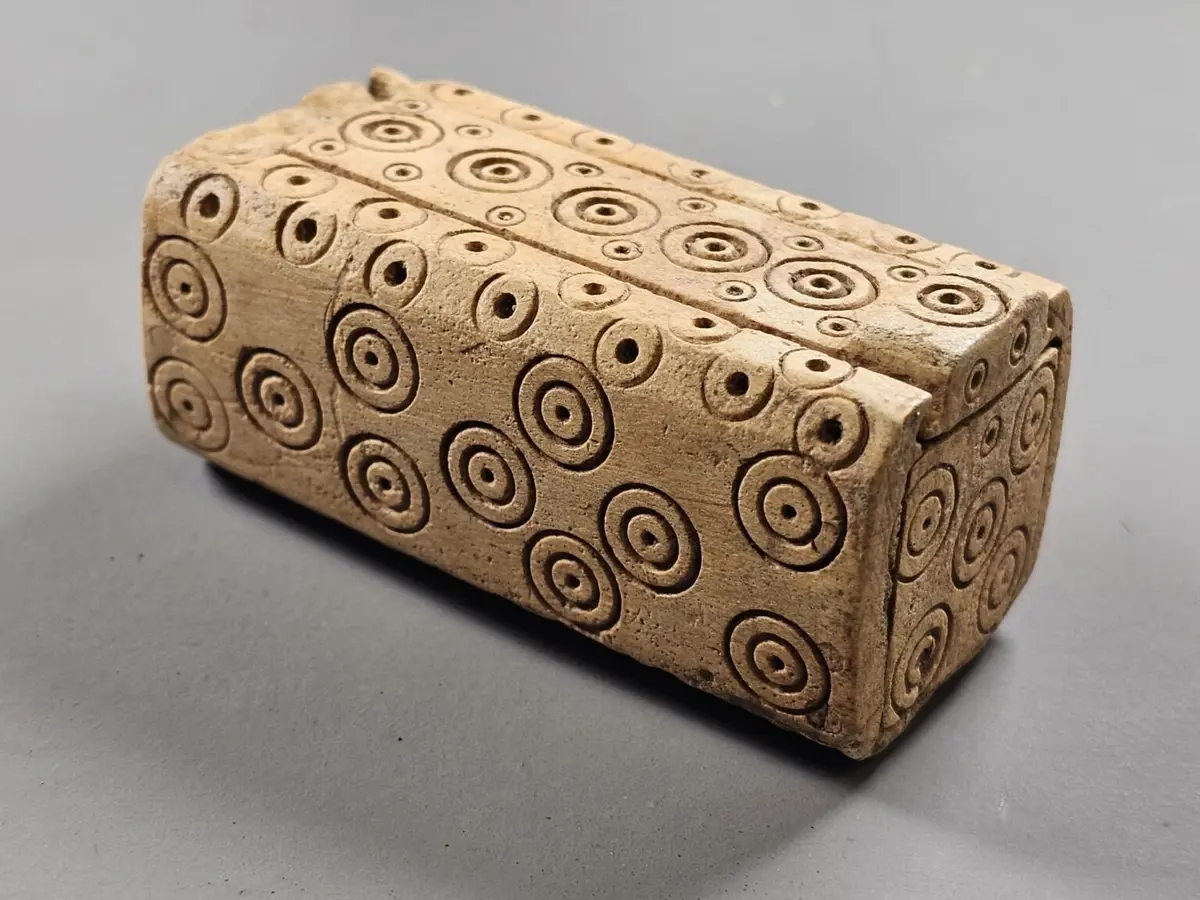
 English have stumbled upon an unusual artifact in the picturesque village of Broadway, Worcestershire, shedding new light on daily life and burial practices in . This rare box, expertly crafted from deer bone, is unlike anything previously discovered, according to scientists.
The exquisite miniature box was found in a late Roman grave of a young woman during archaeological excavations that preceded construction work.
Archaeologists believe the box may have been used by the woman during her lifetime to store cosmetics, ointments, or other personal trinkets. Its careful placement in the grave strongly suggests it was a valued item that the woman cherished or held symbolic significance for those who buried her.
At this site, researchers uncovered evidence of continuous human activity spanning approximately 8,000 years, from the Mesolithic period to the Anglo-Saxon Middle Ages. While archaeologists have unearthed numerous significant artifacts, this unique Roman bone box stands out as the most remarkable.
What else is known about the find?
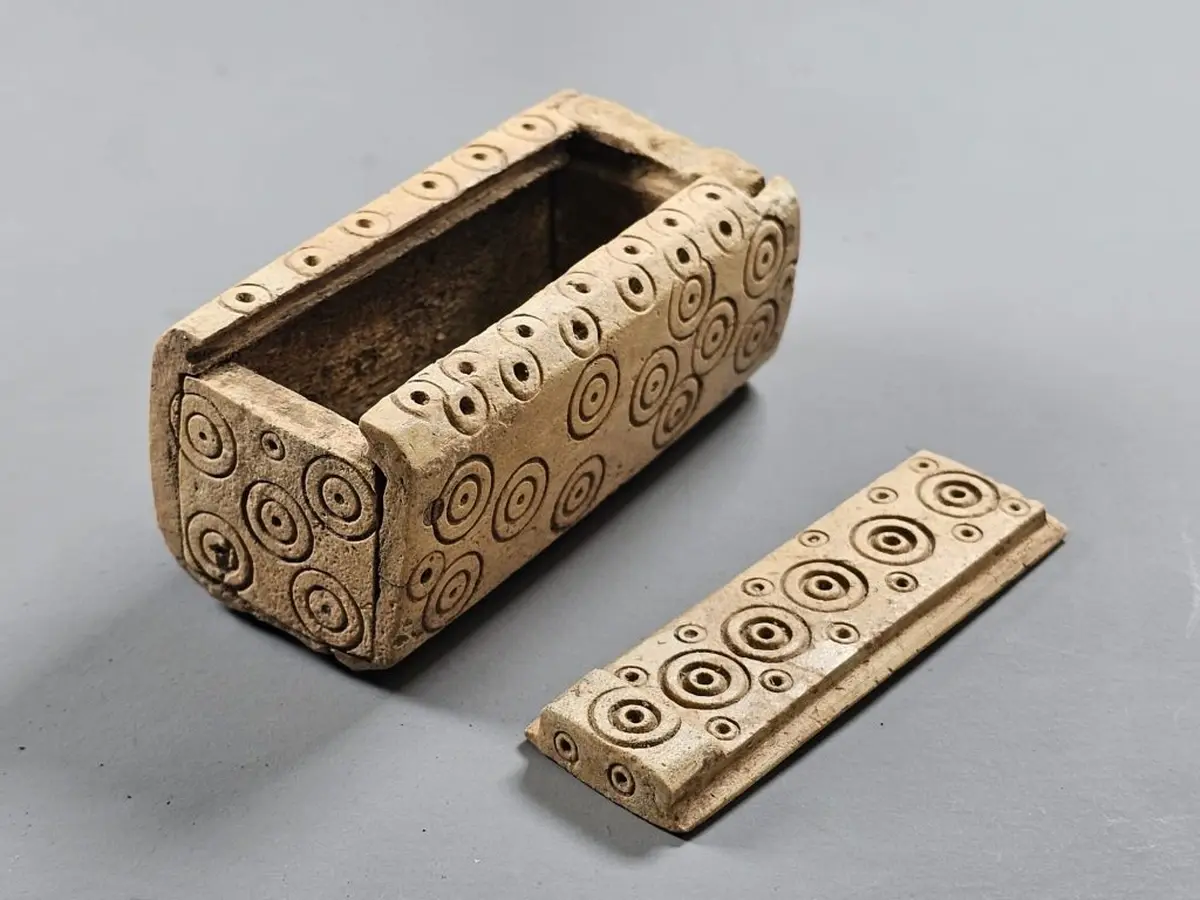
The box measures 68 mm in length, 33 mm in width, and 30 mm in depth, and is remarkably well-preserved. Although small, the item is highly detailed, as reported by Arkeonews. The box features a sliding lid and is adorned with a pattern of rings and dots, a motif commonly found on ancient Roman objects.
The fact that the box was carved from deer bone highlights the high level of craftsmanship of the artisan. Until now, archaeologists had never encountered a bone box of this type, making it a rare from Roman Britain.
Jamie Wilkins, who led the excavation, described the box as “extraordinary not only because of its craftsmanship and condition but also due to the story it tells about the community that lived here.” The scholar added that he had never seen such an item before.
This unique artifact not only attests to the high professionalism of Roman craftsmen but also creates an invisible connection to the person who lived in this area around 1,600 years ago.