
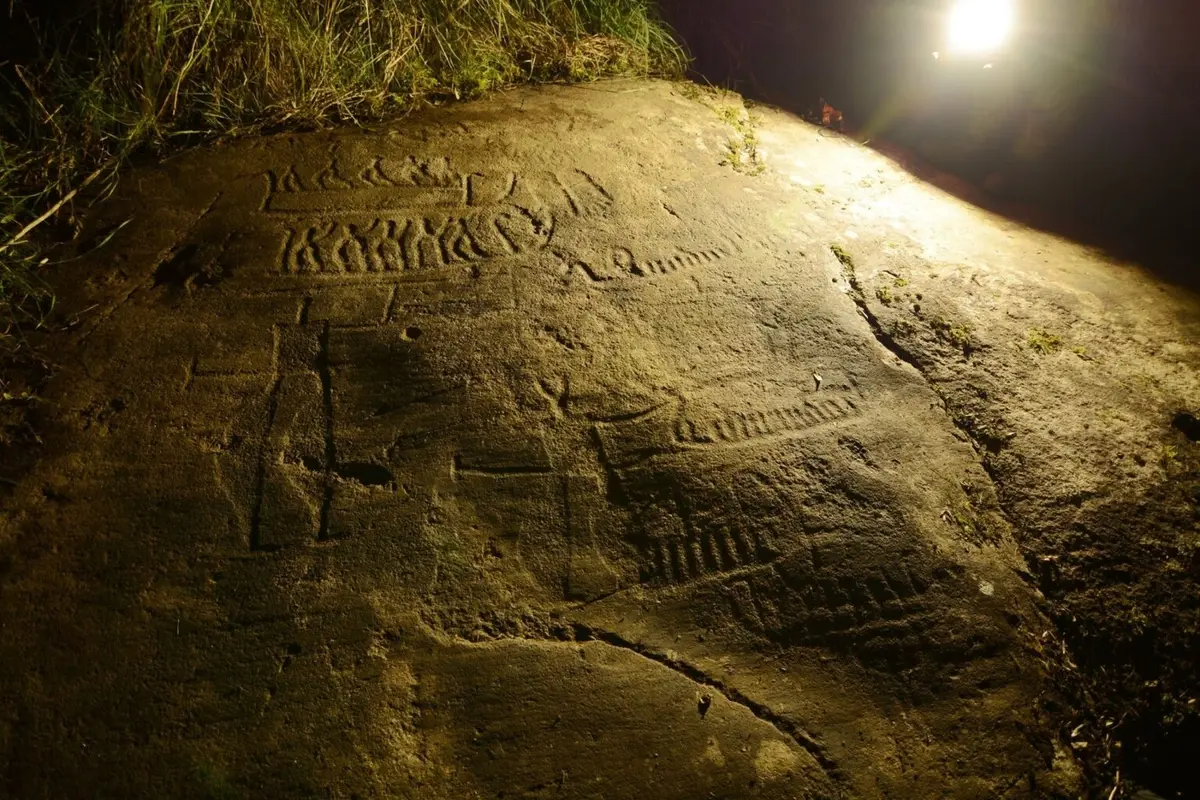
 A recent discovery beneath the Kolsåstoppen hill in the municipality of Bærum, in eastern Norway, has once again drawn attention to prehistoric rock art. These artworks were created more than 3,000 years ago.
Experienced rock art hunter Tormod Fjeld stumbled upon an astonishing collection of carved images while walking with his daughter. What began as a casual exploration quickly turned into a scientific find.
The most striking features were large depictions of ships—a recurring motif in Scandinavian rock art from the Bronze Age. Some were carved vertically, while others appeared upside down.
Experts later dated the carvings to approximately 1800–500 B.C. and viewed them as symbolic representations of journeys, trade, rituals, and cosmological beliefs tied to the sun and the afterlife. Carved ship images have been found at well-known rock art sites such as Tanum in Sweden and Alta in northern Norway, suggesting shared cultural and symbolic traditions across much of prehistoric Scandinavia.
In addition to the ship images, Fjeld found a large footprint and a hand with five thick fingers, Arkeonews reported. Human body parts are a relatively rare motif in Norwegian rock art compared to animals and ships, which makes these carvings particularly intriguing. Scholars typically associate footprints and handprints with rituals, seeing them as territorial markers or symbols of identity and ownership. Similar images elsewhere in Scandinavia are linked to participation in ceremonies or to sacred landscapes.
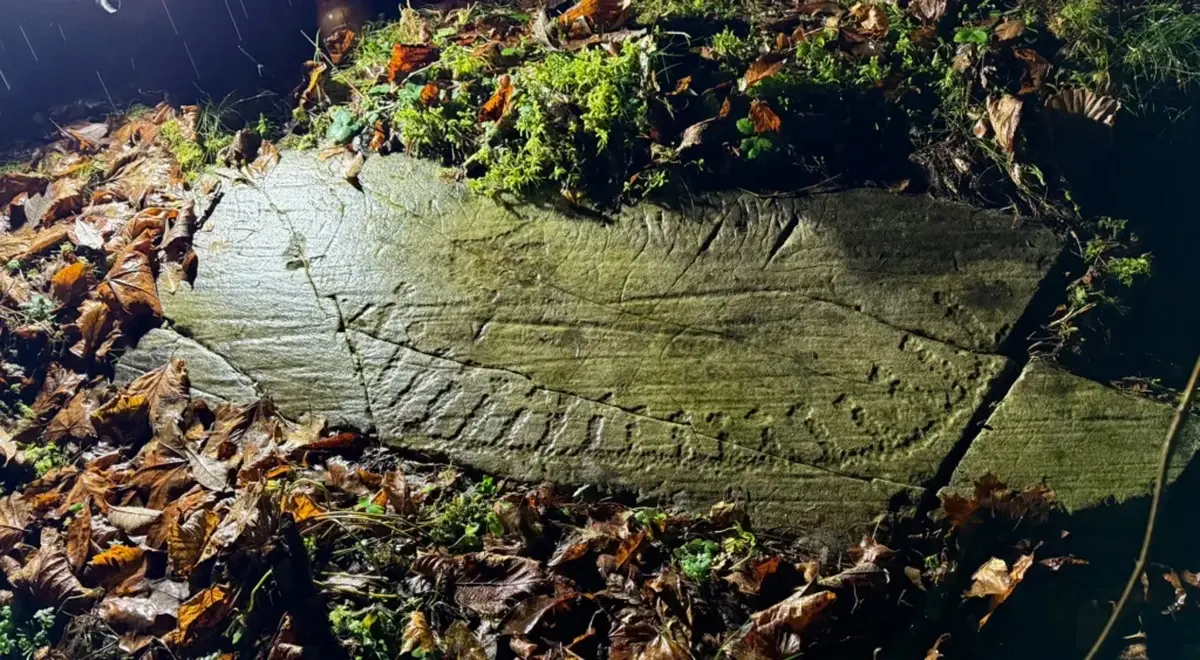
Carved Image of a Bronze Age Ship
Knowing the Landscape Helped Make the Find
Fjeld emphasized that the discovery wasn’t a coincidence but resulted from a deep understanding of the landscape. He said knowledge of local features—ancient shorelines, sun-facing rock surfaces, and proximity to prehistoric waterways—was crucial.
During the Bronze Age, sea levels were significantly higher, so many carvings that are now far from the shore were once located nearby. This pattern is common across Norway, where rock carvings are often found along former maritime routes.
Using landscape knowledge not only helps find carvings but also offers insight into how prehistoric people interacted with their environment.
Carving in Sandstone
An unusual aspect of the Bærum find is that the carver used sandstone rather than the more common granite. Sandstone’s softer surface allows individual tool marks to remain visible as small indentations, providing valuable information about the carving techniques used during the Bronze Age.
Carvings in sandstone are less durable, making them rarer and especially valuable to researchers.
Reidun Mari Aasheim, an archaeologist from Akershus county, described the discovery as “very exciting.” She noted that many cultural heritage objects in Norway remain undocumented because of limited resources. Official archaeological surveys usually happen only before road construction or housing developments. Because of that, the work of dedicated amateur enthusiasts like Fjeld is crucial to expanding knowledge of the country’s prehistoric heritage.
In 2023 alone, Fjeld found more than 70 previously unknown rock carvings. There have been many such discoveries in other years as well. The amateur archaeologist believes many rock images in the area are still hidden underground. If so, future finds could further change our understanding of Norway’s prehistoric past.