
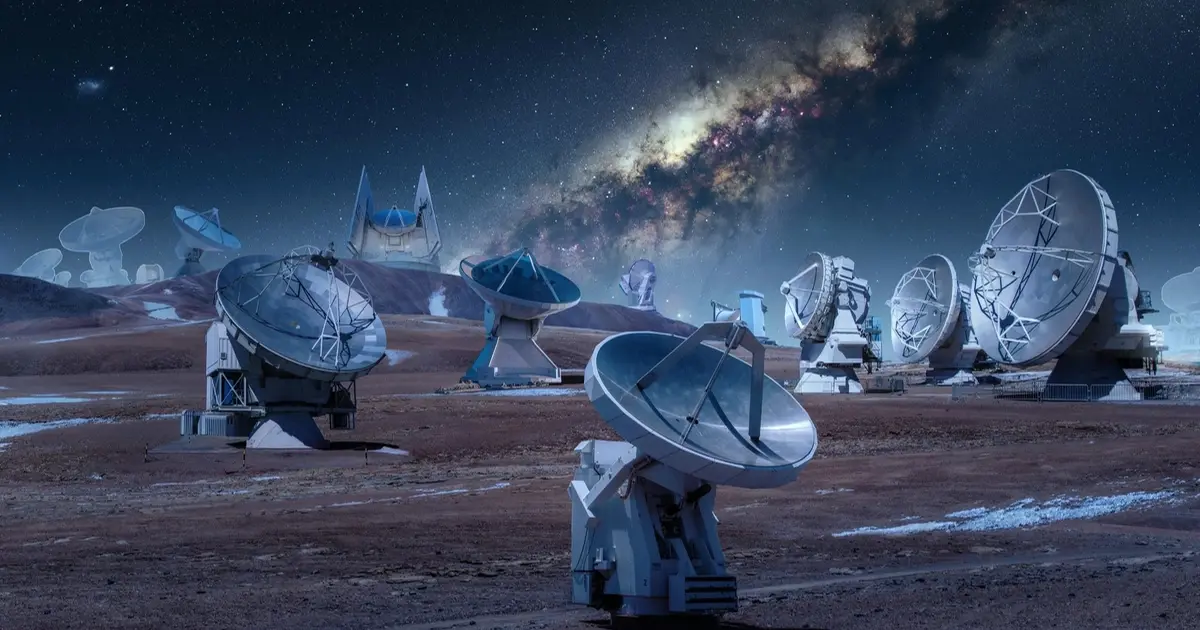
 A new photograph of the taken by a radio telescope in the Atacama Desert (Chile) is the most detailed image of our galaxy ever captured. Experts have hailed this image as a scientific and aesthetic breakthrough.
“This image not only sparks people’s imagination about space, but it is also incredibly important for understanding the origins of our planet,” says lead researcher Stephen Longmore, a professor of astrophysics at Liverpool John Moores University (UK).
According to him, the conditions at the center of our —extreme temperatures, pressure, and turbulence—are very similar to those in galaxies from the early universe when most of today’s stars were formed. These galaxies are so distant that we cannot observe the formation of individual stars and planets within them. “But we can do this in the center of our galaxy, and that’s what we managed to achieve during our research,” Professor Longmore explained. He and over 160 scientists worked for several years on the Alma CMZ Exploration Survey, investigating the CMZ (Central Molecular Zone)—the dense, dynamic center of the Milky Way located in the constellation Sagittarius.
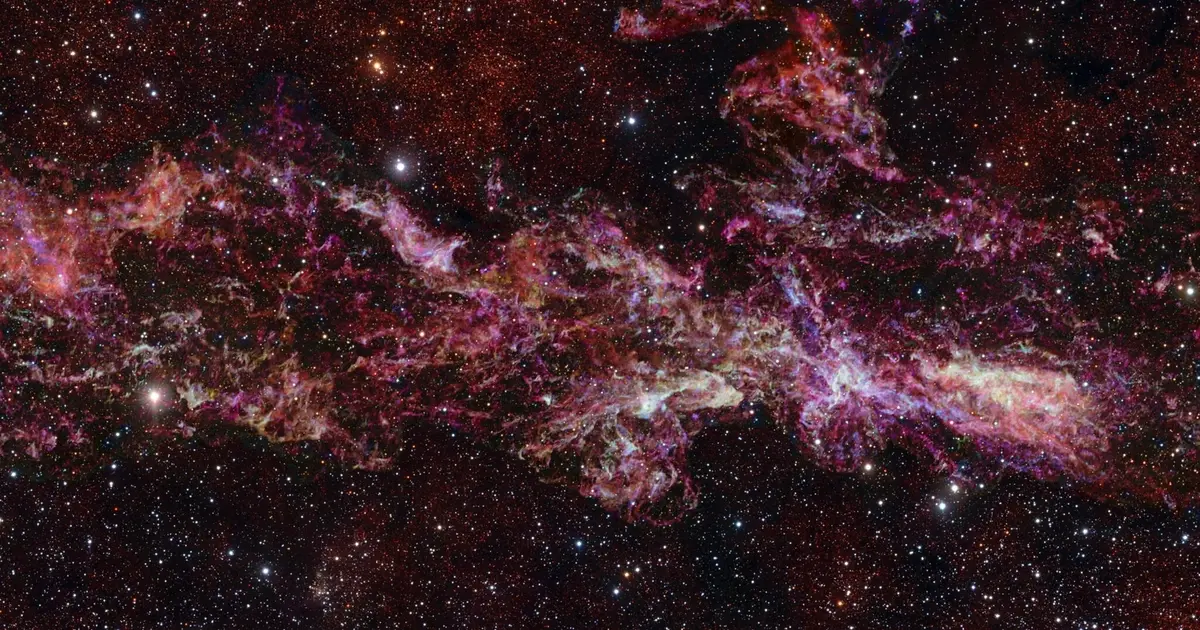
Before the radio telescope captured this new image, scientists could only examine small, isolated sections of the center of our galaxy, as reported by The Guardian.
“It was as if we only had a few snapshots of individual streets, but we didn’t have an entire map of the city. Here we saw gas, there was a cloud where stars were forming, but we didn’t understand how everything was interconnected. These long, thin threads we see are streams of matter moving and forming stars and planets,” the project leader shared.
He also expressed his excitement about the stunning beauty of the image, saying, “As a scientist and someone who appreciates beautiful pictures, I was thrilled.”
Now, researchers are eager to use the to gather even more information about the Milky Way.
“By combining observations at different wavelengths, we create color images where each color represents different physical information. For example, you can see that in the area where two gas clouds collide, young stars are forming right inside. Perhaps this collision compressed the gas enough to form stars. This is the kind of causal relationship we can start to uncover by combining datasets,” Professor Longmore said.
