
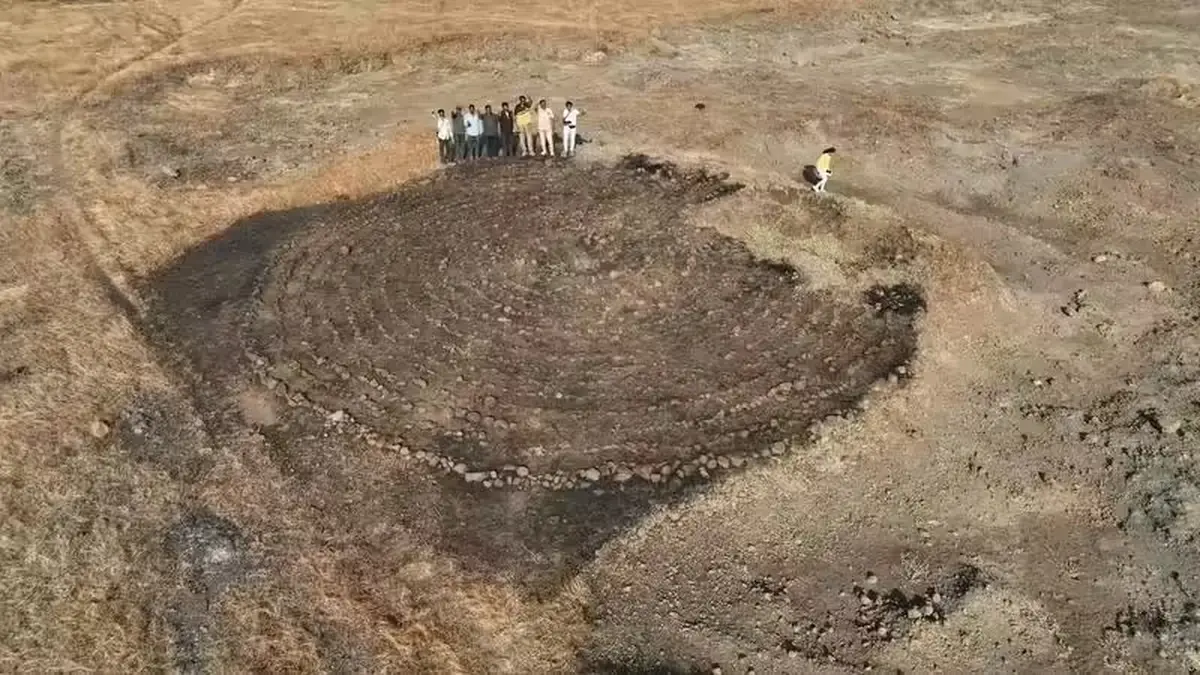
 The discovery of this remarkable stone structure sheds new light on Indo-Roman trade and the complex navigation systems used in ancient times. Researchers believe this labyrinth served as a landmark for ancient Roman traders traveling through India around 2,000 years ago.
What Did the Scientists Say?
For centuries, the labyrinth lay hidden in the steppes of Boramani in the Solapur district of Maharashtra. This area is now better known for its wildlife conservation achievements than for archaeological discoveries.
Interestingly, the structure was first noticed by members of a non-governmental organization called the “Circle of Nature Conservation.” Upon seeing the unusual stone pattern, they documented the site and alerted archaeologists.
Field research revealed that the structure, which has a diameter of about 15 meters, consists of 15 concentric stone circles. This makes it the largest circular labyrinth ever discovered in India, according to Arkeonews. Until recently, the largest was thought to be a circular labyrinth with 11 circles.
The newly discovered labyrinth is constructed from small stone blocks, with layers of soil several centimeters thick between the rings. Sachin Patil, an from Deccan College in Pune, explained that such a structure could have served as a landmark for Roman traders moving inland from India’s western coast to major trading centers.
The researcher believes the labyrinth indicates intense trade activity between the ancient city of Ter and the Roman Empire in the early centuries AD. It is known that ancient Roman merchants exchanged gold, wine, glassware, and precious stones for Indian spices, textiles (including silk), indigo dye, and other goods highly valued in Mediterranean markets.
“This region was part of a large and active trade corridor. Such labyrinths likely served as landmarks along trade routes,” Patil explained.
Global Scientific Interest in the Indian Discovery
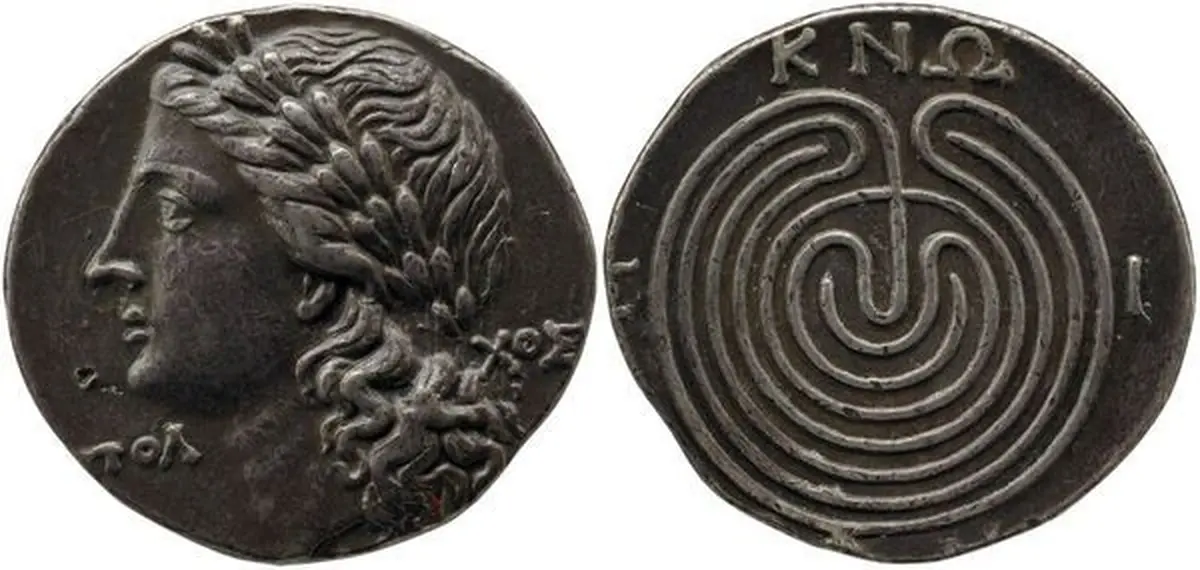
The circular labyrinth has sparked worldwide interest. The discovery will be featured in an upcoming issue of the British scientific journal Caerdroia, dedicated to the study of labyrinths. The journal’s editor, Jeff Saward, a leading international expert on labyrinths, described the finding as exceptional.
“Although this labyrinth is created in a classical style, the spiral at its center has a distinctly Indian character. This feature, often referred to as ‘chakravyuha,’ reflects an adaptation to local culture. Undoubtedly, this is the largest stone labyrinth of its kind in India,” emphasized Mr. Saward.
The ancient Indian military term “chakravyuha” refers to a difficult-to-overcome structure or a formation of soldiers arranged in a spiral or vortex.
This discovery confirms previously obtained data indicating that the entire region was a major center of international trade.
More Than Just Navigation
In addition to their practical applications, labyrinths in various cultures have long held symbolic and spiritual significance. In India, they are often associated with fertility, cosmic order, and meditation. Thus, it can be assumed that the structure in Boramani may have served multiple functions.
In the near future, archaeologists plan to conduct several additional studies to gain a deeper understanding of India’s role in ancient trade connections.
