
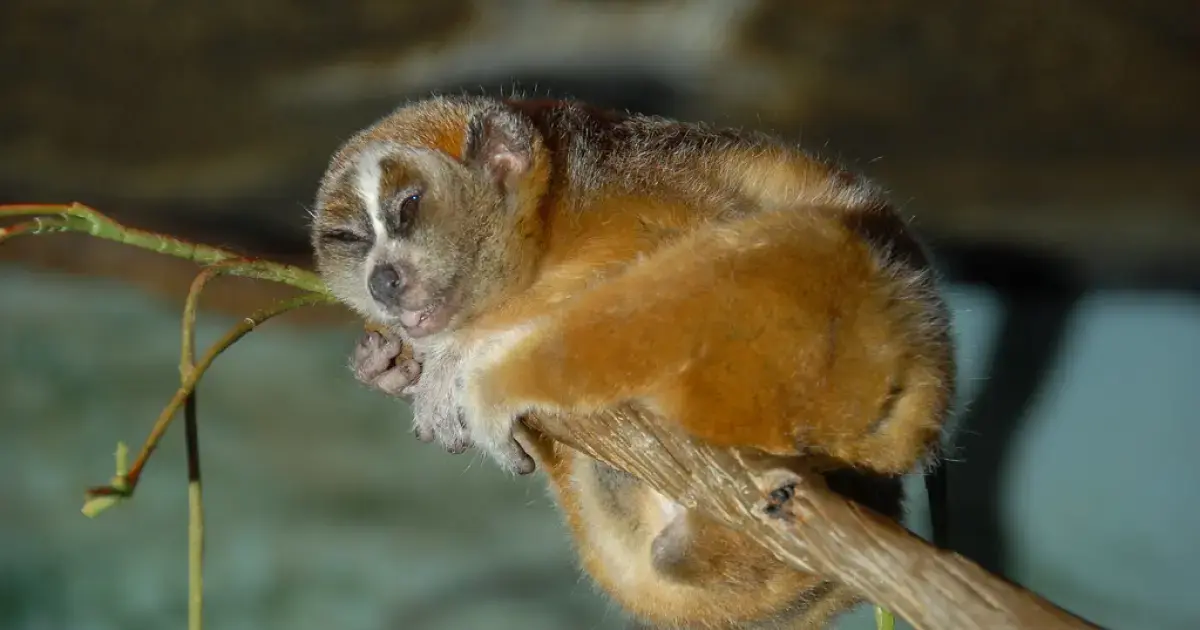
 For the team at the Bronx Zoo—the largest urban zoo in the U.S.—the birth of a baby pygmy slow loris is an event worth sharing with the world. And that’s exactly what the staff did by releasing a video of the tiny bravely climbing through the branches.
The baby was born on December 13 of last year, completely covered in fur, as reported by IFLScience.
These little ones typically weigh only about 30-60 grams. As adults, pygmy slow lorises grow to be 15-25 centimeters long and can weigh up to 450 grams. Mothers carry them in their arms, but when they go out to forage for food, they leave them on branches where the little ones gradually learn to be independent—just like in the video. These primates are omnivorous, enjoying tree sap, flowers, fruits, and even hunting for lizards and insects, as well as snacking on bird eggs.
The Bronx Zoo is located in the northernmost of New York City’s five boroughs—the Bronx. Covering an area of 1.07 square kilometers, the zoo was founded in 1899, originally housing 843 animals. Today, it is home to over 6,000 animals from around the world, representing about 650 species.

Toy-like but Toxic Inside
It may sound surprising, but these charming creatures are among the few known venomous mammals. By licking a gland on their forearms, they fill specially adapted grooves in their teeth with venom that mixes with enzymes in their saliva. A bite enhanced by this cocktail can be quite painful. Generally, these bites are not dangerous to humans, except in rare cases where they can cause anaphylactic shock.
In 2023, the International Union for Conservation of Nature (IUCN) recognized two species of slow lorises: the intermediate (Xanthonycticebus intermedius) and the small or pygmy (Xanthonycticebus pygmaeus). The first species inhabits the tropical forests of northern Vietnam, Laos, and China, while the second is found in southern Vietnam, Laos, and eastern Cambodia. Zoologists have long suspected that there are two species of these primates. Ultimately, differences in , as well as in skull and jaw structure, confirmed that these species are distinct.
Both are currently under serious threat of extinction. These primates are ruthlessly exploited in traditional medicine and cuisine. Additionally, pygmy slow lorises are often taken into homes as pets. Another issue is that some animal traders attempt to crossbreed the two species, resulting in infertile hybrids.
The baby from the Bronx Zoo is the first such primate born as part of a breeding program aimed at supporting the genetic diversity of pygmy slow lorises.
Interesting Fact. In 1963, the Bronx Zoo invited visitors to an exhibit titled “The Most Dangerous Animal in the World.” Instead of fierce predators, guests were greeted by a mirror. The explanatory plaque read that “the greatest threat to life on the planet comes not from lions or tigers, but from humans.”
Photo: Openverse