
 A groundbreaking technology employed by astrobiologists and planetary scientists at the Carnegie Science research organization in the U.S. has unveiled some of Earth’s oldest secrets and may soon be tested on other planets.
By using advanced chemical techniques alongside artificial intelligence, researchers have uncovered evidence of ancient life in rocks that are 3.3 billion years old. They hope to apply the same approach to samples from Mars or to icy oceans like those on Europa.
The study, published in the journal PNAS, analyzed more than 400 samples of ancient sediments, fossils, modern plants, animals, fungi, and even meteorites.
The system can distinguish between materials produced by life and abiotic samples with better than 90 percent accuracy.
“This example is inspiring, demonstrating how modern technologies can shed light on the oldest history of our planet and change the approaches to searching for ancient life on Earth and other planets. This is a new powerful tool for astrobiology,” said Dr. Michael Wong, a co-author of the study.
What Did the Scientists Discover?
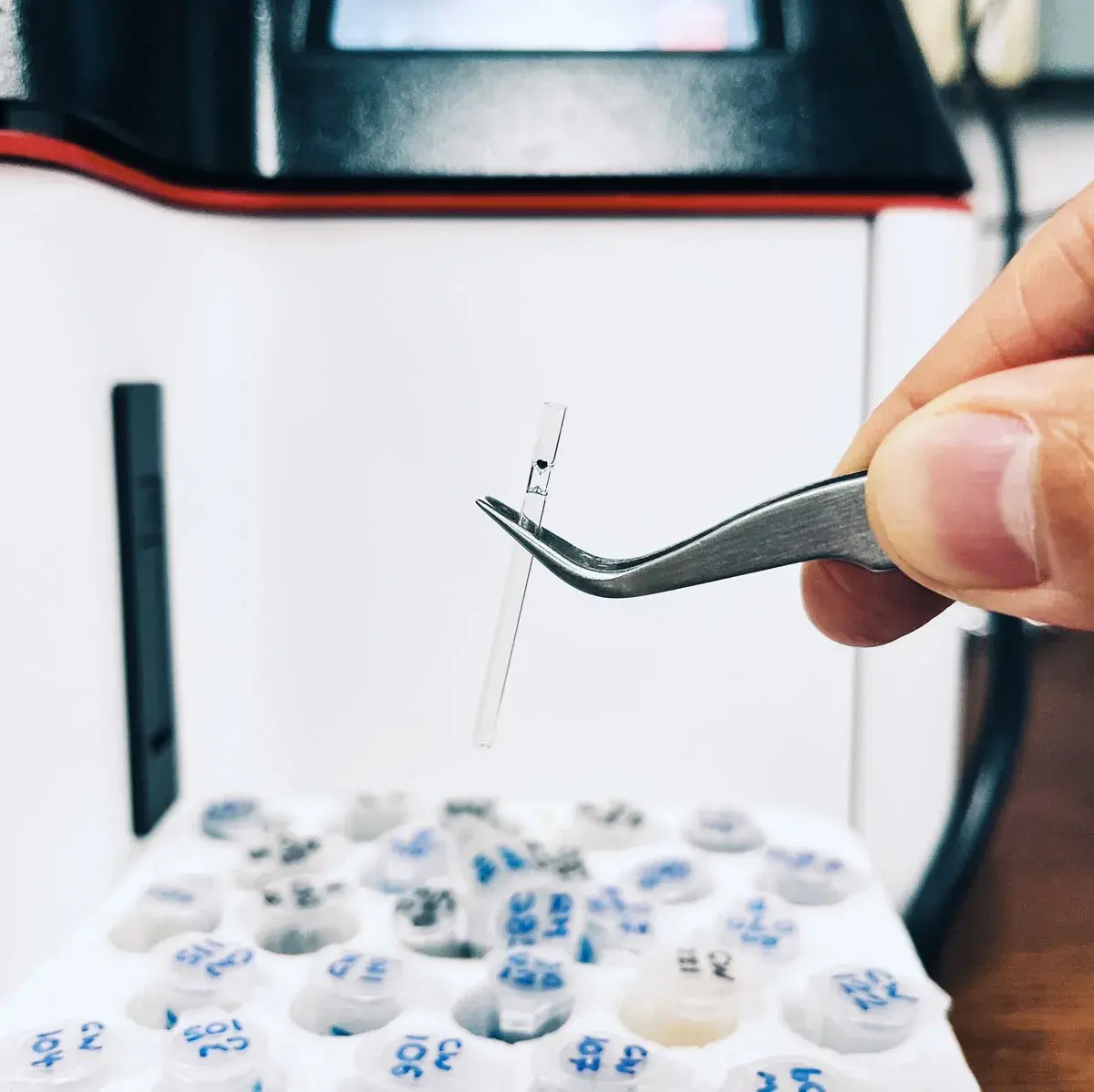
To detect faint chemical traces left by ancient organisms, the team used a method called pyrolysis–gas chromatography–mass spectrometry. The complex chemical patterns it produced were then analyzed for biosignatures with a machine learning model.
Dr. Robert Hazen, another co-author, told BBC Science Focus that the technology represents a “paradigm shift” because the algorithm does not hunt for specific molecules (such as lipids) as direct evidence of past life. Instead, it looks at the distribution of what is present now.
“For the first time, we are only looking for the distribution function,” he said. “This allows for more general approaches when studying samples that have significantly degraded.”
The oldest detected biosignature signal is 3.3 billion years old, nearly double the previous record of 1.7 billion years.
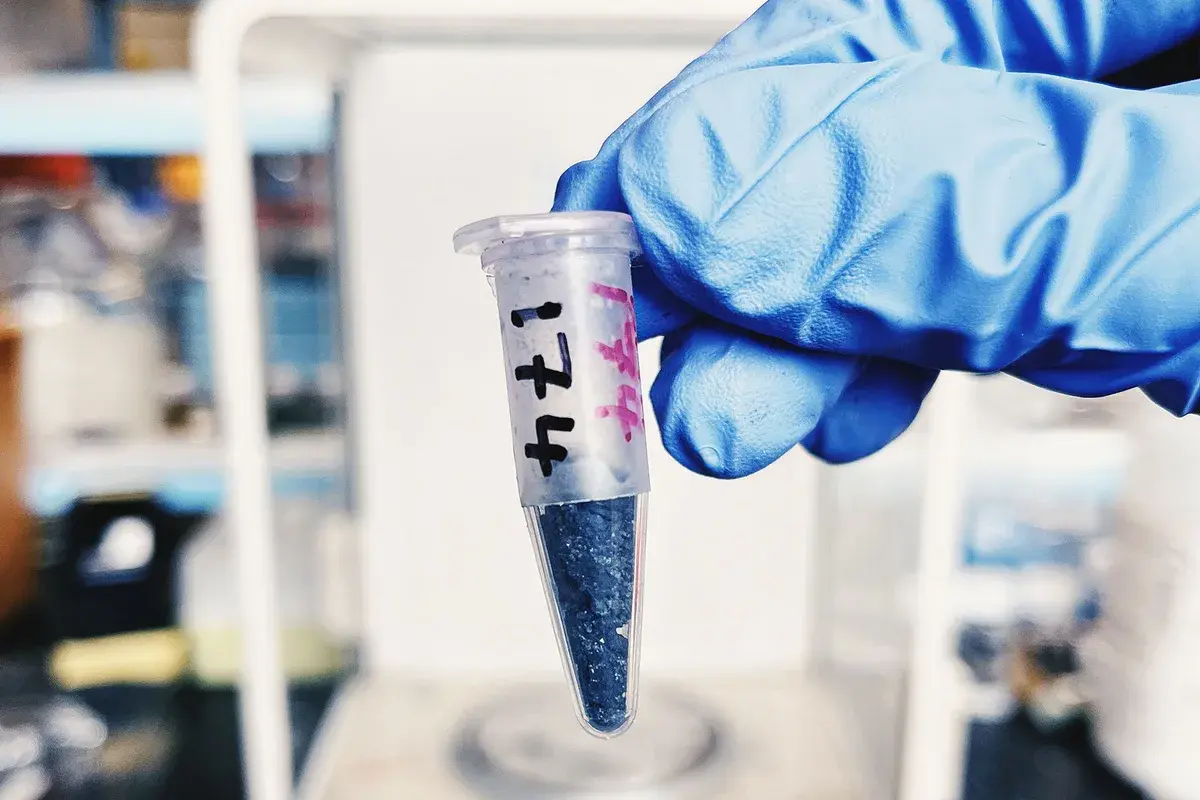
Sample of shale aged 3.5 billion years used in the analysis
The team also found molecular evidence that oxygen-producing photosynthesis occurred at least 2.5 billion years ago, extending the chemical record of photosynthesis by more than 800 million years.
Previously, scientists had traced the emergence of life back to 3.5 billion years ago using two main types of evidence: ancient rock structures created by communities of microbes that grew in sticky, layered “mats” and left behind hill-like formations called stromatolites, and clear changes in isotopic ratios in rocks.
However, samples suitable for that kind of analysis are rare. The new machine learning–based approach removes the need for pristine fossils or preserved biomolecules and offers an additional line of evidence that can be applied to a much broader range of rock types.
This approach goes beyond a simple “life versus non-life” test. The algorithm can already distinguish photosynthetic organisms from non-photosynthetic ones and even separate the broad groups of cells known as eukaryotes and prokaryotes.
If transporting samples from Mars proves too costly, Hazen believes a rover equipped with a toolkit could apply the same machine learning approach directly on the Red Planet. The team recently received funding to develop such a toolkit.
In the meantime, researchers plan to apply the new method to samples from Earth’s deserts that resemble Martian environments.
The authors cautioned that the technology is still a complement to existing methods. However, it could eventually become a key analytical tool in both terrestrial and planetary science.
“For decades, we have been searching for traces of life in ancient rocks using a limited set of tools. Now, machine learning is helping us detect biological signals that were essentially invisible. This is a step forward in our ability to read the deep history of life on Earth,” concluded Professor Andrew Knoll, a co-author of the study.
Photo: Michael L. Wong
