
 British police are entering a high-tech era: AI-powered tools will now be part of their crime-fighting arsenal.
Home Secretary Shabana Mahmood says these new technologies will “increase the number of officers on the streets and put rapists and murderers behind bars.”
So, what AI tools will the police have at their disposal?
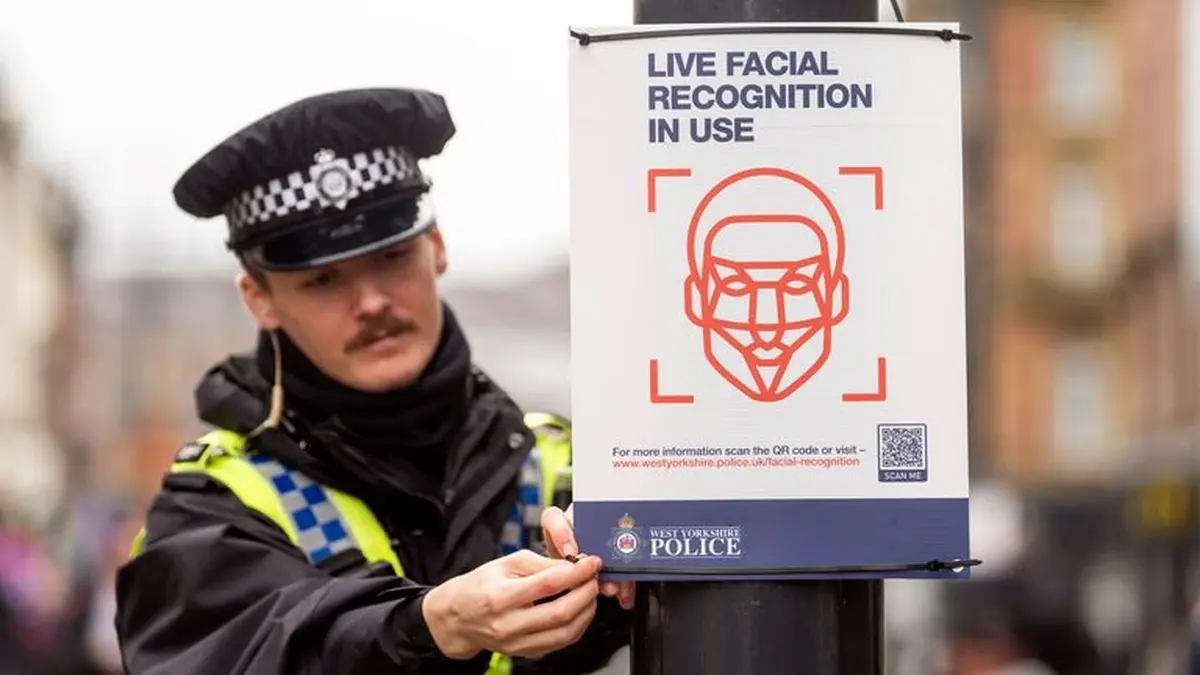
Virtual Chatbots
The Thames Valley Police, Hampshire, and the Isle of Wight have recently become the first British law enforcement agencies to start testing a new AI-based virtual assistant known as Bobbi.
This application is designed to answer frequently asked questions directed to the police. Unlike other chatbots, Bobbi uses “information from closed sources,” meaning only data provided by police officers.
Real-Time Facial Recognition
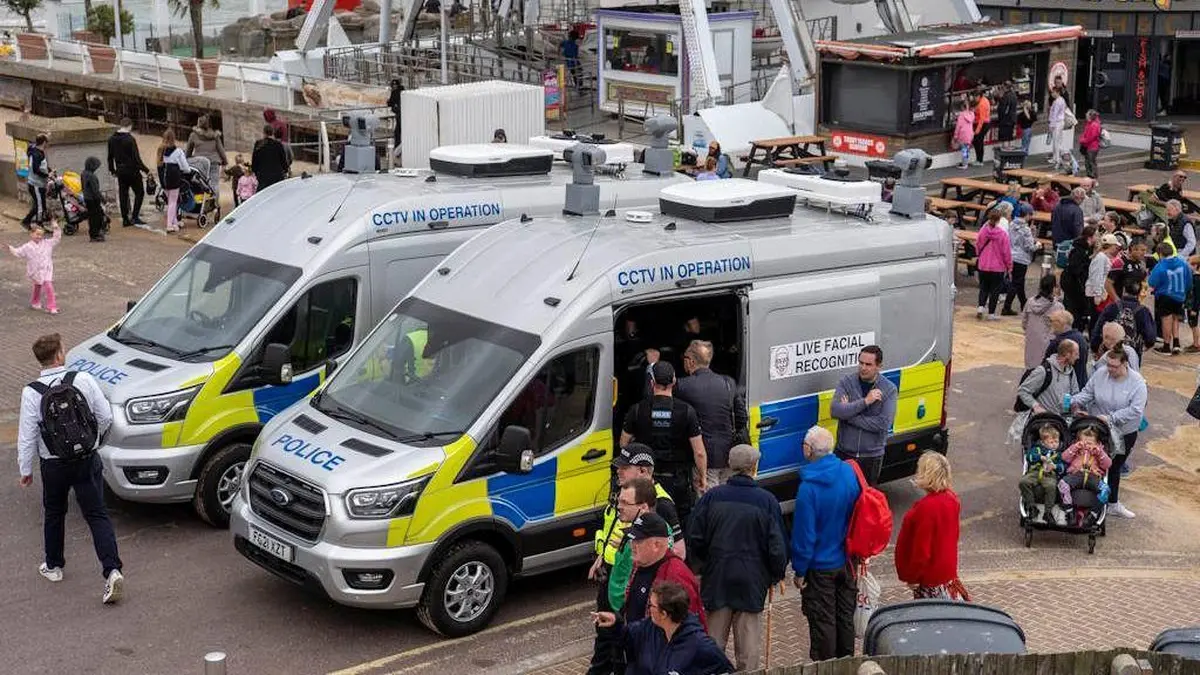
The Home Office plans to triple the number of mobile facial recognition units. Plans call for each police force in England and Wales to have 50 of these vans.
Under current legislation, this technology can only be used to search criminal and suspect databases, as well as for individuals on bail.
The government says the use of this AI will be regulated by data protection, equality, and human rights laws.
Retrospective Facial Recognition
In addition to these vans, police will receive new tools for retrospective facial recognition, as reported by the Daily Mail. This AI-based technology can identify faces or specific objects in video footage from surveillance cameras, video doorbells, and mobile devices.
Deepfake Detection Tools
New AI tools designed to detect deepfakes will help prevent the spread of misleading images online. This will curb the criminal use of AI-powered deepfake creation services.
Recently, Liz Kendall, the UK’s Science Minister, announced that the government would ban AI tools for creating nude images of individuals without their consent. The decision followed a wave of criticism aimed at Elon Musk’s Grok AI tool, which was used to generate numerous sexual deepfakes involving unsuspecting X users.
Digital Forensics Technologies
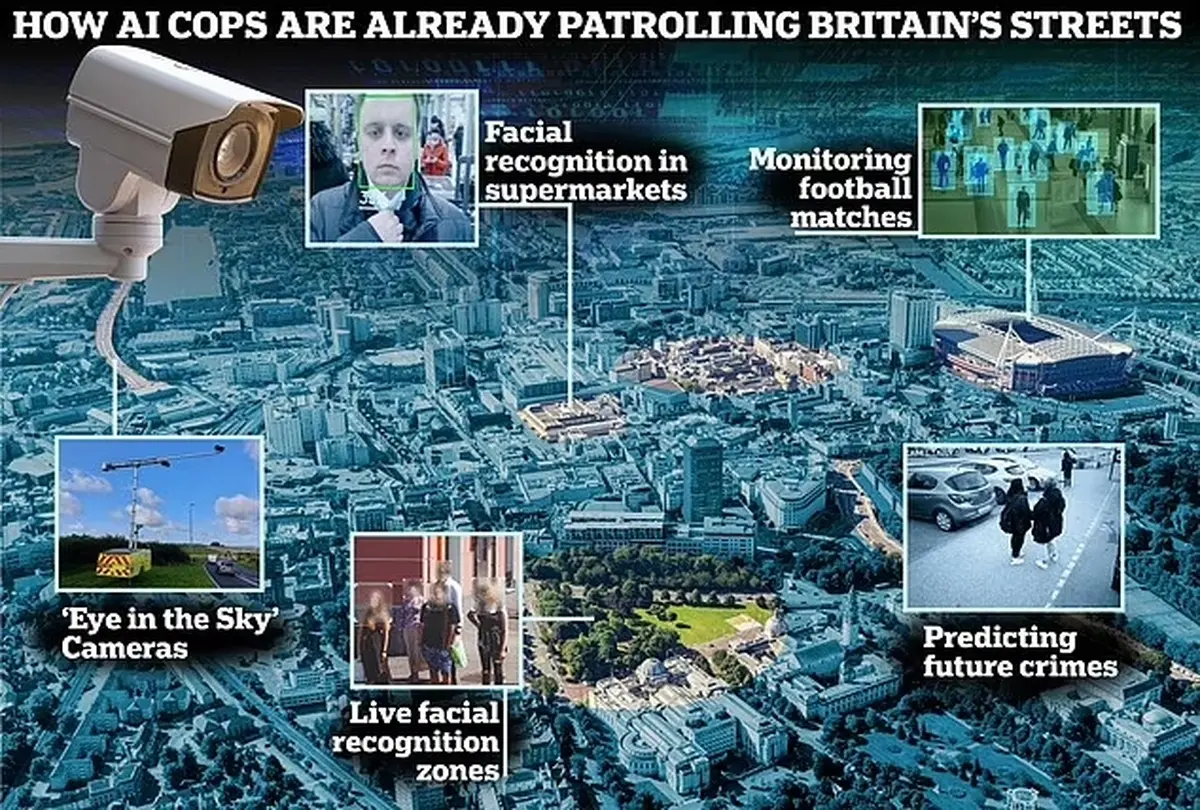
New AI tools for digital forensics will help police gather and analyze evidence more efficiently. According to the government, one such tool currently in use by police in several counties can handle up to 27 cases in a single day.
Translation and Editing Tools for Audiovisual Materials
Automatic transcription, translation, and conversion of audio recordings into usable formats are also on the horizon for British police. These systems perform tasks similar to humans but do so faster and more effectively.
Meanwhile, AI-based editing tools that “blur” facial features and details like license plates reduce the time police spend on these tasks by 60 percent.