
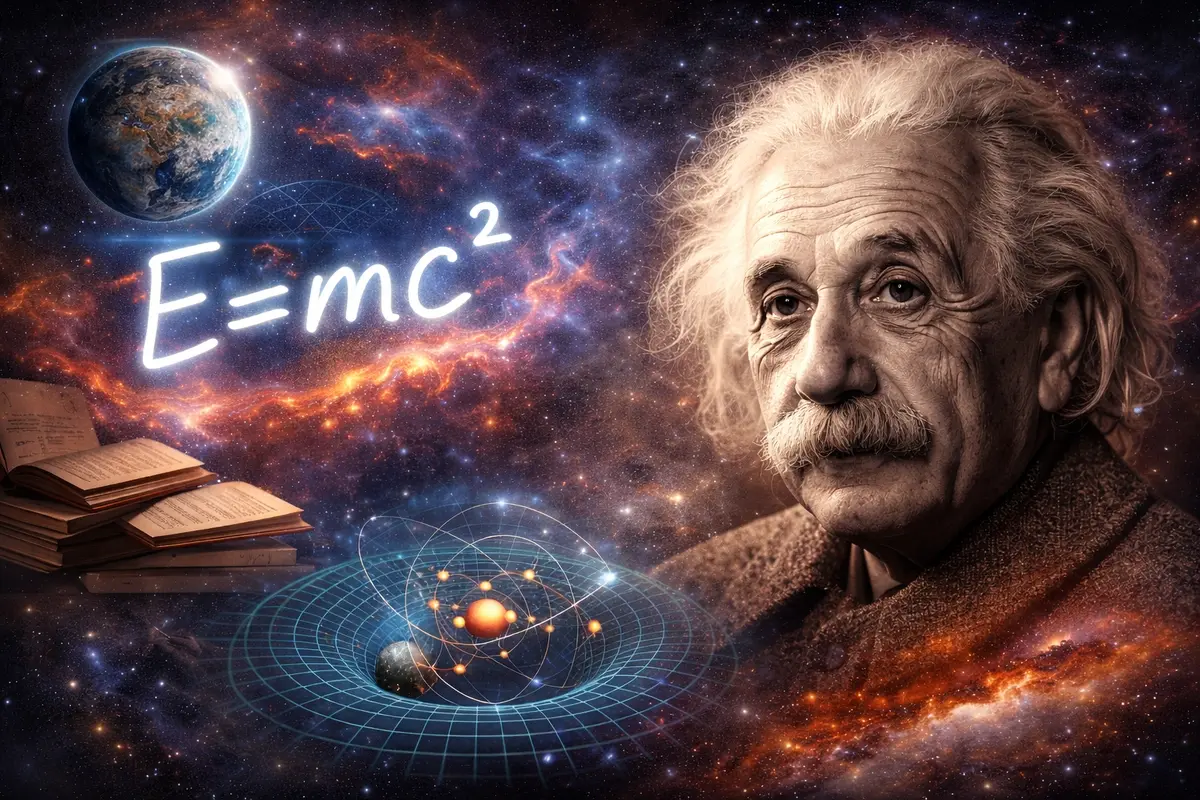
The “absent‑minded professor,” often described as an evangelist for the exact sciences, held strong, sometimes surprising views on knowledge, faith, social justice, war, and politics. He rejected religious dogma and criticized capitalism, and he grounded many of his scientific conclusions in imagination and abstract thinking, drawing inspiration from sailing, his violin, and Mozart’s music.
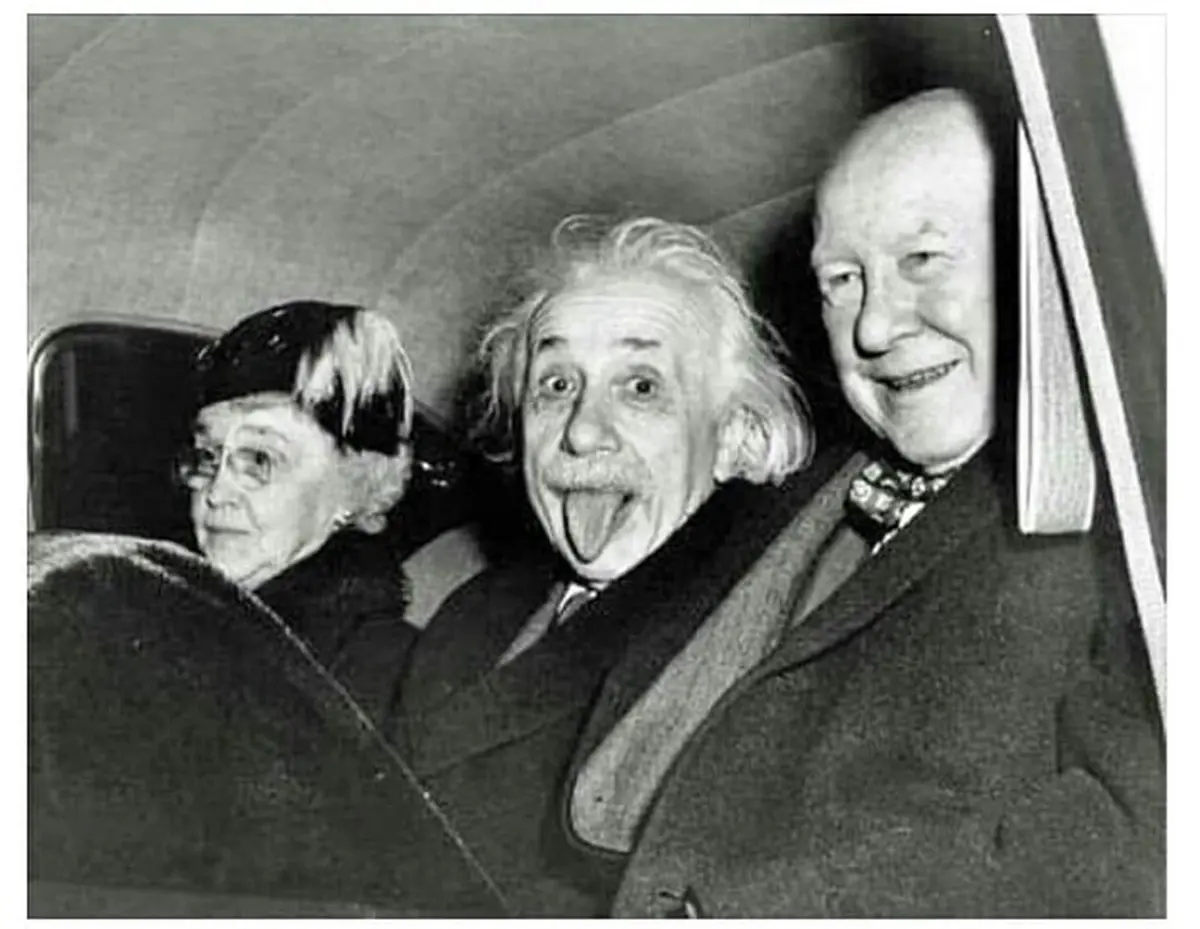
That easygoing, eccentric air—his sense of humor and free spirit—found its clearest expression in his most famous ironic photo, the tongue‑out portrait he made for his 72nd birthday when reporters cornered him on March 14, 1951. The improvised shot, now an icon of photography, revealed the human side of a genius. Einstein loved the picture and called his gesture “a grimace of rebellion against humanity,” a remark that captured a defining trait of his personality.
A Mind Hard to Grasp
Once Albert Einstein and traded compliments that captured the difference between them: one man the world seemed to understand instantly, and the other a man no one fully understood. Figuring out who Einstein really was and why he changed science can be as difficult as following his technical papers. His major achievements include explaining the photoelectric effect (the work that earned him the 1921 Nobel Prize), formulating mass–energy equivalence, and contributing to quantum theory.
Timeline of Einstein’s discoveries in physics:
- special theory of relativity (1905), best known in its popular form as E = mc²;
- quantum theory of heat capacity and the photoelectric effect;
- the theory of stimulated emission;
- statistical theory of Brownian motion;
- general theory of relativity (1907–1916);
- quantum statistics.
Time magazine called the author of what many call “the most famous equation in the world” its Person of the Century. The same magazine also painted the eccentric genius—with his tousled gray hair, pipe, and tendency to go shoeless—as a cartoonist’s dream. As one of the founders of modern theoretical physics and quantum mechanics, Einstein is often ranked as the greatest intellect since . The Swiss‑born, German‑educated, and later American physicist and public intellectual published more than 300 scientific papers on quantum and gravitational physics and about 150 essays and books on history and philosophy. Despite receiving some 60 Nobel Prize nominations related to relativity, he was formally honored for prior theoretical work “after the fact,” and he did not return from a trip to attend the award ceremony.
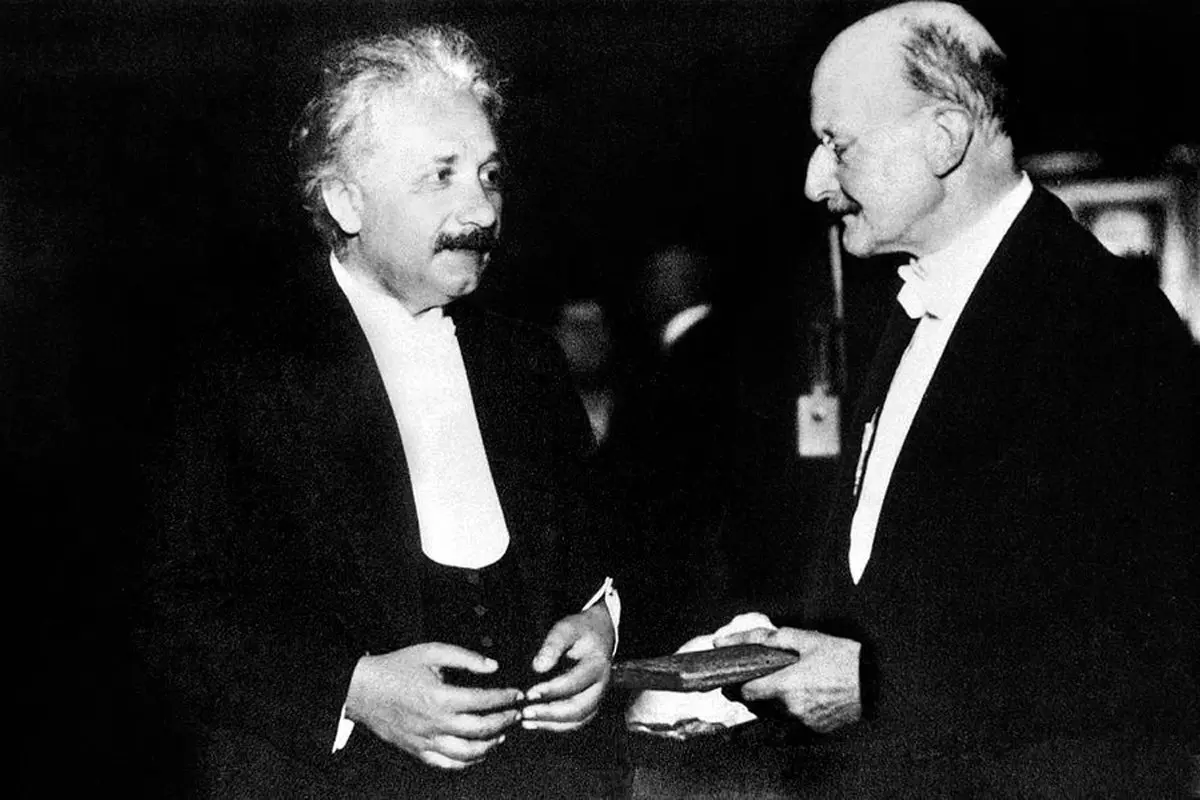
Einstein receives the Nobel Prize
Scientific Contributions
Einstein argued that time can pass differently depending on circumstances. In the special theory of relativity he established that the speed of light is constant and that time and space depend on an object’s velocity. His famous equation—“energy equals mass times the speed of light squared” (E = mc²)—shows that a tiny amount of mass can be converted into a huge amount of energy, a principle later illustrated by the invention of the atomic bomb. The general theory of relativity redefined gravity not as a force but as the warping of spacetime by massive objects, explaining planetary motion, the bending of light, and the existence of . As one of the founders of quantum theory, Einstein proposed in 1905 the concept of light quanta (photons) to explain the photoelectric effect, which earned him the Nobel Prize in Physics.
In what became known as Bose–Einstein statistics, he helped develop the method for counting and describing bosons. In his work on Brownian motion, Einstein developed a statistical theory that supported the existence of atoms. He also worked on ideas for a unified field theory, described magnetomechanical effects, and explored concepts that foreshadowed quantum teleportation. His theory of stimulated emission laid the theoretical groundwork for lasers. By creating both the special and general theories of relativity and reshaping ideas about space, time, and gravity, Einstein transformed modern physics and opened the path to cosmology. In short, quantum mechanics, Einstein, and contemporary science are closely linked. Einstein’s work underpins modern cosmology, nuclear physics, laser technology, and satellite navigation.
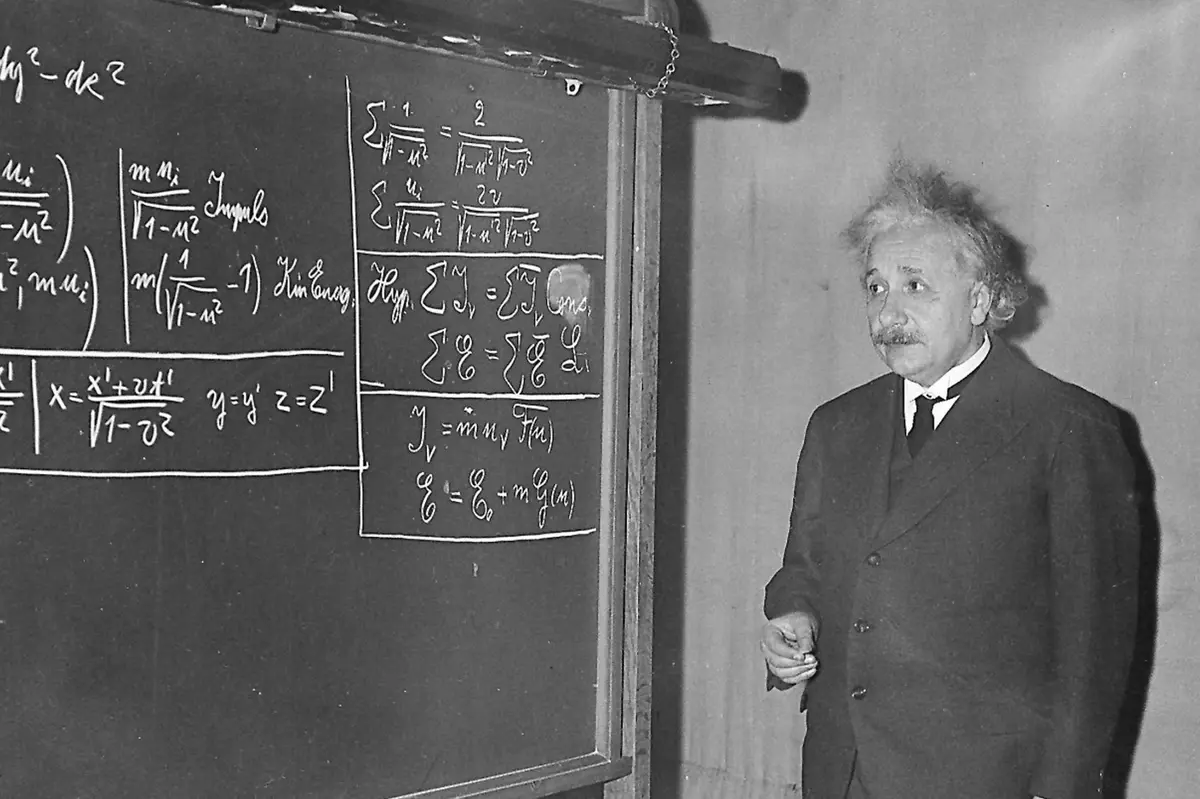
Relativity, Explained Simply
Einstein liked to say that scientists don’t invent so much as observe. He first stumbled onto ideas behind relativity when he noticed that a car moving at the same speed and in the same direction as another car appears motionless relative to that other car. Those cars, though both moving relative to the Earth, remain at rest with respect to one another. Einstein’s theory of relativity has two parts. The general theory of relativity rests on the equivalence principle and examines the curvature of spacetime, while the special theory of relativity says that the faster an object moves, the more its time and dimensions are distorted. But the Nobel Committee wanted empirical proof for what had begun as Einstein’s imaginative insight.
In the end, the Nobel Prize came 16 years after his 1905 breakthroughs, and it honored a theoretical discovery from that “miracle year” that had experimental confirmation. A Swedish physicist, Oseen, helped bring Einstein’s name to the committee’s attention by pointing to experimental facts that supported Einstein’s explanation of a natural phenomenon. The Nobel citation read: “For his services to theoretical physics, and especially for his discovery of the law of the photoelectric effect.” In practical terms, Einstein won the prize primarily for that achievement, which was part of the broader framework of relativity. The observational confirmation of Einstein’s work made him a scientific star, and ordinary people would often stop the famous man in the street and ask him to explain “the famous theory.” That popularity sometimes forced the laureate to assume another persona in public.
Einstein’s Childhood
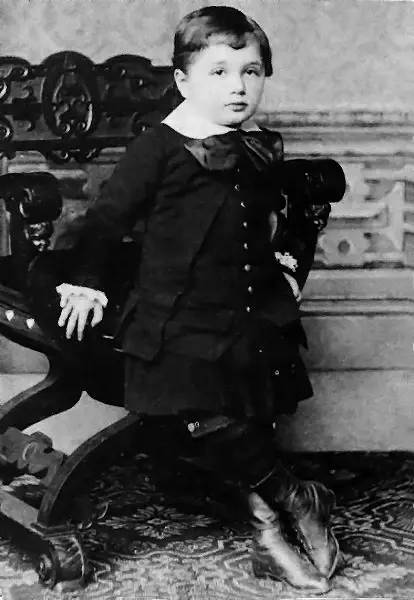
The future genius was born on March 14, 1879, in Germany. A year later his parents—secular Ashkenazi Jews Hermann Einstein (a businessman and engineer) and Pauline Koch—moved the family from Ulm to Munich, where a year later Albert’s younger sister Maria (Maja) was born; she would become a scholar of Romance philology and remain close to her brother throughout her life. Albert’s father and uncle started an electrical engineering firm in the industrial city that produced equipment running on direct current. One of Einstein’s formative childhood memories was the compass his father gave him; the instrument sparked a curiosity about electromagnetism and hinted at “deep hidden laws behind things.”
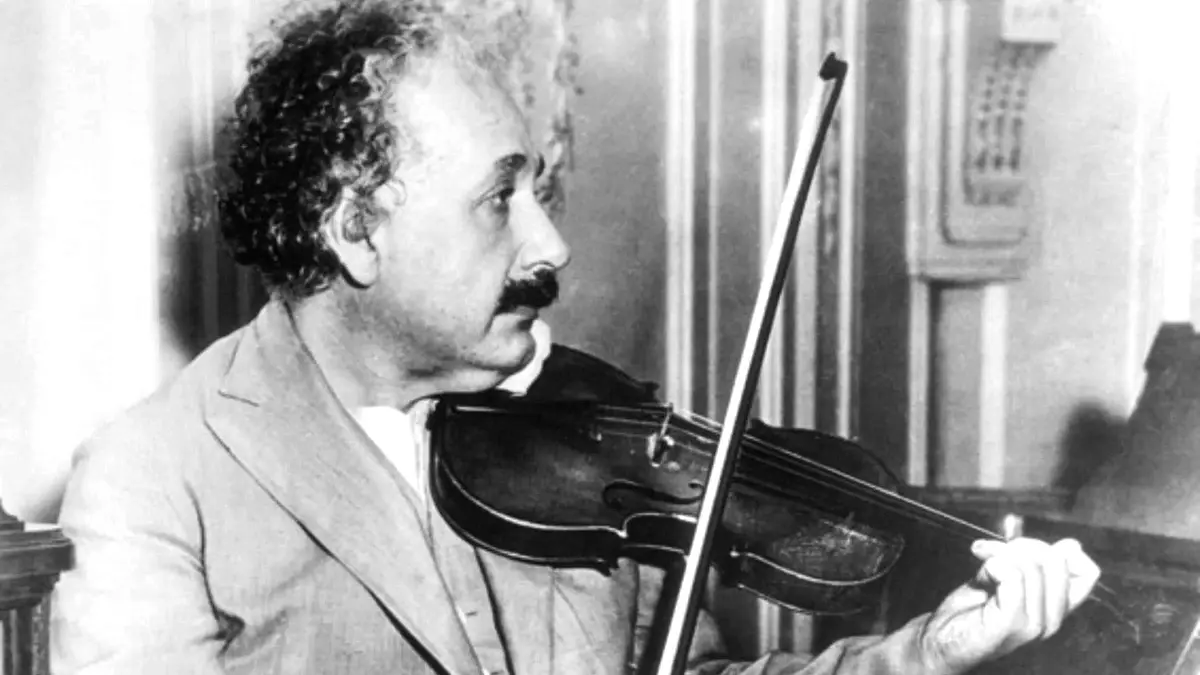
Another powerful influence was music: the shy boy learned to play the violin before he learned to speak (he barely spoke until age seven, though later he composed rhymes). From age five Albert attended a Catholic primary school, and at eight he transferred to a gymnasium for his secondary education. Those years were difficult: his parents sold their money‑losing business and moved to Italy, leaving the 15‑year‑old in Munich to finish school. His father wanted him to become an electrical technician, but Albert resisted rote memorization because it stifled his creative thinking. A doctor’s letter in 1894 helped him obtain permission to leave the gymnasium a year before graduation.
Developmental Traits
Some biographers suggest Einstein had dyslexia, a condition that could have made reading and verbal expression harder while strengthening his visual‑spatial thinking; others treat that claim as debatable and caution against tying his early speech delay to an unconfirmed diagnosis. Commentators have also suggested traits similar to those associated with Asperger’s syndrome, ascribed to other greats like Isaac Newton. Whatever the labels, social withdrawal in childhood did not prevent these exceptional figures from becoming scientific luminaries. As a teenager, Einstein wrote an essay in Italy, “On the Investigation of the State of the Ether in a Magnetic Field,” and from an early age he outpaced his peers in physics and mathematics.
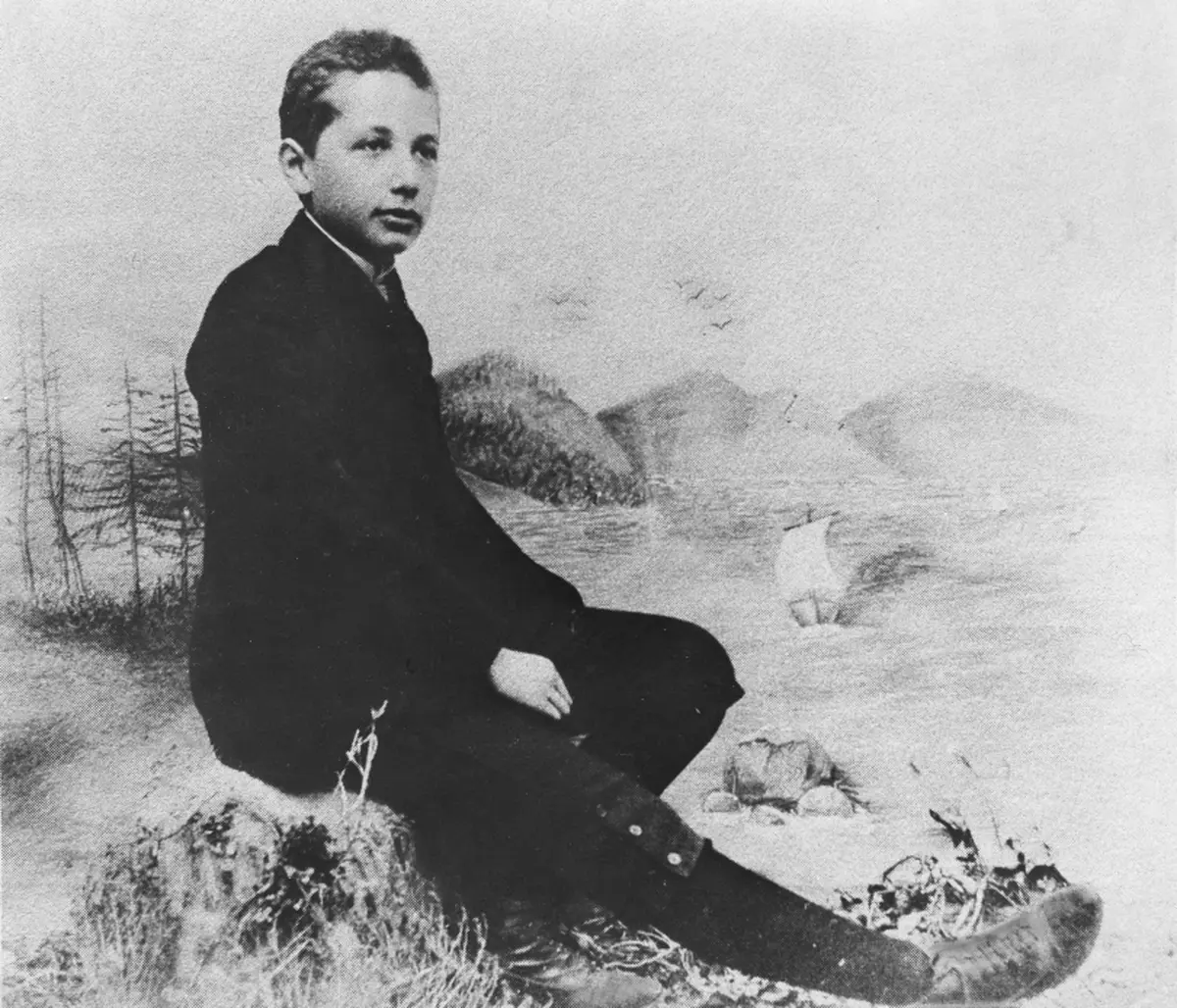
At age 12 Einstein began teaching himself algebra, analysis, and Euclidean geometry, and by 13 he had devised his own proof of the Pythagorean theorem. His home tutor recalled that the 12‑year‑old worked through a geometry textbook “from A to Z” and concluded early on that “nature is a mathematical structure.” By 14 he had mastered integral and differential calculus and advanced so rapidly in higher mathematics that no one around him could keep up. His interests also expanded to music and philosophy; reading Immanuel Kant’s Critique of Pure Reason at that age, Einstein showed an understanding of complex ideas beyond most casual readers.
Einstein at 14
Physics and Lyricism
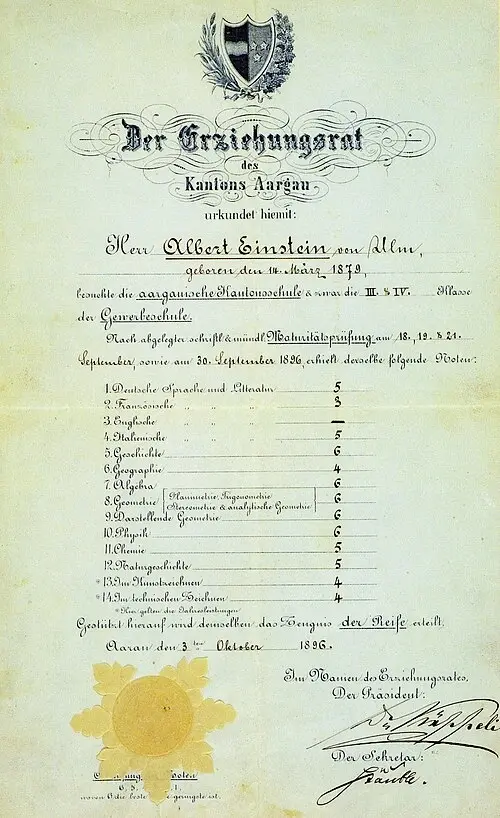
When 16‑year‑old Einstein tried to enter the Federal Polytechnic School in Zurich, his entrance exam showed exceptional knowledge in physics and mathematics but weaker scores in other subjects, so he continued his secondary schooling. Einstein’s 1896 diploma from the Aargau canton school survives and debunks the myth that he was a poor student; his best grades were in algebra, geometry, physics, and history. With strong marks he enrolled at 17 in the four‑year mathematics and physics program at the Federal Polytechnic, renouncing Württemberg citizenship to avoid military service.
Einstein’s diploma from Aargau (grades under the six‑point system)
Among the five freshmen in his program there was one woman, 20‑year‑old Serbian student Mileva Marić. Classmates described her as “intelligent, serious, and pleasant,” even though physical descriptions of the period labeled her unattractive and slight (she had a dislocated left hip). The classmates bonded over physics and later became lovers. Einstein, whom she called “my dear Johnny,” wrote tender poems to his “little witch” and “kitten I long to kiss.” His parents opposed a marriage between their 17‑year‑old son and the 21‑year‑old student, and after failing the Polytechnic finals twice (while Einstein graduated with an average grade of 4.91) Mileva gave up her professional ambitions and returned to Novi Sad without a diploma or an engagement ring.
A Lost Life
The fate of Einstein’s first child born out of wedlock remains unclear. The daughter, Liserl, born in early 1902, was never seen by her father. From Einstein’s letters of the period it appears the baby was either placed with adoptive parents or died of scarlet fever. Although Einstein married Liserl’s mother in January 1903, he admitted later that he did so reluctantly and out of a sense of duty. In May 1904 the couple had their son Hans Albert in Bern, and in July 1910 Mileva gave birth in Zurich to their second son, Eduard, who later developed a serious mental illness. A few months before Eduard’s birth Einstein described his marriage as a “mistake.”
In letters to his teenage love, Einstein confessed that he regretted she had not become his wife. “I always remember you with tenderness and feel as unhappy as a man with a lost life can feel,” he wrote to Marie Winteler, his first love in 1895–1896 when he lived with her family while studying in Aarau (she was the daughter of Einstein’s teacher, Jost Winteler). That early passion ended when Einstein entered the Zurich Polytechnic and met Mileva Marić, though family ties with the Winteler household didn’t break entirely: Einstein’s sister Maja later married Marie’s brother Paul. Einstein’s first marriage, however, ultimately collapsed and ended in divorce.
The Patent‑Office Clerk
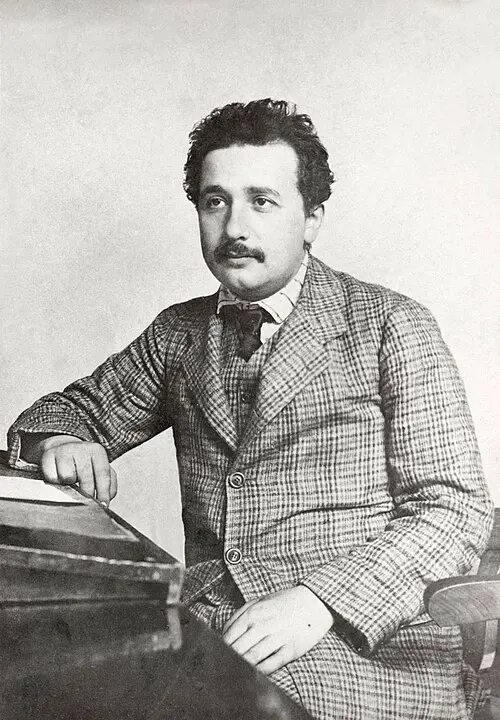
Einstein is a classic inspiration for anyone whose early career doesn’t follow a straight path. After graduating from the Federal Polytechnic with a teaching diploma in mathematics and physics, he spent two years looking for work in his field but couldn’t find a teaching post in Swiss schools. Through his father’s connections Einstein secured a job as a third‑class technical expert at the Swiss Patent Office in Bern. The future professor—soon to be world famous—spent several years at the office evaluating patent applications. Biographers suggest the inventions he examined there may have sparked ideas that led to the special theory of relativity.
Einstein at the patent office
That first job also shaped his appearance. The patent office years produced the image of the unkempt genius who avoided barbers. A clerk’s modest salary and the demands of family life encouraged frugality, and Einstein’s busy schedule left little time for haircuts. When his curls grew wild, his wife simply trimmed them. Superstition aside—cutting each other’s hair was considered bad luck in their circle—the episode ended with Mileva cutting her husband out of her life, while unintentionally creating what became known as the “Einstein hairstyle.”
Happiness Denied
The story of two physicists, one of whom subordinated herself to the other, offers a cautionary tale about sacrifice and how personal life can shape a scientific career. Scholars still debate Mileva Marić’s role in the development of Einstein’s theory of relativity and her contribution to his 1905 papers—the so‑called annus mirabilis or “miracle year.” At that time Einstein was gaining fame for a string of breakthrough papers (including the special theory of relativity), while his intellectual partner ran the household and cared for the family. Einstein acknowledged that Mileva helped him with calculations and “took wonderful care of everything.”
Pointing to Mileva’s involvement in the intense collaborative work that preceded the special theory, some experts cite Einstein’s letters, where he often used phrases like “our paper” and “our work on relative motion.” Mileva herself, in letters to a friend, called those works “Albert’s ideas, of which I am very proud.” She also complained that she saw little of her husband, who was “occupied only with his work.” So while some scholars argue that Mileva influenced Einstein’s discoveries, many conclude that she was not a cheated collaborator but a victim of an era that denied women a fair chance at scientific careers.
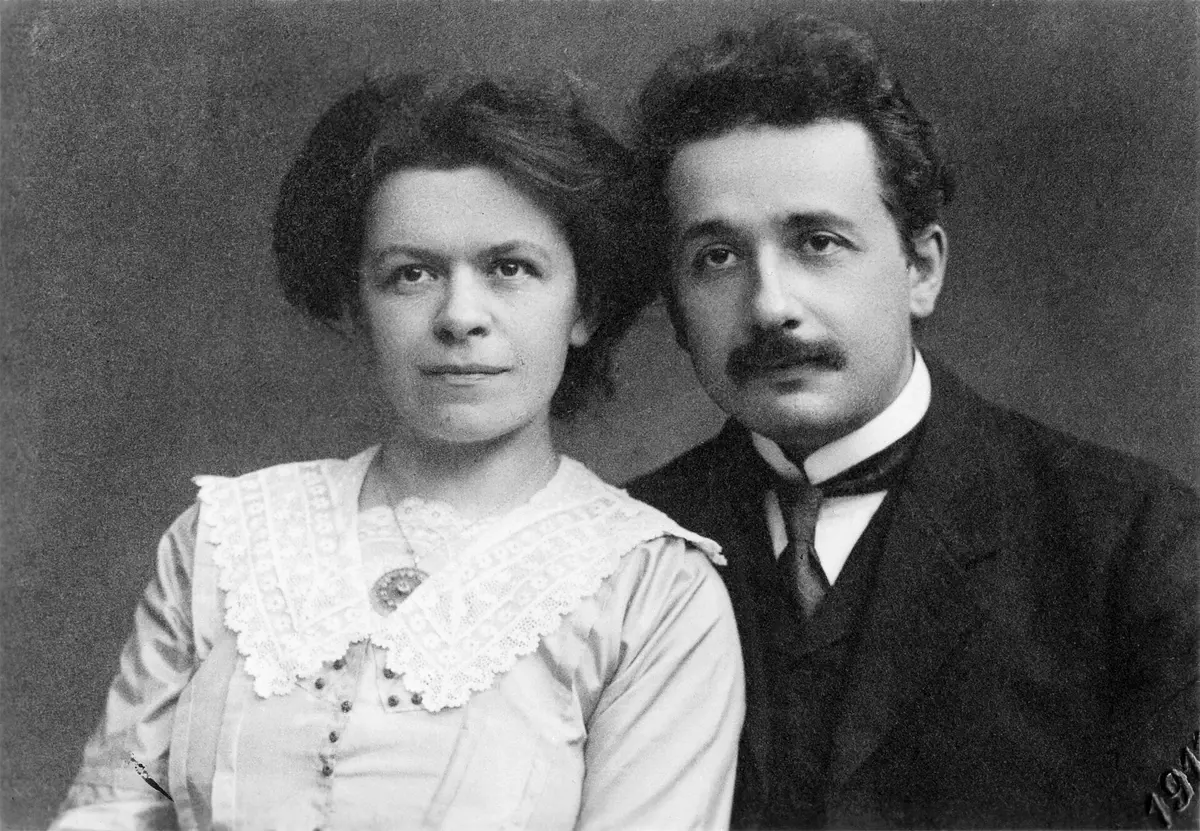
Albert Einstein with his first wife, Mileva Marić
Einstein’s Private Life
There is another perspective, and it’s not without evidence: some argue that Einstein himself hindered his first wife’s scientific recognition. Critics point to conditions he imposed on Mileva when they lived together in Berlin. In a 1914 letter Einstein listed her duties: keep his clothing and linen in order, bring him food to his study three times a day, and be silent on command. By then Einstein had been having an affair for two years with his cousin Elsa Löwenthal (his next wife) and treated Mileva like a housekeeper who couldn’t easily be dismissed. When she discovered the affair, Mileva immediately returned to Zurich with their sons.
The couple formally divorced on February 14, 1919, after five years of separate living. To fulfill financial commitments to Mileva and the family, Einstein gave his ex nearly the entire amount of his 1921 Nobel Prize (he received 121,000 Swedish kronor in 1922, about $32,000). Mileva used that money to buy several houses in Zurich, securing her future. She died in 1948 at age 73; their younger son, who suffered from schizophrenia, died in a psychiatric hospital in 1965. As for Einstein, he married his cousin Elsa Löwenthal the same year as the divorce and adopted her two daughters.
On Living “In Harmony” with a Woman
Charlie Chaplin, a guest of Einstein’s, described Elsa as “a square‑built, vigorous woman” who clearly enjoyed her husband’s fame. A friend of the couple summed up their typical Berlin household: “In a house with luxurious furniture, rugs, and paintings, Einstein looked out of place—like a bohemian visiting bourgeois society.” The couple emigrated to the United States in 1933; Elsa died three years later from kidney and heart problems. Einstein never remarried: he admired other men’s ability to “live in true harmony with a woman” and admitted, “I tried twice to solve that problem and failed both times.”

Albert Einstein with Elsa Löwenthal
Einstein was unfaithful again during his marriage to Elsa: in 1923 he began a relationship with Betty Neumann, the niece of a friend and his secretary. Other women with whom he had affairs while married to Elsa included wealthy widow Toni Mendel, floral business owner Estella Kacenellenbogen, the Austrian Margarete Lebach, and Berlin socialite Ethel Mihanovski. After Elsa’s death he had a short affair with Margarita Konenkova, who may have been a Russian spy (her husband, a sculptor, created a bronze bust of Einstein for the Institute for Advanced Study in Princeton). Einstein’s sister Maja fled Nazi Germany in 1939 and moved to the United States; she lived with him at Princeton until her death and helped maintain his household after Elsa’s passing.
Einstein the Pacifist
Einstein’s estrangement from Germany began during World War I when he publicly rejected a document that justified German aggression. While the “Manifesto of the Ninety‑Three” was signed by many prominent German intellectuals, Einstein distanced himself from it and instead signed the pacifist “Manifesto to the Europeans.” His pacifism did not stop his academic career. As a celebrated public intellectual, Einstein traveled the world, met emperors, kings, and prime ministers, and spoke to scientists and statesmen alike. His decision to make a long eastern trip in 1922 prevented him from attending the Nobel ceremony in Stockholm. A German diplomat who represented the laureate at the Nobel banquet praised Einstein not only as a physicist but also as a fighter for peace.
Einstein’s commitment to peace brought him close to fellow pacifist Charlie Chaplin. Hitler’s rise made any rapprochement between Einstein and the Nazi regime impossible. When Adolf Hitler became chancellor, Einstein renounced his German citizenship. In February–March 1933 the Gestapo searched his Berlin apartment several times. The Nazis confiscated his personal sailboat and turned his house into a Hitler Youth camp. A German magazine listed Einstein among the regime’s enemies and put a $5,000 bounty on his head. After laws barred Jews from holding official posts (including university positions), the German Student Union began burning Einstein’s works. The anti‑fascist scientist resigned from the Prussian and Bavarian academies of sciences and cut ties with colleagues who remained in Germany. At the same time he worried about the fate of Jewish scientists and urged leading British politicians like , Austen Chamberlain, and David Lloyd George to help evacuate German Jewish scholars to British universities.
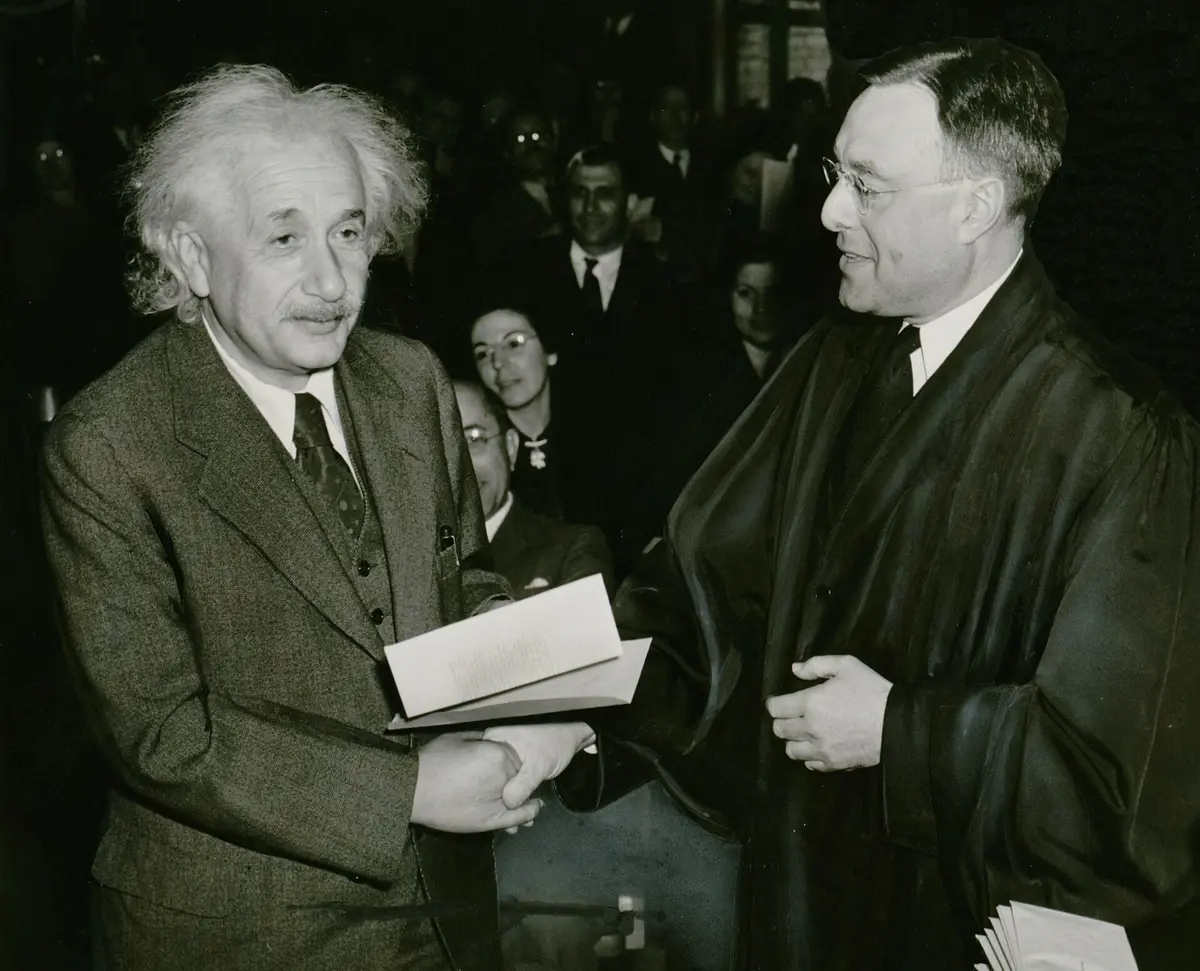
Einstein receives American citizenship
Einstein and the Atomic Bomb
Einstein emigrated to the United States and accepted a permanent position at the Institute for Advanced Study in Princeton, where he devoted himself to finding a unified theory of physics. A true “theory of everything” would reconcile quantum mechanics (the microworld) with general relativity (gravity) in a single mathematical framework. Stephen Hawking and others later suggested Einstein’s attempts were premature because physicists then understood too little about nuclear forces. Einstein himself called one decision “the mistake of my life”: he signed a letter to President Franklin D. Roosevelt urging the United States to develop an atomic bomb, motivated by fear that Germany might build one first. He later regretted this deeply.
Einstein opposed using atomic weapons for moral and pacifist reasons and understood the catastrophic consequences such weapons could unleash. He did not work on the Manhattan Project and considered the development of weapons of mass destruction a tragic error. Einstein’s consistent stance was for peace and disarmament; he believed atomic energy should serve humanity, not destroy it. Crucially, Einstein’s theoretical physics was not the direct technical basis for building nuclear weapons. After the U.S. bombings of Hiroshima and Nagasaki, he called for international control of atomic energy and warned of the global threat posed by nuclear war.
“Time to Go”
Einstein’s authority, earned through revolutionary discoveries, allowed him to influence political and social debates worldwide. He considered himself a democratic socialist, criticized capitalism, and condemned racism as “the worst disease in America.” He advocated a world federal government as “the only conceivable check against the arbitrariness of national elites.” Einstein was not a nationalist and opposed the creation of an independent Jewish state, even though he was invited to head one—a proposal he declined. He remained connected to the Institute for Advanced Study until the end of his life. The FBI kept a secret file on the free‑thinking scientist as early as 1932; that file eventually totaled 1,427 pages.
In his final years Einstein found comfort in his secretary Ellen, his wire‑haired terrier Chico, and his cat Tiger. He outlived his sister Maja by four years. On April 17, 1955, Einstein suffered internal bleeding from a ruptured abdominal aortic aneurysm and refused surgery, saying, “I have done my share—time to go.” He died the next morning at age 76 in Princeton Hospital. Pathologist Thomas Stoltz Harvey removed Einstein’s brain during the autopsy to study the secrets of his mind. The body was cremated, and the ashes scattered in an undisclosed location. Einstein bequeathed his personal archives, library, and intellectual legacy to the Hebrew University of Jerusalem. The last unfinished text he left behind was a draft of a televised address he never completed in the hospital for the seventh anniversary of Israel’s founding.
Einstein’s Most Famous Quotes
Ever since mathematicians attacked the theory of relativity, even I stopped understanding it.
I have no special talent. I am only passionately curious.
There are two ways to live your life: one is as though nothing is a miracle, the other is as though everything is a miracle.
Imagination is more important than knowledge.
The search for truth is more important than its possession.
Truth is what stands up to experience.
If you cannot explain something to a six‑year‑old, you do not truly understand it yourself.
Two things are infinite: the universe and human stupidity; and I’m not sure about the universe.
You can’t solve a problem with the same thinking that created it.
No problem can be solved from the same level of consciousness that created it.
The world is a dangerous place, not because people are evil, but because they refuse to fix what is wrong.
Power attracts men of low morality.
Science without religion is lame, religion without science is blind.
I don’t know with what weapons World War III will be fought, but World War IV will be fought with sticks and stones.
If you want to live happily, tie it to a goal, not to people or things.
Try not to become a man of success, but rather try to become a man of value.
