
 Forget the days when almonds were merely seen as “rabbit food” or a cake topping. Today, this nut is a true star among TikTok influencers and a favorite among nutritionists. Despite its trendy status in 2026, almonds have been a time-tested classic for millennia.
From Ancient Caravans to the World Capital
Almonds are one of humanity’s oldest “superfoods.” Archaeologists say they were cultivated as far back as 3000 B.C. in the Middle East. For ancient travelers, they were the perfect snack: they had a long shelf life and provided a significant energy boost.
Interesting fact: what we commonly refer to as a nut is technically the seed of the almond tree’s fruit. Its global fame came thanks to Spanish missionaries who brought it to California in the 18th century—now known as the “world capital of almonds.”

How Almonds Protect Our Minds
One of the most impressive discoveries in recent times is the link between almonds and brain health. A large study involving over 160,000 participants showed that daily consumption of these nuts can help prevent diseases such as:
- Dementia and Alzheimer’s disease;
- Parkinson’s disease;
- Stroke risk;
- Multiple sclerosis.
Why does this work? Almonds contain the amino acid arginine, which helps blood vessels expand and remain elastic. Healthy blood vessels mean a healthy brain free from micro-damage. This is critically important, as even , protecting your memory for years to come.
The Calorie Trick: Why Almonds Won’t Make You Gain Weight
You’ve probably heard that nuts are too high in calories. But almonds are different! Their cell walls are so sturdy that they act like a natural capsule.
When you eat whole almonds, about 30% of their calories simply aren’t absorbed by the body. So if the package says “170 calories,” you’re actually getting around 130. And those calories that “slip by” become a feast for the beneficial bacteria in your gut.
A Heart Like a Clock and Protection Against Inflammation
Almonds are a cocktail of monounsaturated (“good”) fats, vitamin E, and polyphenols. This trio works on your health in several ways:
- Clear Blood Vessels: Regular almond consumption helps lower “bad” cholesterol levels. If you want to enhance this effect through your diet, be sure to , as the combination of healthy fats and legumes is the best protection for your heart.
- Less Inflammation: Polyphenols block inflammatory processes in the body.
- Stable Sugar Levels: Since almonds lack refined carbohydrates, they help prevent blood sugar “spikes.”
The Secret Weapon of Beauty Routines: Almond Oil
If you want your skin to be silky and your hair strong, almonds can help here too. Almond oil is a natural concentrate of vitamins:
- Vitamin E in almonds is a powerful antioxidant that protects cells from daily stress. This is especially important for maintaining the barrier functions of the epidermis in winter. To ensure your is as effective as possible, your body needs support from both outside and inside. Proper nutrition helps keep your skin hydrated even in cold weather.
- Vitamin A: Gently renews cells and brightens the skin.
- Biotin: The “beauty vitamin” responsible for your hair’s elasticity.

How to Properly Add Almonds to Your Diet?
To reap real benefits, experts recommend aiming for two large handfuls a day.
- Which to Choose? You can have roasted or raw—there’s minimal difference in benefits. You can even enjoy them in dark chocolate if that’s more to your taste.
- Whole Nuts vs. Oil: In nut butter, the cells are broken down, making it much higher in calories than whole nuts.
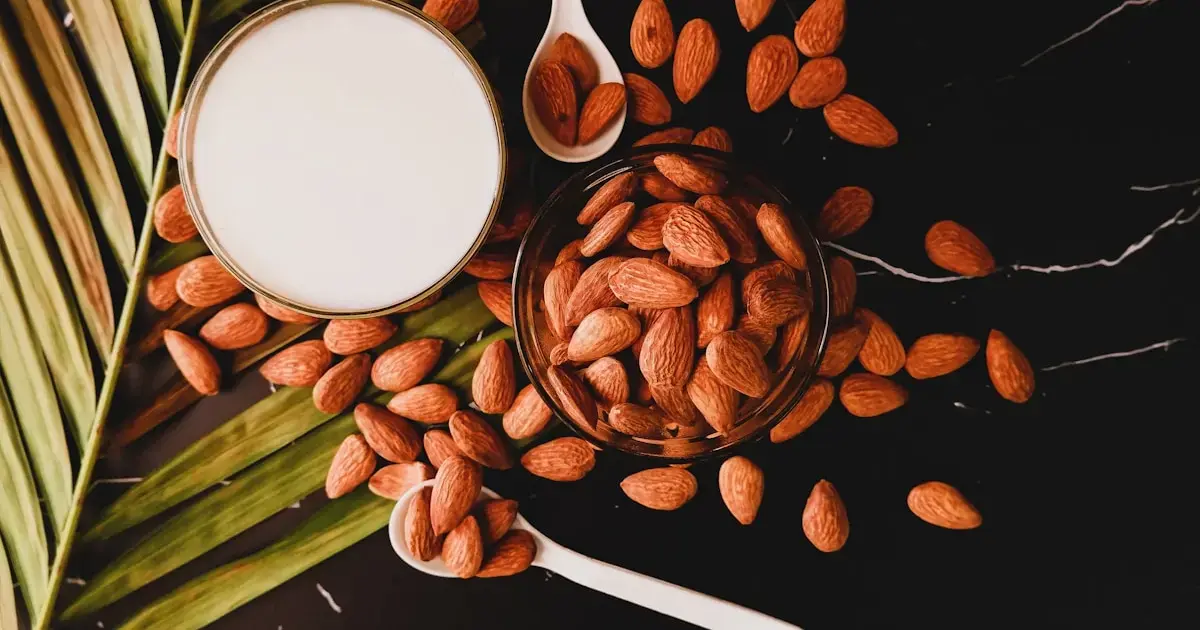
- Almond Milk: Nutritionists consider this product an alternative for those who are lactose intolerant.
When to Say “No”: Who Should Be Cautious with Almonds?
Despite their superfood status, almonds have a complex character and aren’t suitable for everyone. Here are a few situations where it’s better to avoid these treats or consume them with caution:
- Nut Allergies: This is the most important warning. Almonds are a strong allergen, so if you have reactions to other nuts, be extremely careful. If you’ve experienced similar reactions, it’s worth knowing whether a and how to properly adjust your diet in such cases.
- Kidney Stones: Almonds contain a lot of oxalates. If you’re prone to kidney stones or have related conditions, excessive consumption of nuts may exacerbate the problem.
- Sensitive Thyroid: Some substances in almonds can interfere with normal iodine absorption, which is important for people with thyroid dysfunction.
- Digestive Issues: Phytic acid in the skin can sometimes hinder mineral absorption. If you feel discomfort after eating nuts, try soaking them before consumption or peeling them.
Tip: If you’re unsure whether you can add almonds to your diet in large quantities, it’s best to consult your doctor.
The conclusion is simple: replace your usual snack with a handful of almonds. This is the easiest step to support your heart and memory. And to feel even better this season, pay attention to the .
Expert Commentary: Why You Should Add Almonds to Your Diet
 Lyudmyla Palamarchuk, physician and nutritionist
Almonds are a nutritious and beneficial food that can easily be incorporated into your daily diet. They contain healthy fats, vitamin E, magnesium, and plant protein, helping to maintain normal cholesterol levels and stable blood sugar. For healthy individuals, regular almond consumption can serve as a preventive measure against heart and metabolic issues.
Benefits for Vessels and Weight Control:
- Almonds support vascular health, and thus brain health, although they are not a “cure” for dementia.
- Some of their fats are not fully absorbed, so the nut provides satiety without excess calories.
Debunking Myths:
- About Soaking: Phytic acid, which has many myths surrounding it, has anti-inflammatory and anti-tumor properties, so soaking almonds is not necessary.
How to Consume Properly:
- Dosage: The optimal portion for most people is 20–30 grams per day.
- Timing: For maximum benefit, enjoy a handful of almonds as a snack between meals.
Important to Know: This product should be consumed cautiously in cases of kidney stones, and individuals with nut allergies should avoid it altogether.
Almonds are an example of a food whose benefits are backed by research, making them a great addition to the daily diet of health-conscious individuals.
For more tips from physician and nutritionist Lyudmyla Palamarchuk, check out her pages on FB, Instagram, TikTok
Frequently Asked Questions About Almonds
What is the daily norm for almonds?
The optimal dose for an adult is 20-30 grams per day (approximately 20 nuts). This provides the body with the necessary amount of vitamin E and magnesium.
Should almonds be soaked before consumption?
Yes, experts recommend soaking the nuts for 8-12 hours. This activates beneficial enzymes and improves nutrient absorption.
How do almonds affect brain function?
Thanks to their content of riboflavin and L-carnitine, almonds support memory and concentration, which is especially important for brain health.
