
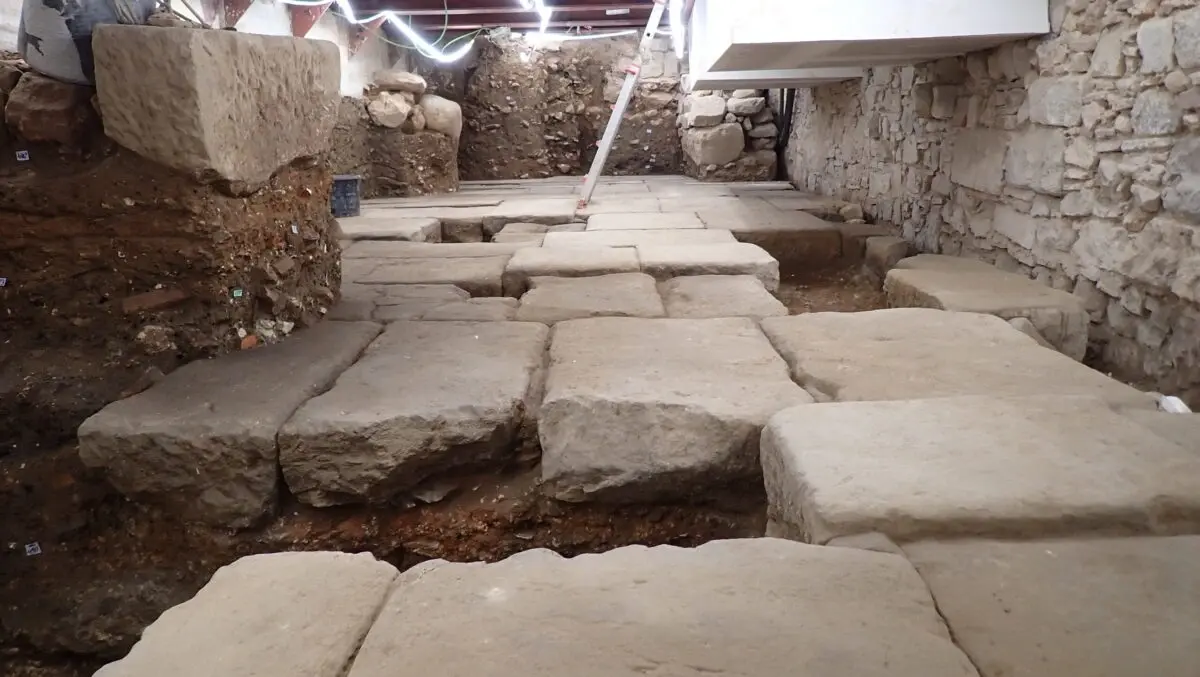
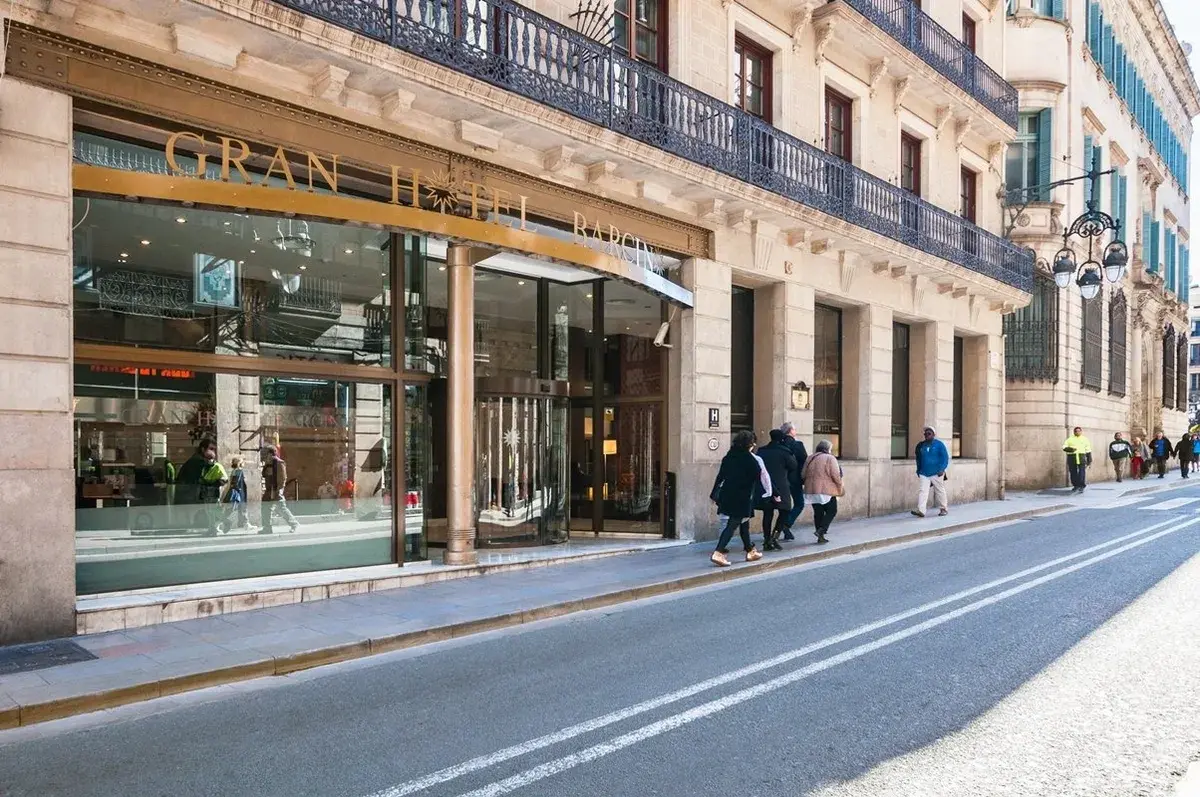
During expansion work at the Gran Hotel Barcino in Barcelona’s Gothic Quarter, archaeologists made an astonishing discovery. They uncovered a monumental stone floor that was once part of the city forum — the center of Roman public and political life more than 2,000 years ago.
Fragments of the forum lay more than two meters below the modern street. Archaeologists dated those fragments to the founding of the Roman colony Barcino by Emperor Augustus — around 15–10 BC.
How the discovery unfolded
Archaeological work at the hotel, conducted before the installation of a new elevator shaft, began as a routine precautionary survey. But when the team reached a depth of 2.5 meters, they hit something unexpected: large stone slabs forming an ancient paved surface.
What began as a small 6-square-meter trench expanded into an 80 m² excavation. The archaeological excavations revealed some of the most significant remains of Roman Barcelona found in recent decades, the outlet Arkeonews reported.
The monumental floor was paved with stone quarried from Barcelona’s famous Montjuïc hill, which has supplied building material to the region since ancient times. The pavement covered roughly 42 m² and consisted of massive rectangular slabs. Some slabs measured 149 centimeters long by 118 centimeters wide, and the blocks ranged from 18 to 35 centimeters thick. The variation in thickness helped Roman builders compensate for irregularities in the natural bedrock under the site, creating a level, durable surface.
These large, precisely fitted stones were typically used in important public spaces designed to impress visitors with their grandeur.
A 90-degree twist in the forum’s layout
Roman towns typically grew around two main axes: the cardo, a street running north–south, and the decumanus, running east–west. At the intersection of those streets sat the forum — the city’s central square where political decisions were made, markets buzzed, and religious ceremonies took place.
For decades, historians believed that Barcino’s forum lay parallel to the cardo and occupied an area near the Palau de la Generalitat (15th–17th centuries) and Plaça Sant Jaume.
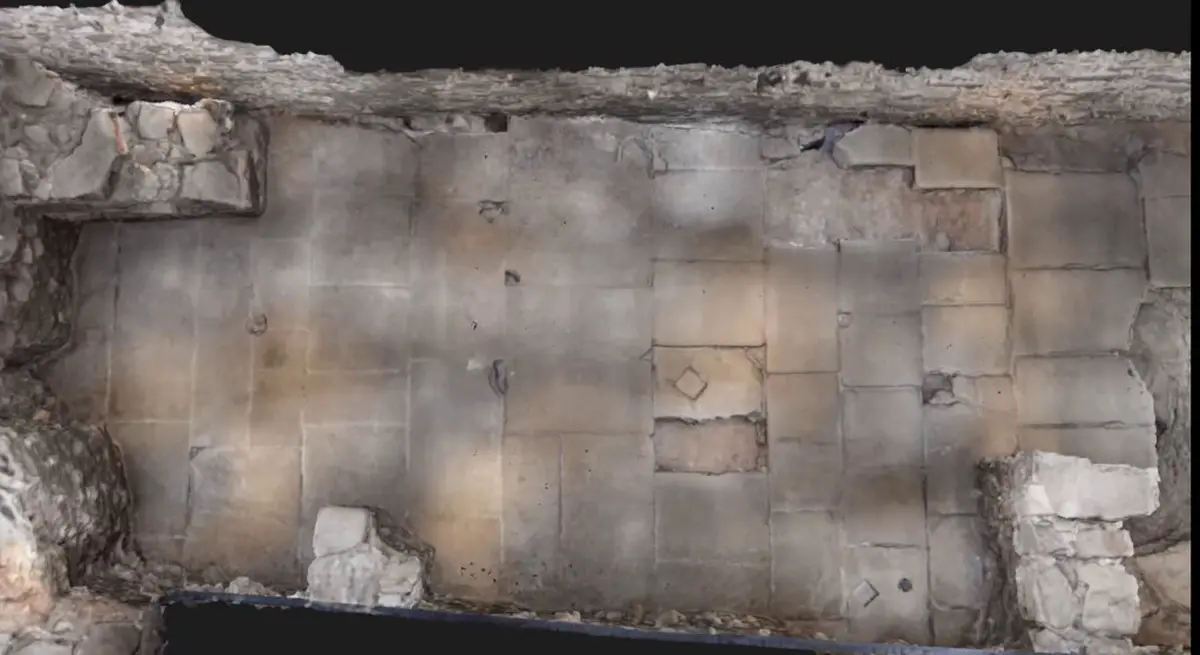
The newly discovered stone floor tells a very different story. Because the slabs lie parallel to the decumanus and perpendicular to the cardo, the forum was likely oriented along an east–west axis. If researchers confirm this hypothesis, it would mean the forum was actually rotated 90 degrees compared with previous scholarly reconstructions.
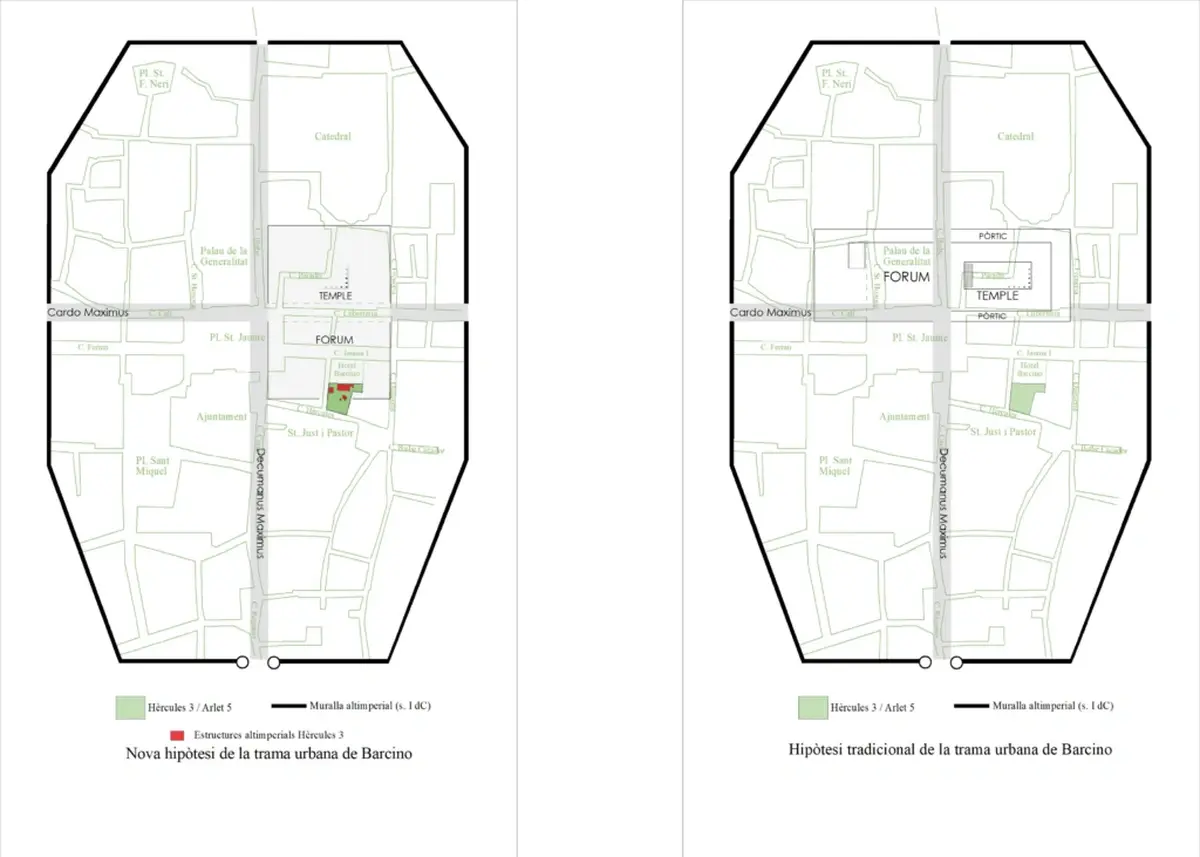
Left: New hypothesis for the Barcino forum. Right: Traditional hypothesis for the Barcino forum. Illustrations by Jordi Amorós (AGER Archaeology)
What else the archaeologists found
Near the paving, the team uncovered a massive concrete structure and two square wells about 2.6 meters deep — features that also date to the Roman period.
Those wells were connected by a siphon system — a hydraulic mechanism Roman engineers used to regulate water flow between reservoirs. Archaeologists suggest that the site’s water-management system was probably linked to a fountain or decorative water feature in the forum.
During the excavations, the team also recovered more than 150 fragments of imported marble. The marble arrived from quarries in Italy, Greece, the Aegean islands, Anatolia and Egypt.
Preserving the past in a modern city
The hotel owners did not plan to dismantle the rare floor. They chose to preserve the archaeological site.
The paving and surrounding structures have now been reinforced and integrated into the building’s underground level. Everything remains in place and has become a tourist attraction that hotel guests will be able to visit.