
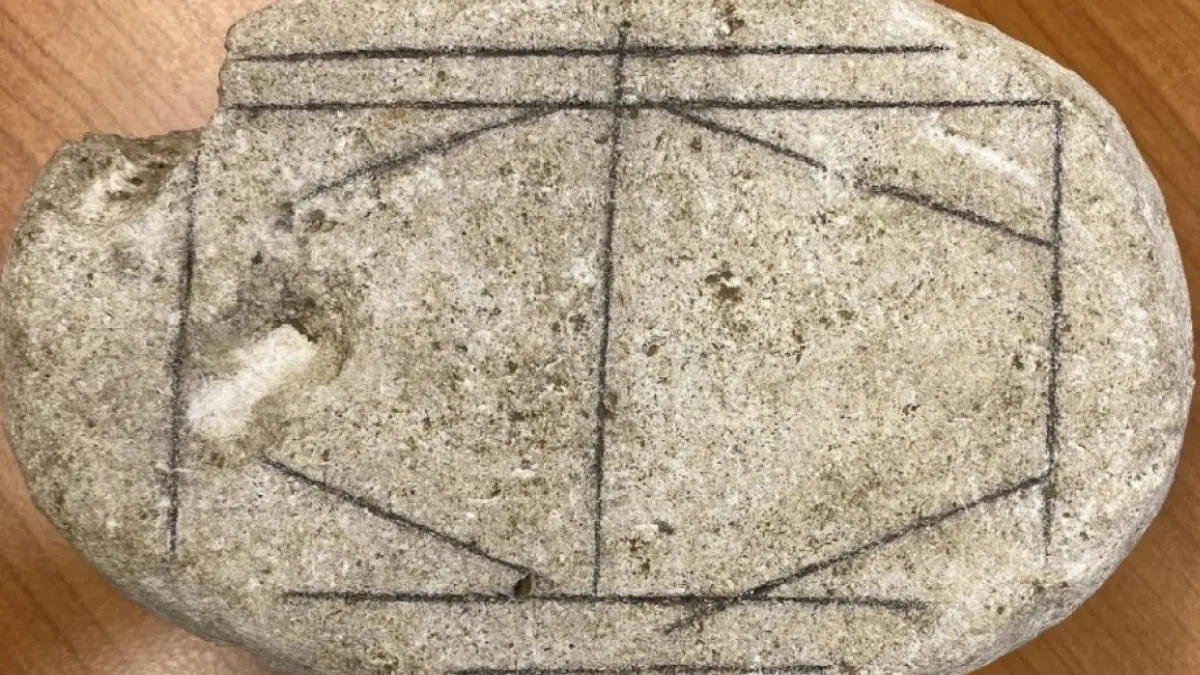
 Archaeological discoveries often leave scientists scratching their heads, but this time, technology from the future has come to the rescue. A mysterious stone from the Roman era, found in the Netherlands, had puzzled experts for decades. However, as reported by Science Alert, artificial intelligence has finally shed light on its purpose.
The Stone That Stayed Silent for Centuries
The artifact is a smooth limestone featuring engraved lines—both diagonal and straight—that intersect. For a long time, researchers debated whether it was part of a sundial, a decorative element, or perhaps an ancient calendar. Studying always requires patience, but sometimes conventional analysis methods just aren’t enough.
Using 3D scanning, scientists discovered microscopic wear patterns on the stone’s surface. These marks appeared precisely in areas where game pieces could have been moved over time. This led to the intriguing possibility that the stone was an ancient game board.
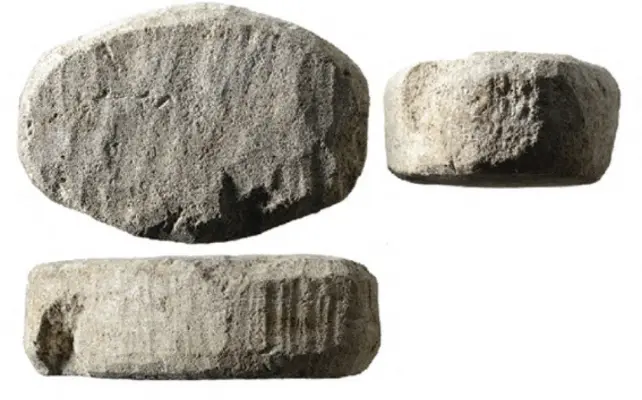
A smooth white stone dating back to the Roman era, found in the Netherlands, has long puzzled researchers. (Antiquity/AFP)
How AI Became a “Player”
To test this theory, scientists from Maastricht University employed an artificial intelligence system called Ludii. This specialized program is trained in the rules of over a thousand ancient games from around the world. The AI analyzed the geometry of the lines on the stone and proposed dozens of possible rule sets.
Moreover, the algorithm played thousands of games against itself to filter out uninteresting or overly complex scenarios. As a result, it became clear that the stone was likely a game board for a strategic game similar to modern checkers or mills.
This discovery further proves that can help us reclaim lost fragments of our past.
Why This Matters to Us Today
Board games have always been an important part of leisure throughout history. Even thousands of years ago, people sought ways to entertain themselves and exercise their minds. By the way, developing logical thinking and keeping the brain active is one of the secrets to maintaining .
The use of artificial intelligence in archaeology opens up incredible possibilities. Now, thanks to these digital “brains,” we can do more than just gaze at silent stones in museums; we can literally reconstruct the rules of life and entertainment of people who lived long before us.