
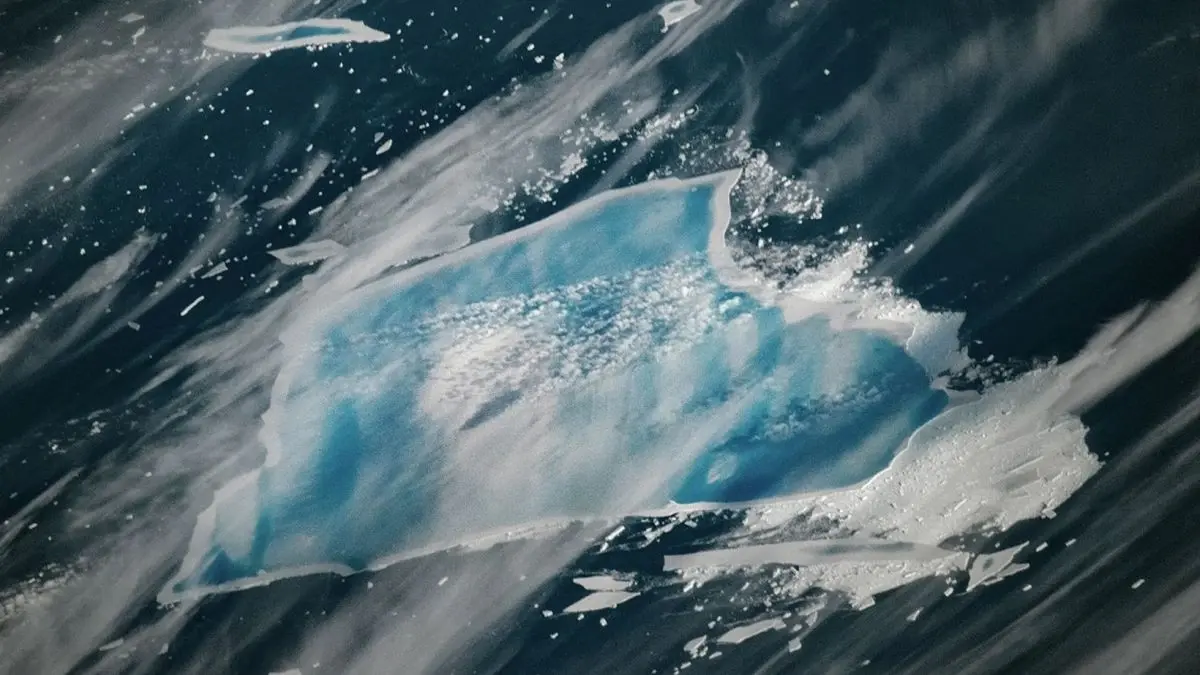
 Satellite data that has tracked iceberg A-23A for decades reveals that this massive , which is breaking apart, has transformed from white to a vivid blue in a very short time. The reason lies in the melting water accumulating in the cavities on its surface.
This indicates that the iceberg, which has had a relatively long life, is nearing its end. The melting water is likely to accelerate its disintegration.
“I certainly don’t expect A-23A to last until the end of the Australian summer,” says Chris Shuman, a retired geologist who previously worked at the University of Maryland in Baltimore.
What’s Happening with A-23A?
Icebergs come in various colors, which can be explained by several factors. Many of these icy formations are white due to air bubbles trapped in the ice during its formation, enhancing the scattering and reflection of light.
As the ice ages, it compresses, forcing out the air bubbles and becoming more transparent. Impurities trapped in the ice can give it a greenish hue. Meanwhile, pure ice tends to have a bluer tint.
However, something different is happening with A-23A. This 40-year-old iceberg is not a classic blue iceberg: as it rapidly melts, it drifts in the warm waters at the boundary of the Southern Ocean and the South Atlantic, between the Falkland Islands and South Georgia.
After breaking off from the Filchner Ice Shelf in in 1986, the A-23A ice mass settled on the bottom of the Weddell Sea, where it remained relatively unchanged for about 30 years. By 2023, it finally broke free. But then it got caught in a swirling current known as the Taylor Column for several months before breaking free again and continuing its dramatic journey.
After that, A-23A became stuck on the seabed once more, only to free itself again, beginning its final movement.
On the Brink of Total Disintegration
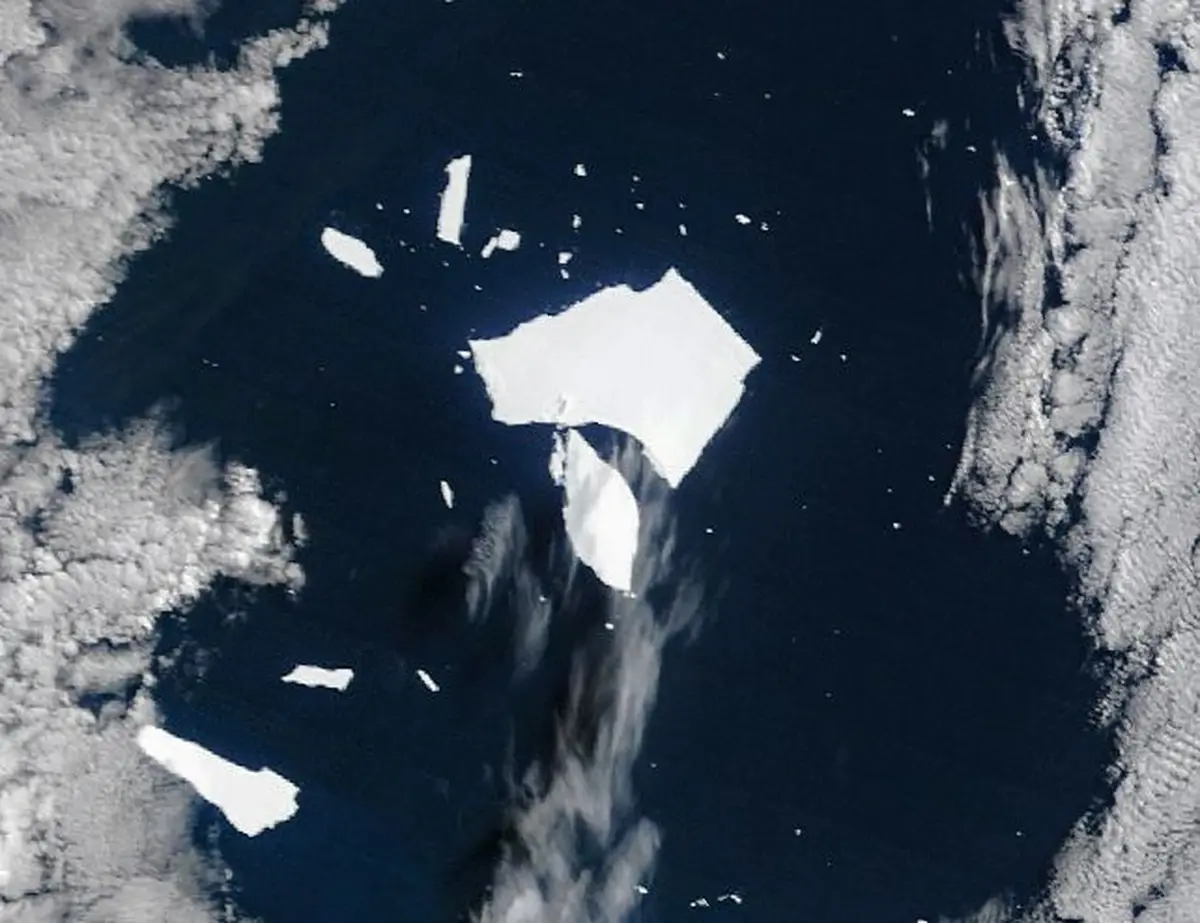
The demise of iceberg A-23A has been brewing for several months, according to Science Alert. Researchers have observed increasingly larger chunks breaking off from it. In January 2025, its estimated area was 3,640 square kilometers, making it the largest iceberg in the world at that time. By September, after A-23A lost several large chunks, its area shrank to 1,700 km². Now, it measures only 1,182 km².
This once-massive ice block is unlikely to last much longer. NASA has reported that A-23A is “on the brink of total disintegration,” as melting water accumulates in its less stable cracks, causing them to expand more rapidly.
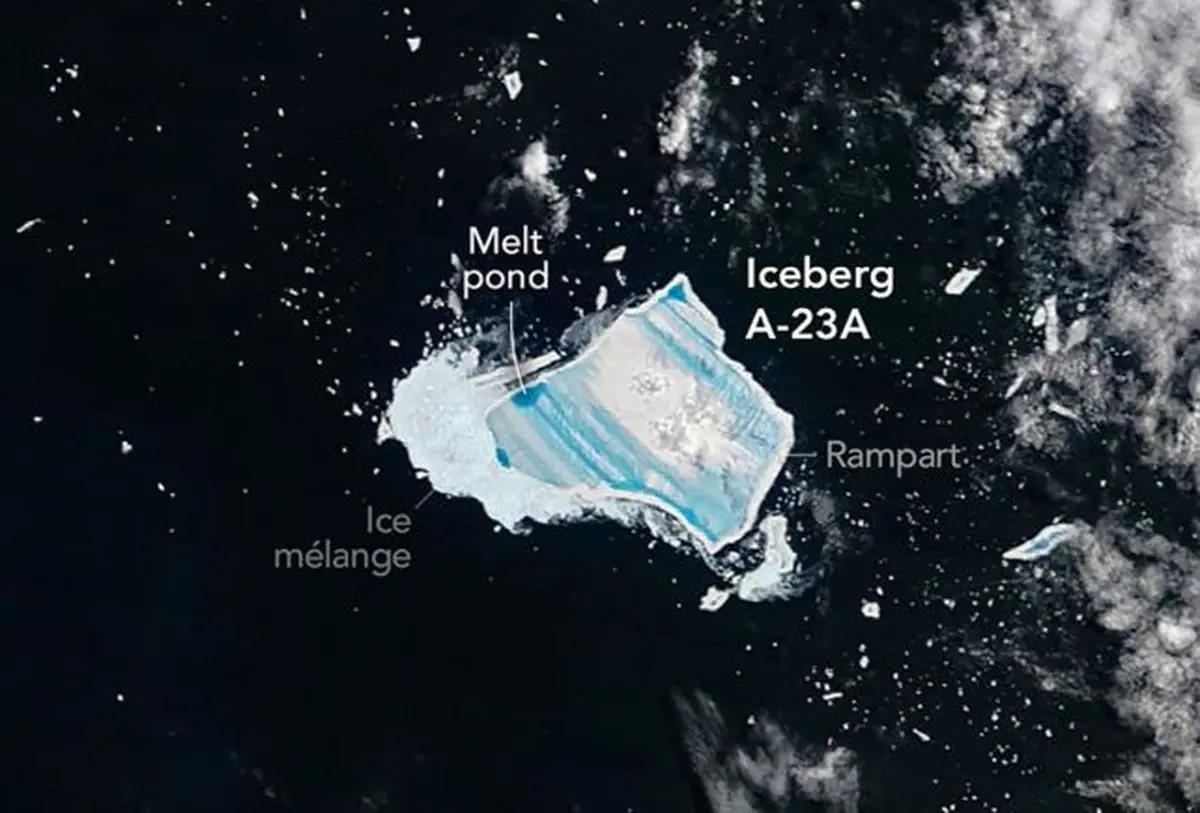
Currently, A-23A is heading toward an area known as the iceberg graveyard, located near South Georgia. There, this doomed object will melt away and eventually merge with the ocean.
“I’m incredibly grateful that we had satellite resources that allowed us to track it and meticulously document its evolution. A-23A will meet the same fate as other Antarctic icebergs, but its journey has been remarkably long and eventful. It’s hard to believe it will soon be gone,” Shuman reflects sadly.
Photo: NASA