
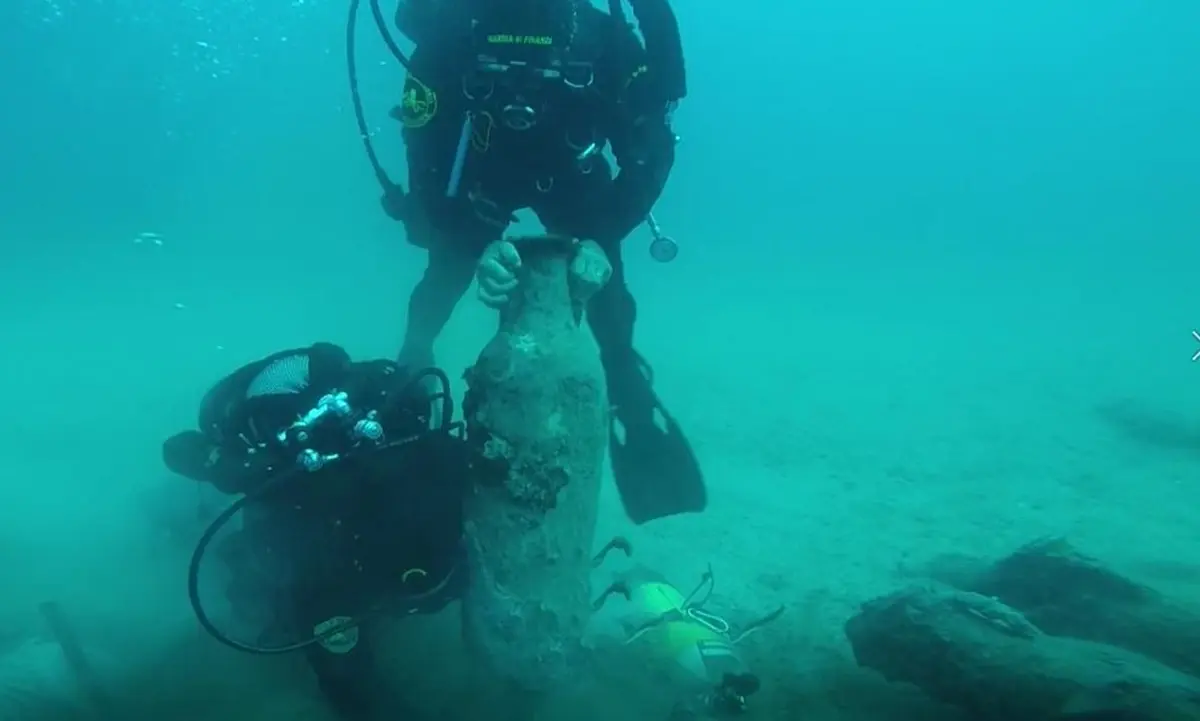
 The ancient port city of Gallipoli is located in southern Italy, in the Apulia region, along the Ionian coast of the Salento peninsula (not to be confused with Gallipoli in Turkey). Recently, it has become the center of an astonishing underwater discovery.
The Italian Ministry of Culture confirmed on its Facebook page the discovery of a well-preserved ancient Roman trading ship resting on the seabed near the city’s coastline.
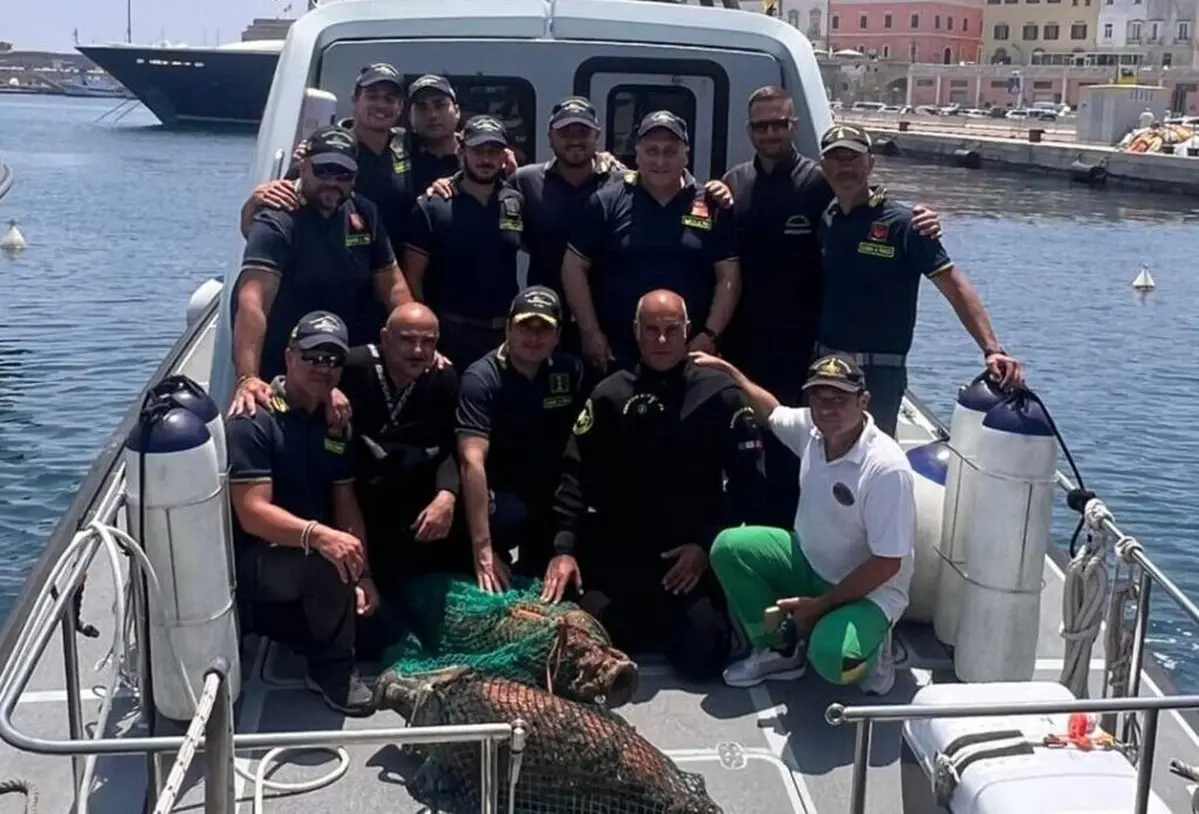
Although researchers stumbled upon the wreck in June 2025, Italian authorities deliberately kept the find under wraps for several months to protect the site from looting. During this time, the shipwreck was safeguarded by a marine patrol and researchers from the Archaeological Superintendency of Fine Arts and Landscape (ABAP).
Law enforcement monitored the area while marine archaeologists conducted preliminary assessments of the sunken vessel’s condition and its scientific significance.
Only after establishing a protection strategy for the site did the authorities decide to disclose information about the discovery, as reported by Arkeonews.
What is known about the find?
Researchers have identified the sunken vessel as a ship used for long-distance maritime trade.
The uniqueness of this discovery lies in the nature of its cargo. The ship is filled with amphorae containing garum — a fermented fish sauce that was one of the most valuable and expensive commodities in the ancient Roman world.
Garum was not only a staple of Roman cuisine but also a luxury item traded throughout the empire.
The ship’s cargo of garum is direct evidence of commercial exchange in the Roman Mediterranean. Archaeologists believe the ship was part of a vast trading network supplying delicacies to elite markets. The find sheds new light on the Roman economy, consumer habits, and daily life in the Roman world.
Such discoveries are rare. The amphorae’s position on the seabed reflects their original arrangement aboard the ship. This will allow scientists to reconstruct the vessel with unprecedented accuracy and possibly learn more about shipbuilding methods, the organization of ancient cargo transport, and maritime routes.
A strategically important area for navigation
In ancient times, the waters near Gallipoli and along the Salento coast formed a key maritime corridor between the eastern and western Mediterranean.
However, these routes were quite dangerous due to frequent storms and the coastline’s complex shape. Consequently, shipwrecks occurred regularly in this area.
On the path to excavation
The Italian Ministry of Culture announced that researchers will soon begin documenting the wreck, conducting thorough studies, excavations, and preservation work.
“Underwater heritage is returning to tell its story, which will deepen our understanding of Roman civilization and its vast maritime world,” the ministry stated.