
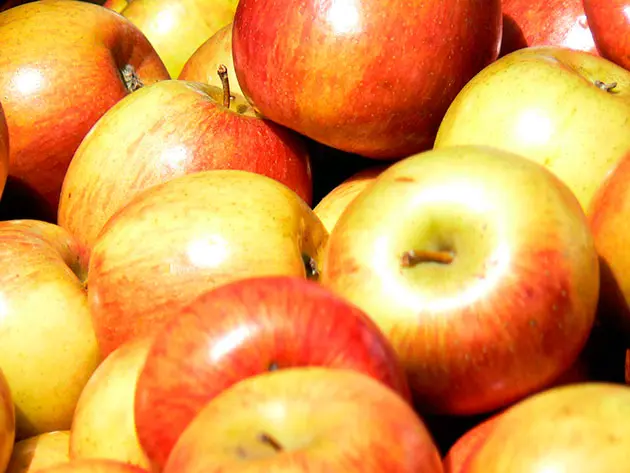
August has arrived, marking the last month of summer and the time of cool sunrises. In ancient calendars, August is called “the bread-salt month” or “the thickener.” It’s a bountiful time of year. Farmers delight in ripe fields, fruits, and vegetables — watermelons full of sunshine and melons exuding their sweet aroma…
August truly brings the blessed days of summer.
So, how and when should we harvest from the garden?
Distinguish between two stages of ripeness for apples and pears: the harvestable stage and the edible stage (ready to eat). Signs of harvestable ripeness include the cessation of fruit growth, yellowing, the emergence of aroma, and the easy separation of the stem from the fruit. Edible ripeness is when the fruits develop the characteristic flavor, aroma, and juiciness of their variety.
Fruits picked too early tend to have low sugar, weak aroma, and poor storage life.
If you worry about premature fruit drop, spray trees with a special solution. Use a dosage of 10 mg per 10 liters of water. Apply it no earlier than three weeks before harvest.
Bud trees in summer if you prepared them back in spring.
The sweet harvest has come to an end — all the strawberries have been picked. What’s next? Prepare for next year’s harvest. If the soil lacks moisture, water the plants (one bucket of water for every two plants). Mound the bushes, especially around the “horns,” being careful not to cover the buds. Fertilize the bushes with ammonium nitrate (1–2 grams per bush), superphosphate (2–3 grams), and potassium salt (1–2 grams).
Substitute commercial fertilizers with local options. For example, replace nitrate with bird droppings (1 part droppings diluted in 10 parts water) or manure tea (1 part diluted in 4–5 parts water). Pour one bucket of the solution along three linear meters of the trench.
In August, plant new berry patches by setting rooted strawberry rosettes. In this case, some crowding is acceptable — leave up to 10 centimeters between plants in a row. Take plants from the crowded rows in spring for replanting in less dense areas. Avoid planting old strawberry bushes, as they are typically low-yielding or barren.
There’s also work to be done in the raspberry patch. Summer pruning of vigorous varieties is necessary. Generally, gardeners pinch or trim raspberries twice during the growing season. The first time is in spring when stems reach 25–27 inches in height; the second time shortens the stems by 4–6 inches as growth slows in early August. This double topping improves winter hardiness and can increase yields by up to 20 percent.
Gardeners continue the battle against pests and diseases that affect fruit crops. Collect and destroy fallen, infested fruit immediately. Gather caterpillars of the hawk moth and the shooting star. Collect and burn any gooseberry berries damaged by fungus. Spray cherry, plum, and shrub plants with chlorophos (0.8–1 gram per liter of water) after harvesting to eliminate second-generation sawflies.
This is far from a complete list of urgent tasks in the summer garden.