
Community gardens and private plots are busy again. It’s time to prepare storage spaces and containers for long-term fruit storage, harvest and put away crops, till the soil, fertilize trees and shrubs, prepare and plant black and red currant cuttings for seedlings, remove old or diseased trees, pick grapes, and more.
Preparing Storage Spaces and Containers for Fruits
You can store fruit at a summer cottage, in a building basement, or in a root cellar. The quality and duration of storage for late-autumn and winter varieties of apples and pears depend largely on how well you prepare the space. Basic storage rooms should be cleared of debris and dust, then sealed. Seal any gaps rodents could squeeze through, then fumigate the space with sulfur. Burn about 10–20 grams of sulfur per cubic meter on a metal sheet in a closed room, and ventilate the area afterward.
Burn hay in the storage before placing fruits, root vegetables, and potatoes inside. Keep the door tightly closed while it burns and seal gaps to prevent smoke from escaping.
Disinfect storage areas with a 0.5% copper sulfate solution, a 0.2–0.3% zineb solution, or a 4% chloramine solution. Whitewash basements with lime; if you see mold, add 3–5% copper sulfate to the lime. Adding 0.7–1% chloramine to the lime also kills mold. Wash boxes and other storage containers with a hot 4% washing soda solution.
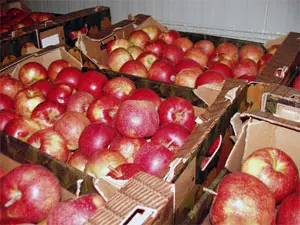
Move the boxes to the storage area ten days before use so the wood reaches the necessary moisture level; otherwise the wood will draw moisture from the fruit.
Harvesting and Storing Fruits
Late-autumn and winter varieties of apples and pears can keep for a long time if handled properly. Choose top-quality fruit: healthy, undamaged, smooth-skinned pieces with intact stems. The quality of the fruit depends heavily on harvest timing.
If picked too early, fruit loses weight, flavor, and storage potential. If picked too late, many fruits fall to the ground and those left on the tree overripen; their flavor will be mediocre at best, and they won’t store well.
To pick at the right time, watch the fruit color and the seed color, and taste a few. If you harvest in cloudy, humid weather when fruit is wet with dew or rain, it will spoil faster in storage. Dry the fruit under a shelter before storing.
In basements, store fruit in boxes stacked several high and wrap the boxes on all sides with plastic. Wrapping reduces fruit transpiration and helps prolong storage by trapping some carbon dioxide under the wrap, which slows ripening. It also prevents the fruit from absorbing odors from other items in the basement.
If you store early and late varieties together, the late ones will ripen faster because ripe fruit emits gases—mainly ethylene—that accelerate ripening. To prolong the storage life of winter varieties, keep them separate.
Avoid frequent handling or rummaging through stored fruit to remove spoiled pieces; that can bruise healthy fruit and spread pathogens. Maintain storage temperatures between 32–39°F (0–4°C) and humidity between 85–92%. Low temperatures prevent fruit from ripening, while high humidity significantly reduces transpiration. Excess moisture is harmful, so ventilate the area if humidity exceeds 92%.
Monitor temperature with a thermometer and humidity with a hygrometer. If humidity is insufficient, place a basin or bucket of water in the room and refill it as it evaporates. Ventilate the storage frequently during the first weeks when outdoor temperatures are still relatively high. To prepare for colder weather, insulate the storage walls.
Extend apple storage life by placing apples in plastic bags that hold 3–4 pounds (1.5–2 kg) and sealing them tightly. Do not use this method for Antonovka apples. Wrapping each fruit in paper soaked in petroleum jelly also helps.
Storing Apples in the Ground
Apples stored in the ground often keep better than those in a basement or garage. For this method, choose healthy, undamaged winter-variety apples free of pests and bruises. Pack them tightly in cardboard or wooden boxes, lining each layer with double sheets of newspaper. Place the filled boxes in pits, cover with boards, then backfill with soil to a depth of 27–31 inches (70–80 cm). To help prevent the soil from freezing, cover the pit with plant debris.
