
 When a supermarket shopper picks up a miniature , they might think they’re looking at a vegetable that was pulled from the ground before it had a chance to fully grow. But it’s not that simple. In fact, this little carrot may have once been much larger.
It’s important to clarify that mini carrots, which are indeed harvested before they reach full size, do exist. Some farmers pick them early and sell them. However, this article is focused on a different kind of small carrot—one that is cut in a special way and marketed by supermarket chains. This is what we call “baby carrots.”
Where Did They Come From?
Baby carrots (or mini carrots) were invented in 1986 by American farmer Mike Yurosek (1922-2005) from Bakersfield, California. This inventive man introduced a tiny carrot to a vast army of consumers, which is often mistaken for a distinct variety. In reality, it’s a common vegetable that undergoes special processing.
One day, Yurosek realized he was tired of seeing so many carrots go to waste due to their lack of appeal to consumers. About 400 tons of this vegetable were sent to landfills every day. Yet, these carrots were perfectly edible. They were discarded solely because of supermarket standards, as reported by IFLScience.
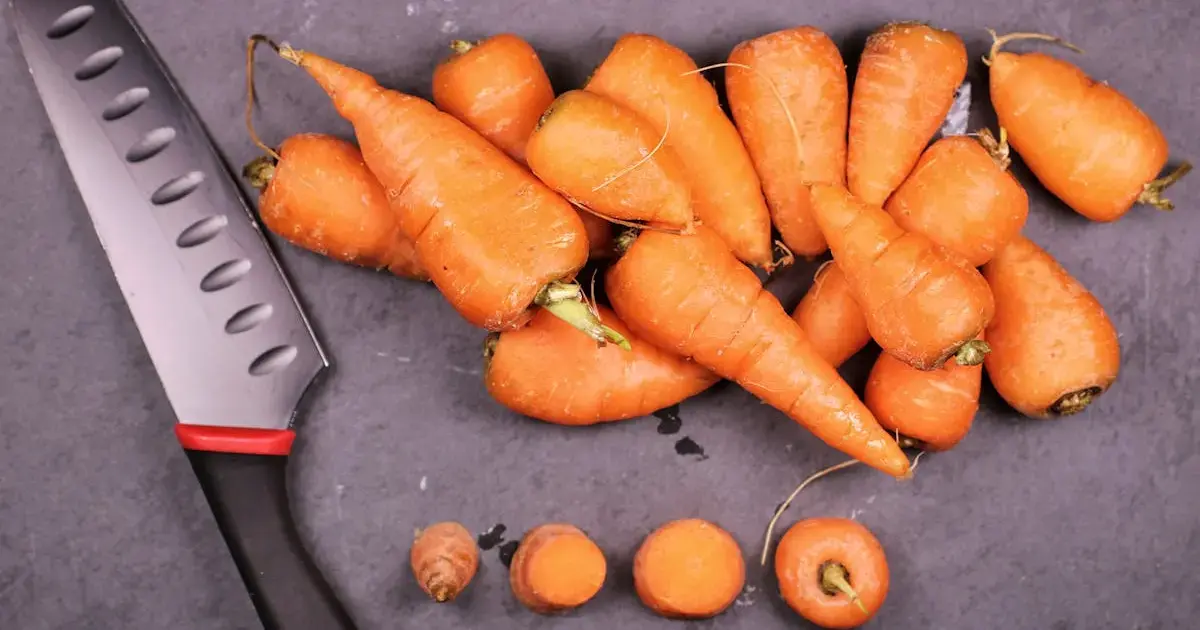
“In the 1980s, supermarkets expected carrots to be a certain size, shape, and color. The rest had to be sold for juice, processing, animal feed, or simply thrown away,” explained the Carrot Museum in the U.S.
Initially, Yurosek tried using a vegetable peeler to cut the “ugly” carrots, and later he used an industrial bean cutter. He purchased the machine from a company that was going out of business. Yurosek came up with two carrot products: small balls he called “bunny balls” and sticks that we now know as baby carrots.
The “bunny balls” didn’t catch on in the market, but the cut carrot sticks did. Ultimately, thanks to Mike Yurosek’s brilliant idea, millions of tons of carrots were saved from waste.
“Most of the baby carrots sold in supermarkets in the U.S. and the U.K. are actually cut pieces of peeled larger roots. This carrot was specifically bred to have a small diameter, no core, and to be sweeter than regular carrots,” the museum explained.
Within a year of inventing baby carrots, consumption of this vegetable in the States increased by nearly 30 percent. By 1997, it had even doubled. A report from the U.S. Department of Agriculture in 2007 noted: “Among fresh-cut vegetables with a total value of $1.3 billion, carrots accounted for the largest share (about half) of supermarket sales, followed by potatoes, celery, and other products.”
Additionally, many people consider baby carrots to be the best healthy snack.
Photo: pexels.com