

A team at the Micronesian Regional Research Center at the University of Guam (Mangilao, USA) says that 4,800 years ago people in parts of Asia removed healthy teeth as a beauty practice. But there were other reasons, too.
What Did the Scientists Reveal?
Researchers now have a clearer picture of why ritual tooth removal was practiced in ancient Taiwan and other parts of Asia. It’s not simply because the teeth were in poor condition.
Although removal of healthy teeth has been documented among ancient peoples worldwide, the practice is most closely associated with early Austronesian communities that lived in what is now Taiwan, Southeast Asia, and Polynesia.
The practice began around 4,800 years ago in the Neolithic and continued in some places until the early 20th century, the team reported in the journal Archaeological Research in Asia.
The procedure involved extracting completely healthy teeth — including incisors and canines — without anesthesia. The sockets were then packed with ash to stop bleeding and help prevent infection, Live Science reported.
By compiling data from more than 250 archaeological sites across Asia, researchers identified 47 sites with burials of people who had missing teeth. Those burials span a long period, from the Neolithic era (4,800–2,400 years ago) to the Iron Age (2,400–400 years ago).
The team found the practice was equally common among men and women, though by the early 20th century it became more frequent among women. Children also underwent the procedure.
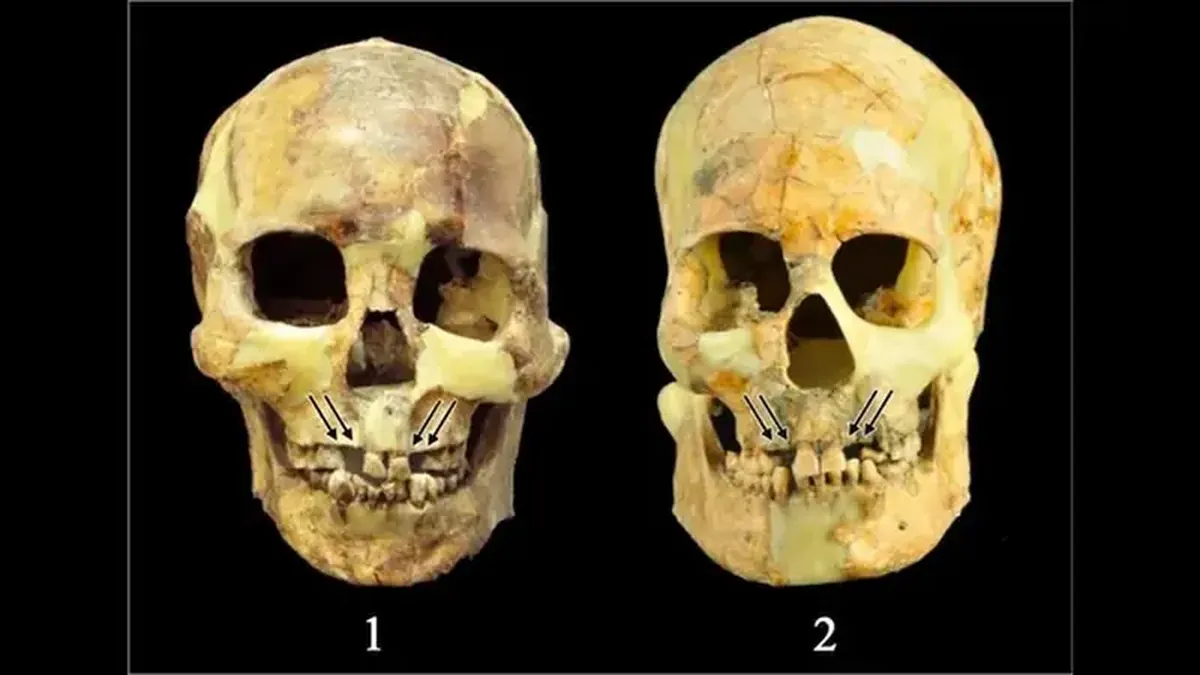
Why Did They Do It?
The main reason was cosmetic — what the researchers call “aesthetic expression.”
“The first motivation — self-adornment — stemmed from a desire to stand out and appear more attractive to potential mates,” the authors say. They add that a bright red tongue showing through gaps in the teeth was considered beautiful in some communities.
The second reason was that the practice served as a test of courage. Some communities also believed tooth removal reduced the pain of tattooing or made speech easier, the authors say.
In many cases, the visible result served as proof of bravery or a mark of maturity.
There was also a practical medical use: ethnological records from Borneo and historical notes from southwestern China indicate that people with tetanus were fed food and medicine through gaps in their teeth.