
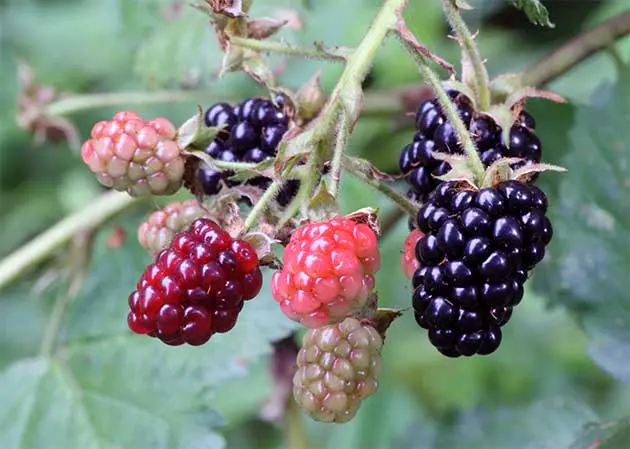
In folk tradition, blackberries are often called “deaf raspberries” or “blueberries.” The bushy plant thrives among shrubs in forests, especially near swamps, along riverbanks, and in other damp spots.
The first-year branches of the blackberry arch and are covered with small thorns. The flowers are white, and the fruits are aggregate black drupes that grow in terminal clusters. The plant blooms from late May into autumn.
People have harvested wild blackberries since ancient times. Cultivation in gardens began in the late 19th century, but large-scale plantations are rare. Blackberries can be enjoyed fresh or dried, and they are used to make infusions and confections.
In folk medicine, the gray blackberry has many uses. Its leaves are astringent, promote sweating, help stop bleeding, relieve pain, and reduce inflammation. The leaves also stimulate peristalsis and have antiseptic properties. The berries and their juice quench thirst and can help reduce fever. Ripe blackberries act as a mild laxative and can promote sweating, while unripe fruits stimulate digestion and act as an astringent.
To treat diarrhea and dysentery, people use the leaves, flowers, and stems of the blackberry; children are given only the berries. For gastrointestinal problems, a tea made from blackberry leaves and calendula (medicinal marigold) in a 1:2 ratio is especially helpful.
Folk knowledge preserves many uses of blackberries for various ailments. Fresh berries provide a rich source of vitamins. An infusion made from the leaves is used to promote wound healing and to treat nervous system and heart conditions. Bees foraging on the plant’s large white flowers produce a clear, light blackberry honey that helps speed recovery from colds, soothes coughs, and reduces fever.
Home cooks make many delicious and nutritious dishes with blackberries. When processing these fruits, preserve as many vitamins as possible. Store jams and raw berry preparations mixed with sugar or honey in the refrigerator.