

Think your faster than you are? Maybe it’s time to pay attention to the quality of your sleep.
A study from the University of California, San Francisco, and Beth Israel Deaconess Medical Center in Boston found that analyzing brain waves recorded during sleep with a machine-learning (ML) model can help identify people at high risk of .
The study showed that when a person’s brain age—estimated from sleep electroencephalography (EEG)—is older than their chronological age, the likelihood of developing dementia goes up.
For every 10-year increase in brain age compared with actual age, the risk of developing dementia rises by almost 40 percent. Conversely, when brain age is younger than chronological age, the dementia risk is lower.
What researchers found about sleep and brain age
The team used a machine-learning model that combines 13 microstructural features of brain waves from EEG recordings. The data came from about 7,000 volunteers aged 40–94 who took part in five studies. They reported these results in a paper published in JAMA Network Open.
None of the participants had dementia at the start of the study. The researchers followed them for roughly 17 years, during which about 1,000 people developed the neurocognitive disorder.
They found that analyzing fine patterns in brain waves with reveals information that traditional methods often miss.
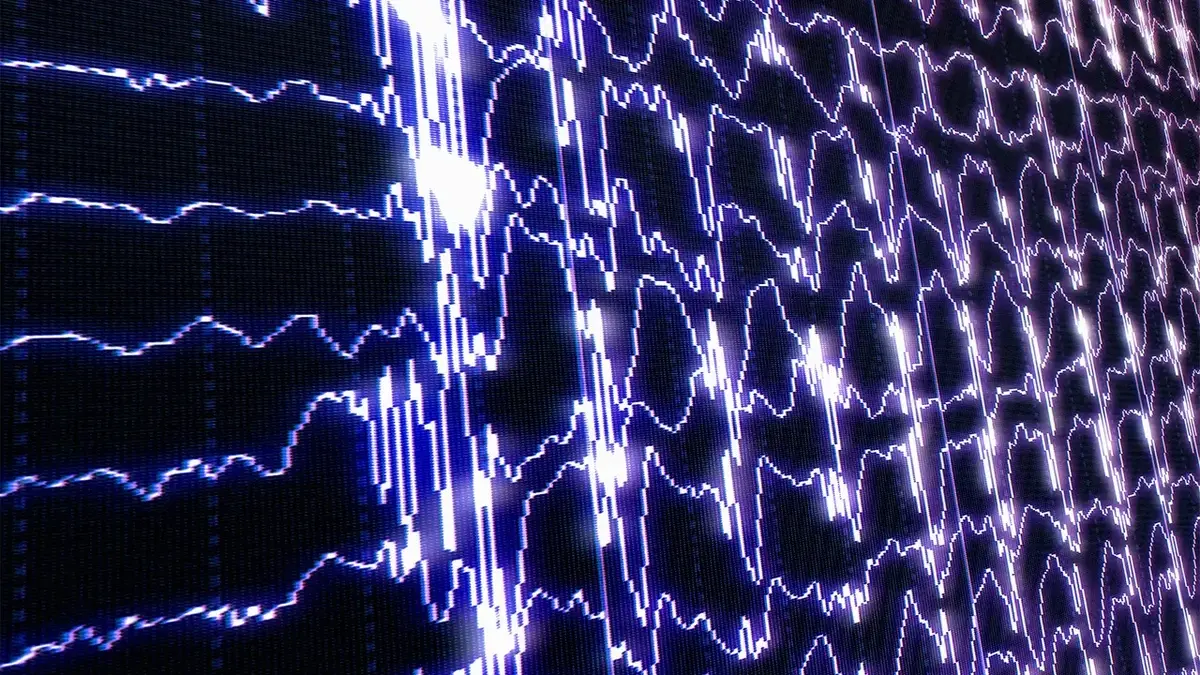
How brain waves relate to cognitive health
The researchers’ results showed that improving sleep quality helps slow brain aging. They focused on several sleep EEG patterns that affect brain aging, especially memory. These include delta waves—the slow, wave-like activity linked to deep sleep—and sleep spindles, short bursts of brain activity associated with memory consolidation.
Sudden large peaks on the EEG correlated with a lower risk of dementia, and that was one of the most striking findings. The team also found that the relationship between an older brain age and the probability of dementia remained significant even after adjusting for factors such as education, smoking, body-mass index, physical activity, other medical conditions, and genetic factors.
Because sleep EEG signals can be collected noninvasively and analyzed with AI, the researchers believe dementia risk could be detected outside clinical settings—for example, with wearable devices.
“Brain age is calculated from brain waves during sleep. And we know that brain activity during sleep gives a measurable picture of how quickly the brain is aging,” said lead author Yue Leng.
“Better management of overall health—such as lowering body-mass index and increasing physical activity to reduce the likelihood of sleep apnea—could have a positive effect on the brain,” said Haoqi Sun, first author of the study and coauthor of the AI model. However, he said there is no magic pill yet to boost brain health.
