
Maintaining the longevity of your wardrobe doesn’t always require a trip to the dry cleaners. With the right techniques, you can refresh and deep-clean specialized items at home.
1. Wet Cleaning Heavy Outerwear
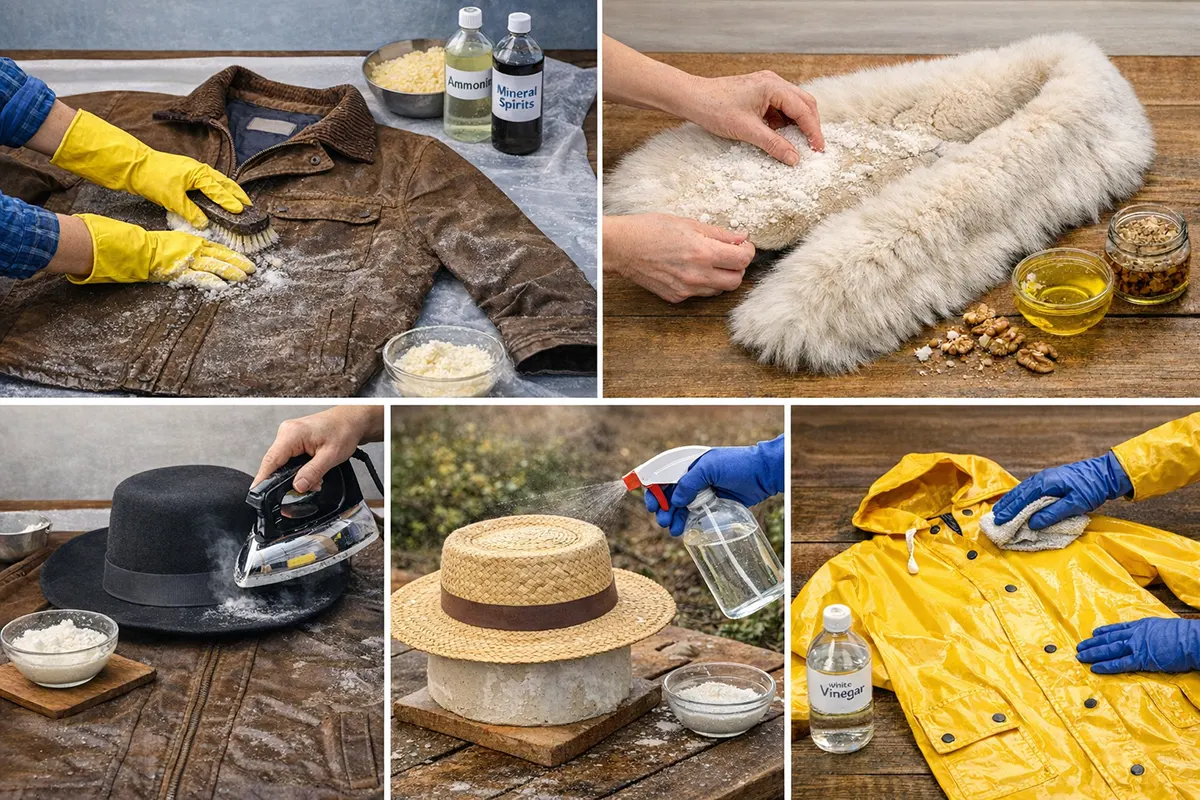
For coats and jackets made of sturdy fabrics, a “wet clean” can lift deep-seated grime.
Preparation: Always brush off loose dust and treat individual spots before starting a full clean. Work on a large, flat surface covered with a waterproof drop cloth.
The Cleaning Solution:
- Grate about 4 oz of a mild bar soap (like Castile soap) into 2 cups of boiling water.
- Once dissolved and cooled to lukewarm, stir in 1 tbsp of household ammonia and 2 cups of high-grade, odorless mineral spirits (a safer, modern alternative to raw gasoline).
- Stir until it forms a consistent paste.
Application: Focus first on high-wear areas like collars, lapels, and pocket edges. Use a stiff-bristle or nylon brush to work the paste into the fabric. If the fabric has a “nap” (like wool or velvet), always brush in the direction of the fibers.
Rinsing & Drying: Wipe away the soapy residue with a clean cloth dampened with warm water. Gently press out excess moisture with a clean towel, then hang the item on a sturdy, padded hanger.
Finishing: Iron while the garment is slightly damp. Use a tailor’s ham (a small, firm cushion) to maintain the shape of the shoulders and chest while pressing.
2. Specialized Fur Care
Fur requires delicate handling to maintain its natural oils and luster.
White Fur: Create a dry-cleaning paste using potato starch and a small amount of odorless mineral spirits. Rub the mixture into the fur, let it dry completely, and then brush it out thoroughly.
Restoring Luster: If fur looks dull, use walnut oil. Crush a few walnut halves in a thin cloth and squeeze until the cloth is saturated with oil. Lightly wipe the oil over the fur; it works for both light and dark shades.
Softening Stiff Pelts: If the leather backing has become brittle, mix one egg yolk, 1 tbsp of petroleum jelly, and 1/2 tsp of glycerin into 2 cups of warm water. Shake well and lightly wipe the inside (skin side) of the fur. Do not soak the fur. Once dry, gently “knead” the leather to restore flexibility.
3. Cleaning and Reshaping Felt Hats
Felt is prone to shrinking, so avoid excessive water.
Spot Cleaning: Use a brush dipped in mineral spirits or a specialized hat-cleaning fluid. For sweat stains, use a small amount of the soapy paste mentioned in the outerwear section.
Reshaping: To help a felt hat keep its form, lightly brush it with a very diluted clear gelatin solution (5%) before ironing it over a hat block or a shaped form.
4. Refreshing and Whitening Straw Hats
Straw hats can be rejuvenated by soaking them in cold water for 10–12 hours without losing their structural integrity.
Whitening Methods:
- Hydrogen Peroxide: Mix 2 tsp of 3% hydrogen peroxide and a few drops of ammonia in a cup of warm water. Apply to the straw and let it dry in direct sunlight to boost the bleaching effect.
- Citric Acid: A 10% solution of citric acid (or lemon juice in a pinch) can lift yellowing. Rinse with cold water afterward.
Maintaining Shape: If you don’t have a professional hat block, use crafting plaster to create a temporary support mold while the hat dries. To protect the straw from future moisture, a very light coat of clear shellac or a 10% gelatin solution will provide a water-resistant finish.
5. Rubberized Raincoats
Modern “slicker”-style or rubber-coated raincoats should never be treated with harsh solvents or sent to a dry cleaner. Solvents break down the rubber coating and cause it to crack or peel, permanently damaging the waterproof layer.
The Process: Lay the coat flat and scrub with a stiff brush using warm, soapy water and a splash of ammonia. This is gentle enough to clean without compromising the coating.
Rinsing & Drying: Rinse thoroughly with cool water and hang to air dry away from direct heat sources, which can also degrade rubber over time.
Pro Tip: To make the color pop, wipe the damp coat with a cloth dipped in distilled white vinegar before it finishes drying. The vinegar cuts through any remaining residue and restores surface sheen.
