
Could the Great Pyramid of Giza be hiding a much older history? A hypothesis from engineer‑researcher Alberto Donini of the University of Bologna has ignited intense debate.
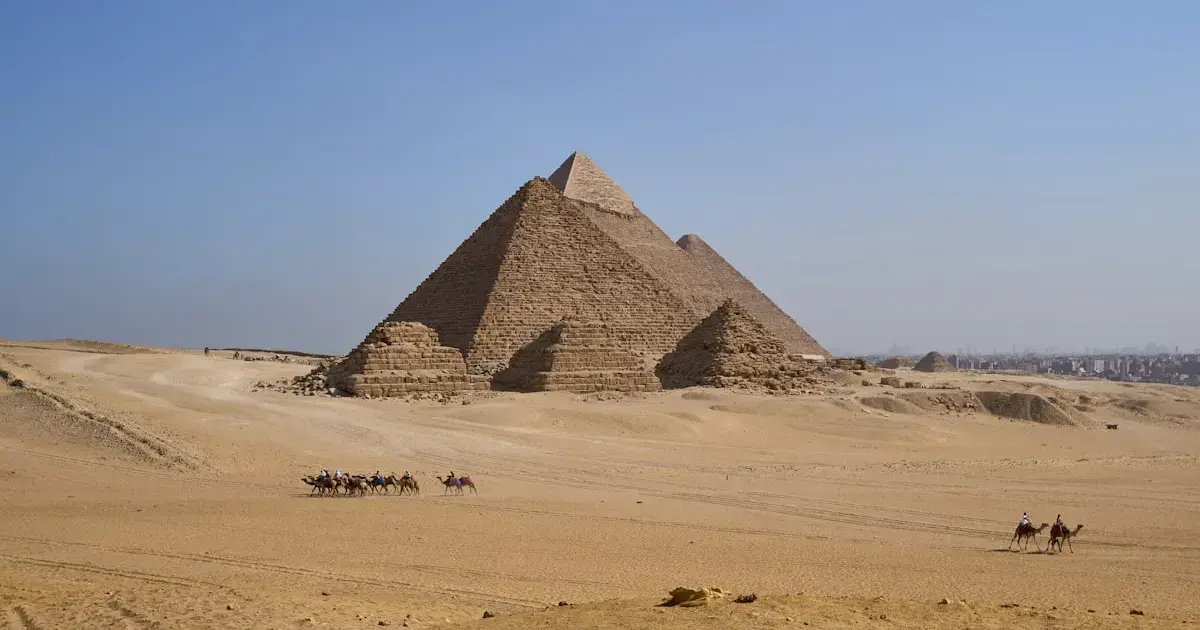
Until now, the consensus has been that the tallest pyramid at Giza—the Great Pyramid, or Pyramid of Khufu (Cheops)—was built around 2560 B.C. The monument now measures 137.8 meters; its original height was about 146.6 meters.
After analyzing erosion patterns on the stones, Donini argues the Great Pyramid could be thousands of years older than that.
What led the researcher to this conclusion?
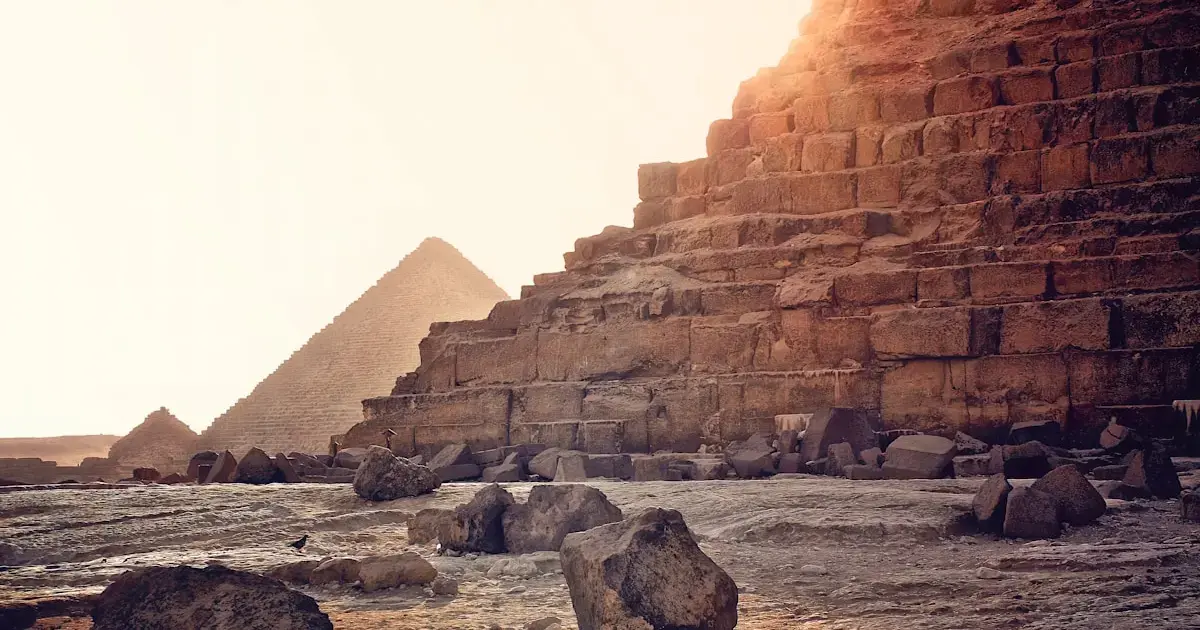
The massive blocks we see today were once covered by smooth limestone casing stones that gave the pyramid a shiny exterior. Over centuries those casings were removed and repurposed (some material was taken to Cairo in the early 14th century). Once the casing was gone, blocks that had been exposed to the elements for hundreds of years became visible. Meanwhile, blocks at the pyramid’s core have been exposed since the monument’s construction, IFLScience reports.
Donini says he “measured the erosion on the surfaces of the blocks that were once covered by casing and compared it to the erosion of neighboring stones that had been exposed to atmospheric factors since the monument’s construction.”
By studying signs of weathering and applying a statistical model, Donini concluded there is a 68.2% probability that the Great Pyramid was built between 8954 B.C. and 36,878 B.C., with a mean estimate of about 22,916 B.C.
Donini suggests Khufu may have restored the Great Pyramid and later claimed credit for its construction. He proposes that “around 20,000 B.C., there existed a civilization in Egypt capable of constructing at least the Pyramid of Khufu.”
Donini said the results are approximate and the study has many limitations.
While the findings are available on ResearchGate, they have not yet undergone peer review.

The scientific community is skeptical of the hypothesis
Critics point out that Donini’s method assumes weathering happened at a steady rate, while local conditions around the pyramids have changed over millennia. Surfaces could have been buried in sand for long stretches, protecting them from some forms of erosion. Increased tourism and human activity have also accelerated damage to the stones.
The new timeline conflicts sharply with results from multiple established dating methods.
“First and foremost, we date the pyramids based on their role in the development of Egyptian architecture and material culture over 3,000 years. Therefore, we are not dealing with just one source of factual knowledge about Giza. We are dealing with the entirety of Egyptology and Egyptian archaeology,” said Egyptologist and archaeologist Mark Lehner.
Lehner pointed to pottery as an example. The pottery found at Giza matches pottery from the time of Khufu, Khafre, and Menkaure, who built the pyramids during the Fourth Dynasty. Experts have tracked changes in pottery styles across a 3,000-year span.
Radiocarbon dating of materials recovered from the pyramids has also supported the conventional timeline.
Photo: Unsplash
