
 For three centuries, the comet has been associated with British astronomer Edmond Halley (1656–1742), who first calculated its periodic return to Earth. It was named in his honor. But a new interdisciplinary study from Leiden University in the Netherlands argues the credit actually belongs to Aylmer, a Benedictine monk and chronicler from 11th-century Malmesbury. The study’s authors conclude Aylmer recognized the comet’s cycle some 600 years before Halley.
Halley’s Comet is often called the most famous comet in human history because it returns roughly every 75–76 years, letting many people see it during their lifetimes. It’s the only short-period comet easily visible to the naked eye, and its appearances have often been linked to major events and omens.
What Did the Scientists Discover?
The research was led by astrophysicist Simon Portegies Zwart and historian Bob Zwart Lewis. They found that Aylmer linked two appearances of the same comet in 989 and 1066—centuries before Halley.
Key historical information about this comes from William of Malmesbury, a 12th-century historian who documented English history after the Norman Conquest. In his chronicles, he described how an elderly monk named Aylmer (also known as Ethelmaer) observed a bright comet in 1066 and recognized it as the same object he had seen decades earlier in 989.
In those times, people often interpreted celestial phenomena as divine signs. Aylmer warned that the comet’s return foretold political upheaval.
Despite its significance, historians largely ignored the observation for centuries. The new study concludes that Aylmer’s note is the earliest known detection of a periodic comet, predating Halley by several centuries.
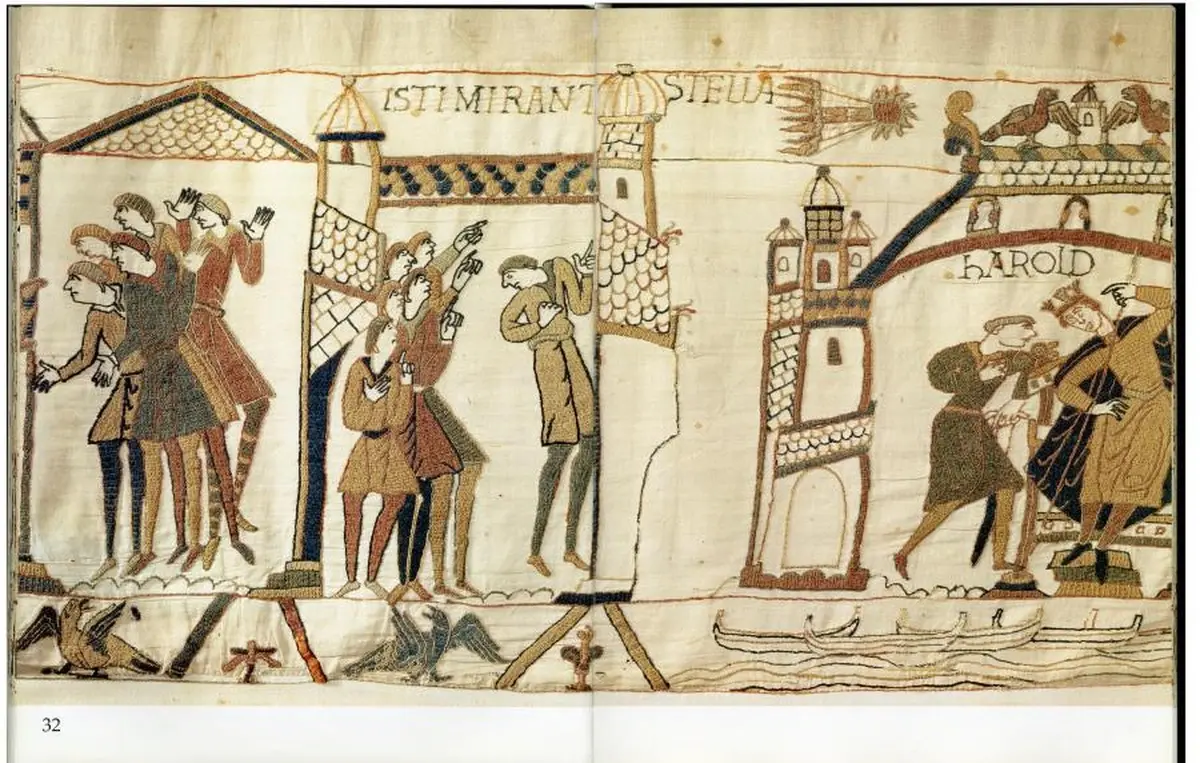
A fragment of the Bayeux tapestry, where people point to what we now know as Halley’s Comet.
The Latin text translates to ‘These (people) admire the star.’
Halley and the Famous Comet
Edmond Halley is one of Britain’s most distinguished astronomers, remembered for demonstrating that the bright comets seen in 1531, 1607, and 1682 were the same object. His prediction that the comet would return in 1758—after his death—was later confirmed. Thus, his scientific legacy was acknowledged, and the comet was named 1P/Halley.
Halley’s calculations were a breakthrough in astronomy. However, the researchers behind the new study argue that people had a conceptual understanding of the comet’s periodicity long before Halley—despite a lack of mathematical tools to formalize it.
The comet’s appearance in 1066 became one of the most widely recorded astronomical events of the Middle Ages. Chinese astronomers observed it for more than two months and noted its peak brightness on April 22, 1066. In Europe, observers in the British Isles first saw it on April 24, shortly before the Norman Conquest, according to Arkeonews.
The comet is also known for its depiction on the Bayeux Tapestry, where it appears as a fearsome omen during the reign of King Harold II Godwinson. He ruled England for only nine months before his death at the Battle of Hastings.
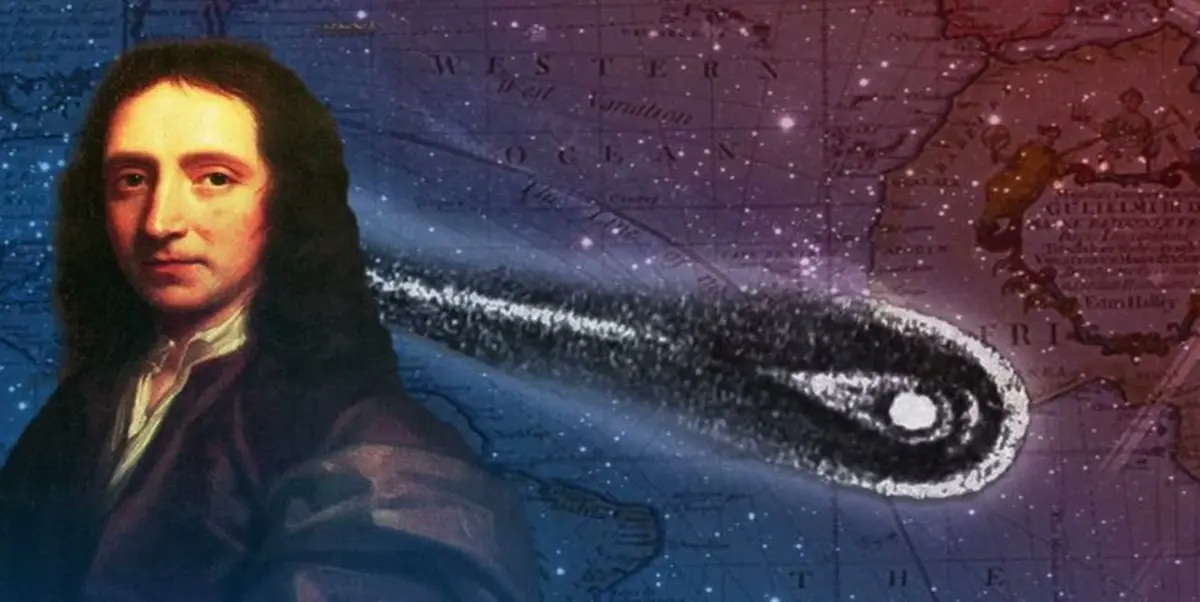
British astronomer Edmond Halley
Should the Comet Be Renamed?
Given Aylmer’s recognition of the comet’s cycle some 600 years earlier than previously credited, some astronomers argue that the current name doesn’t reflect the true history of its discovery. But there is no serious discussion yet within the global scientific community about officially renaming the comet.
Still, many hope that Aylmer of Malmesbury will eventually receive recognition as one of the first thinkers to perceive the comet’s long-term rhythm centuries before telescopes made such observations commonplace.
Photo: Unsplash