
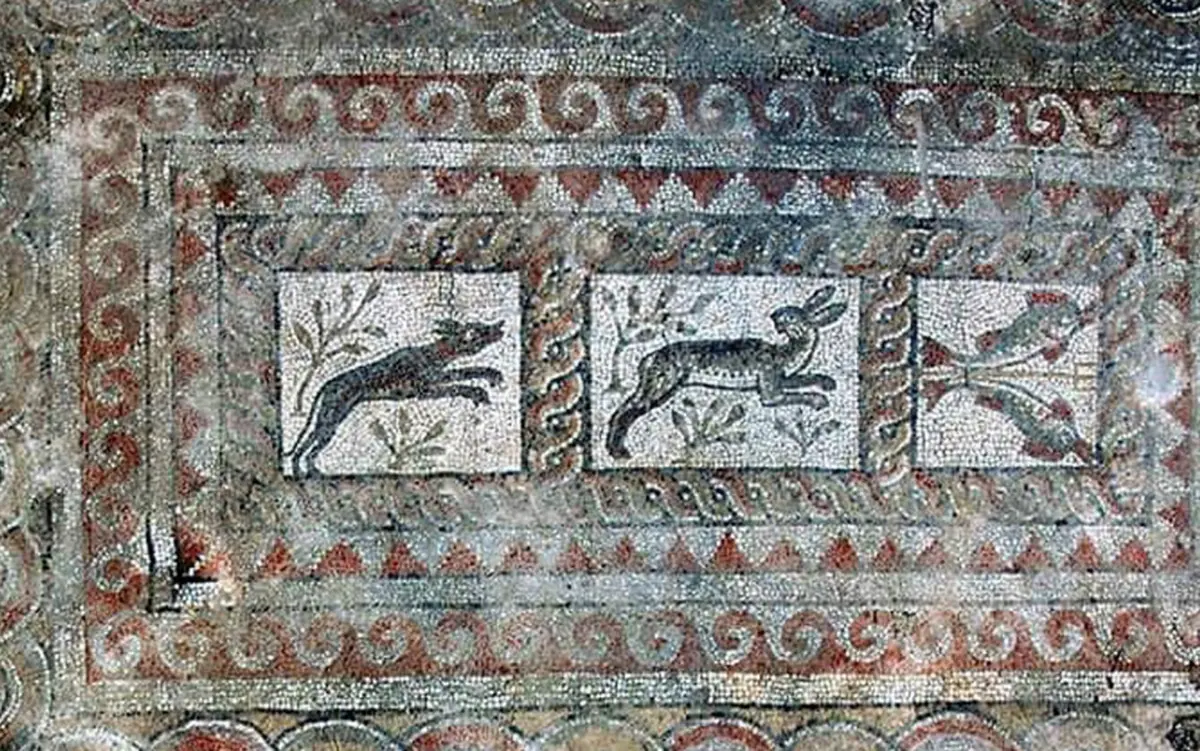
The discovery has given scholars a new window into the cultural and spiritual life of the city once known as Antipatreia.
Berat (often called the “white city”) sprawls across southern Albania. Most people know it for its Ottoman-era architecture and its status as a UNESCO World Heritage Site. Archaeological finds in the city and its surroundings show the area was settled as far back as the Bronze Age. In the 3rd century BCE the settlement was renamed Antipatreia by the Macedonian king Cassander in honor of his father.
Because Berat was repeatedly destroyed and rebuilt over the centuries — from Roman conquests to Ottoman rule — many ancient layers stayed hidden beneath later structures. Historians have had only fragmentary information about Berat’s Roman and late-antique periods.
A recent discovery of two mosaic floors has changed that picture dramatically, Arkeonews reports.
Archaeologists uncovered the first during repair work inside Berat’s medieval castle. Workers installing a water-supply system unexpectedly found a mosaic floor buried 1.8 meters below the modern surface. The fragment of lavish decoration belonged to a basilica from the late antique period, which largely overlaps with the Early Christian era (1st–6th centuries CE).
Researchers came across the second mosaic during drainage work in the lower part of the city, partially beneath a mosque’s foundation. Although archaeologists exposed only a small fragment, the design suggested the mosaic belonged to an Early Christian religious building.
The finds confirmed that during the late antique period Antipatreia had multiple churches and therefore an active Christian community.
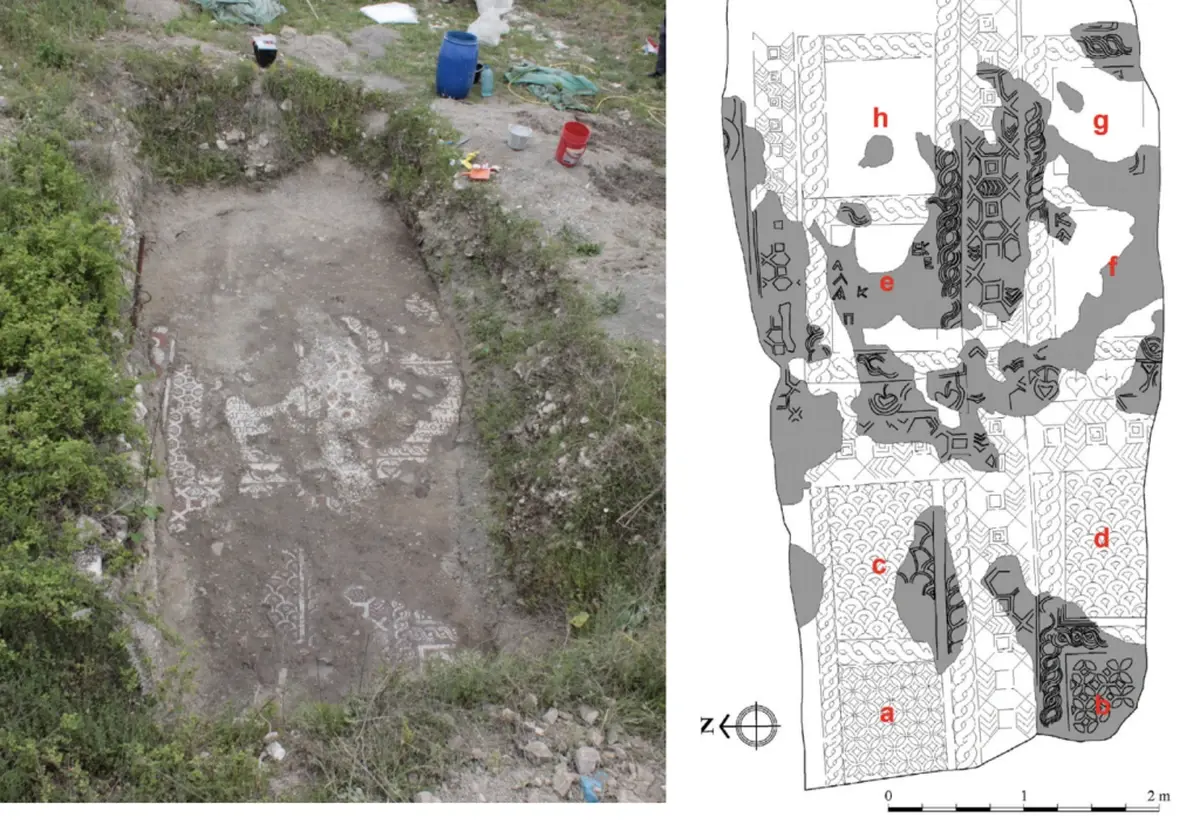
What makes Berat’s mosaics so striking
The castle mosaic especially impressed scholars. It is a polychrome floor decoration measuring roughly 6 by 3.3 meters. Craftsmen made it from limestone and 1–1.5-centimeter ceramic tesserae in white, red, pink, purple, gray, and black.
The composition is divided into panels framed by geometric patterns. Among the most notable decorative elements are intersecting circles that form lattice-like geometric motifs and decorative bands that imitate ivy scrolls.
Some panels contain Greek inscriptions, likely the names of donors or religious dedications.
The second mosaic is smaller but no less important. It features geometric patterns and fragments of Greek text. The word “Mother of God” is clearly visible.
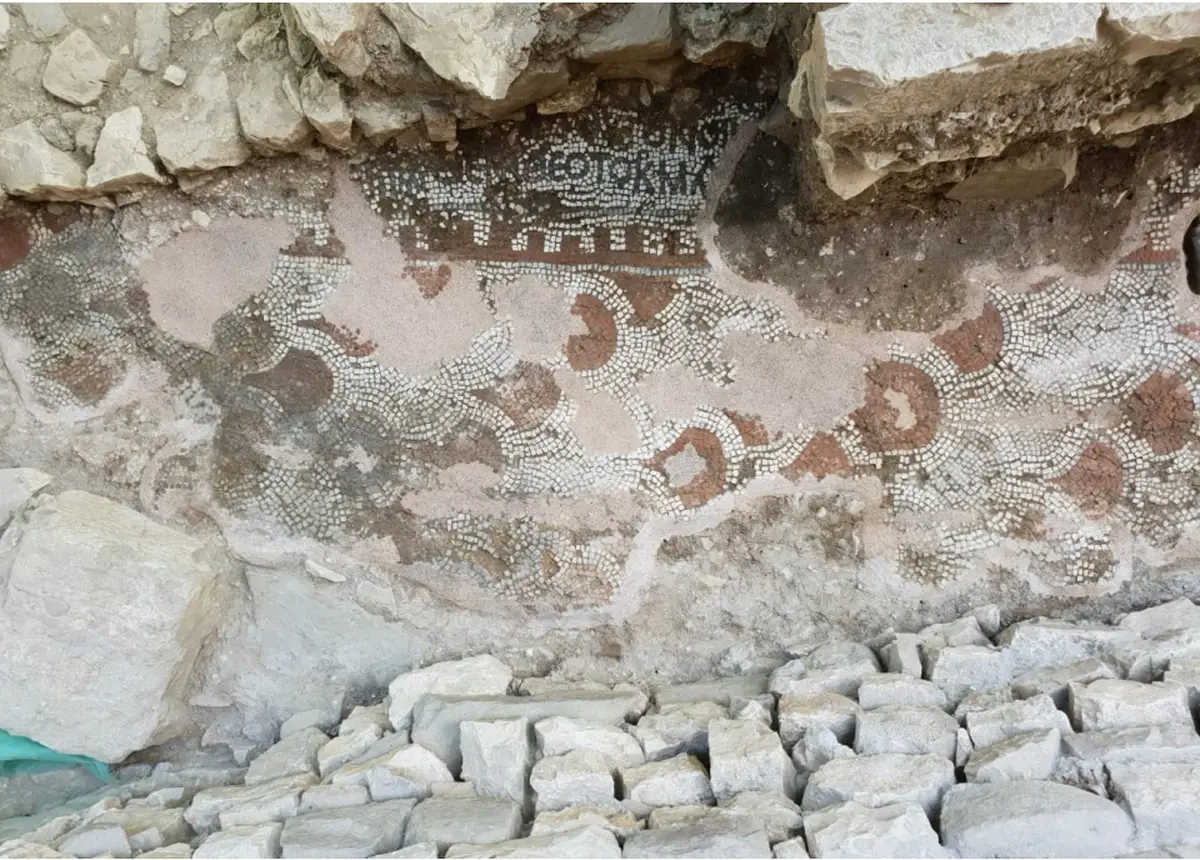
How researchers dated the mosaics
Researchers say certain clues point to a late 5th–early 6th century CE date for these floors.
First, among the found above the mosaic, one matches the reign of Emperor Justin II (565–578). Second, stylistic comparisons with mosaics at other Balkan sites point to shared artistic traditions from the same period.
These and other details indicate the mosaics belong to the late antique era, a time when Christianity was spreading rapidly across the Balkans.
Researchers think the artifacts were probably made by local craftsmen. Skilled artisans moved between Balkan cities and decorated churches across the region.
These two mosaics are not just beautiful artworks; they provide archaeological evidence of Berat’s important role in the development of early Christianity. Until recently, scholars had no proof the city was a significant religious center in that era.
Despite their importance, both mosaics remain only partially excavated. One of them has even been temporarily reburied under a protective layer of sand while researchers plan further study.