
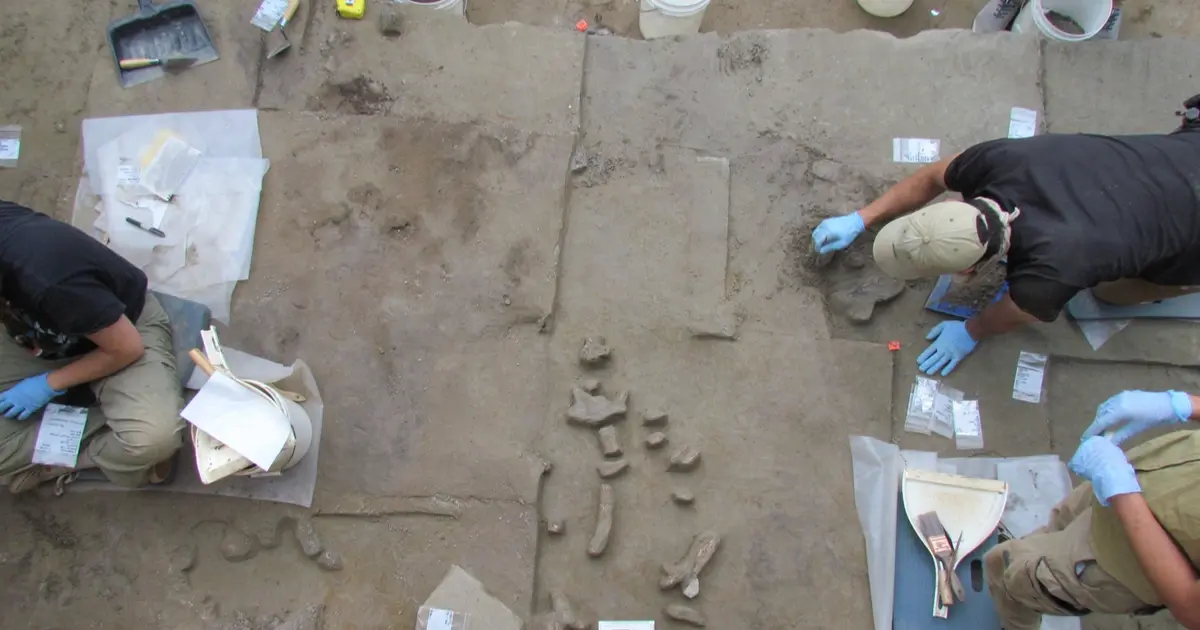
 According to a new study, tools and other uncovered by archaeologists during excavations in Alaska shed light on how humans first arrived in America.
The excavated evidence of prehistoric migration is approximately 600 years older than similar artifacts from the Clovis culture, whose members settled further south, including in what is now New Mexico.
These similarities led researchers to believe that the people who owned the artifacts from Alaska were ancestors of the Clovis culture. This, in turn, suggests that the Clovis ancestors may have crossed a land bridge that once connected Asia to North America, rather than following a coastal route as previously thought.
With stone artifacts dating back about 13,400 years, archaeologists spent much of the 20th century assuming that the prehistoric Clovis culture was the first group to migrate from Asia to America. However, research over the past few decades has shown that other people made this long journey before them.
More Questions Arise
Yet, it remained unclear how the predecessors of the Clovis culture reached the New World. For a long time, it was believed that they arrived in North America via the Bering land bridge, which formed due to lower sea levels during the last Ice Age (from 2.6 million to 11,700 years ago). These migrants may have traversed this vast territory and then moved south through an ice-free corridor—where the Clovis culture later developed.
Other researchers have questioned whether the corridor in present-day Canada was truly ice-free when the Clovis predecessors crossed it. Consequently, a theory emerged suggesting that these people entered the New World through different routes.
Answers Are Forthcoming
Ultimately, scientists analyzed archaeological findings from the Tanana Valley in central Alaska. Excavations there have been ongoing for over four decades, yielding a wealth of artifacts belonging to ancient Alaskan hunters of woolly mammoths.
Researchers focused on recent discoveries made at the Holtzman site in the heart of the Tanana Valley. Notably, they examined artifacts dating back 14,000 years, such as a hammer used for making stone tools and an almost complete . Scientists concluded that this area may be one of the oldest human settlement sites in America.
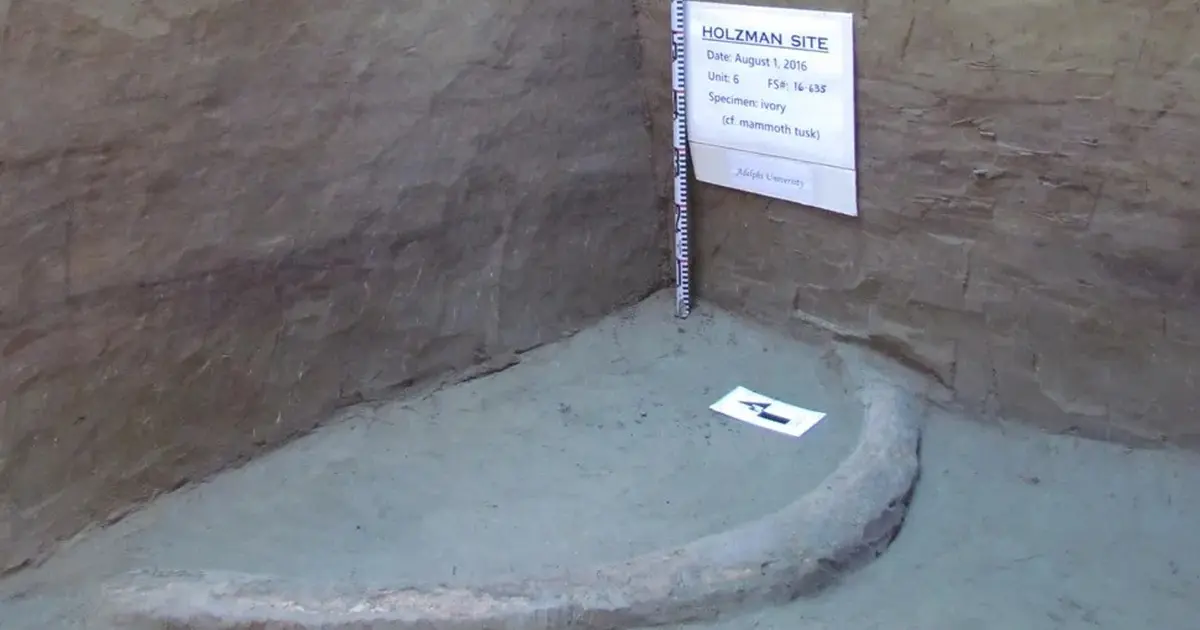
According to excavation participants, the artifacts have been well-preserved in Alaska’s harsh climate. “For most of the year, they remained frozen. We also discovered ancient plant DNA and even a fragment of bison wool dating back 13,600 years. Such a level of preservation of organic material is quite rare,” said co-author of the study, Katherine Krasinski, an archaeologist from Adelphi University in New York, in an interview with Live Science.
Her colleague, Brian Wigle, added, “New data from Alaska confirms that the first people arrived in central North America via an inland route through an ice-free corridor.”
In other words, the first migrants initially crossed the Bering land bridge from Asia to Alaska and then headed south through the ice-free corridor.
The findings of the study were published in the journal Quaternary International.