
Fashion lovers had suspected this for a long time. People who keep up with trends usually don’t rush to throw out beloved pieces; when the time comes, they pull them back out of their closets.
Meanwhile, fashion experts have long pointed to the “20-year rule” — the idea that clothing trends come back roughly every two decades.
Now, scientists have built and analyzed the most comprehensive fashion database to date and found mathematical patterns behind the fashion cycle. This isn’t just observation or guesswork — it’s a mathematical pattern.
How math proved fashion returns every 20 years
In their study, the team developed a mathematical model that shows fashion trends change roughly every 20 years.
After analyzing about 37,000 images spanning from 1869 to the present, the mathematicians found that a given style gains popularity, loses popularity, and then experiences a revival.
Beyond confirming common ideas about fashion’s life cycle, the team provided insights for sociologists and marketers — the results help explain how new ideas spread through society.
Lead author Emma Zajdela recently presented these results at the American Physical Society (APS) Global Summit in Denver. “As far as we know, this is the first time anyone has built such a large and precise database of fashion metrics spanning more than a century,” Zajdela said.
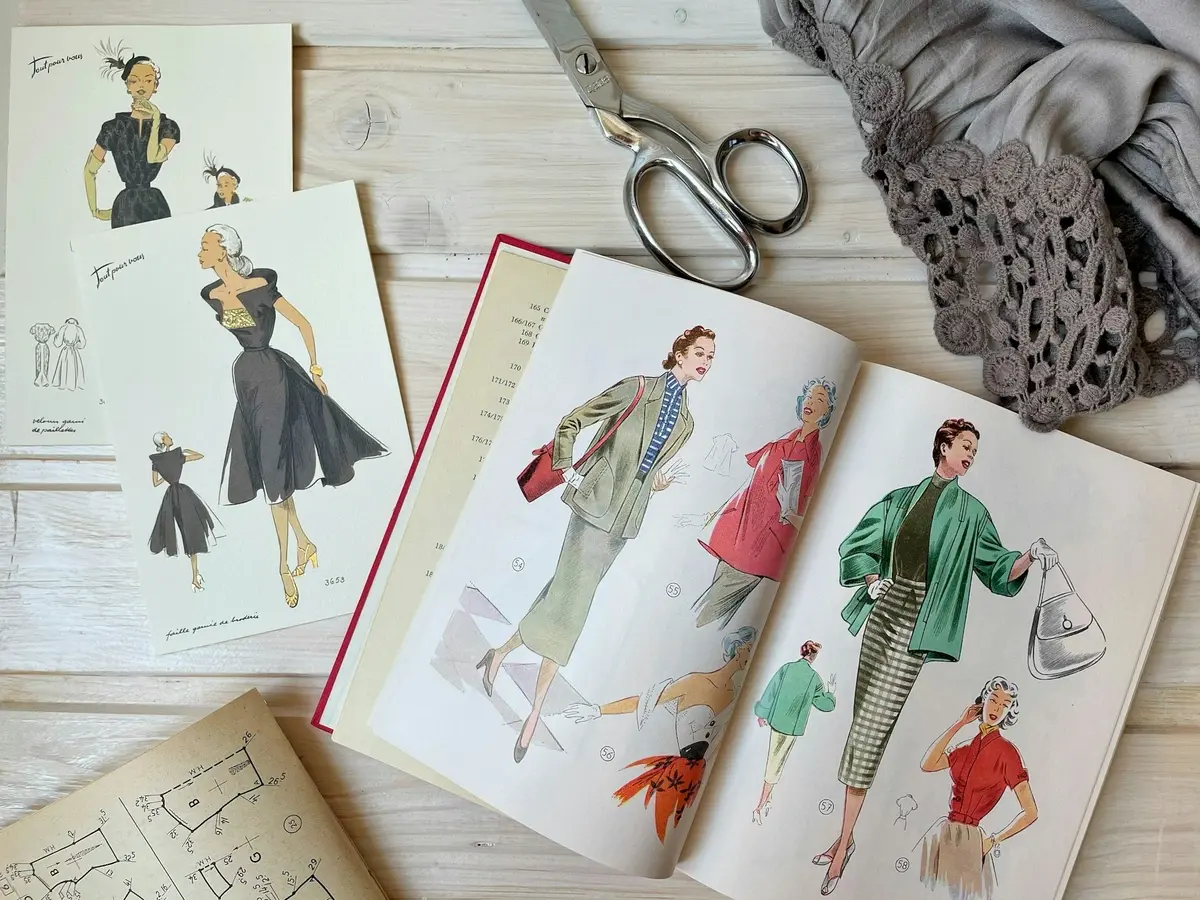
At the summit, she said her team assembled one of the most complete quantitative fashion datasets. Using materials from the Commercial Pattern Archive at the University of Rhode Island and records from numerous fashion shows, the researchers studied tens of thousands of garments.
Using mathematical analysis tools, the scientists measured key dress features — hem length, neckline shape, and the placement of the waistline. They then converted dress sketches into numerical data that could be measured and tracked. To analyze the data, the researchers built a mathematical model based on the tension between the desire to stand out and the desire to conform to accepted standards. Northwestern says designers don’t push trends so far that clothes become unwearable.
When fashion breaks the 20-year cycle
The team uncovered a striking pattern. Although fashion changes gradually over time, the rises and falls of styles follow a repeating wave that reaches a peak about every two decades. One of the clearest patterns involves skirt hem length. Over the past century, skirt length repeatedly shortened and then lengthened — from the short flapper dresses of the 1920s to longer, more conservative styles in the 1950s, and then to the miniskirts of the late 1960s.
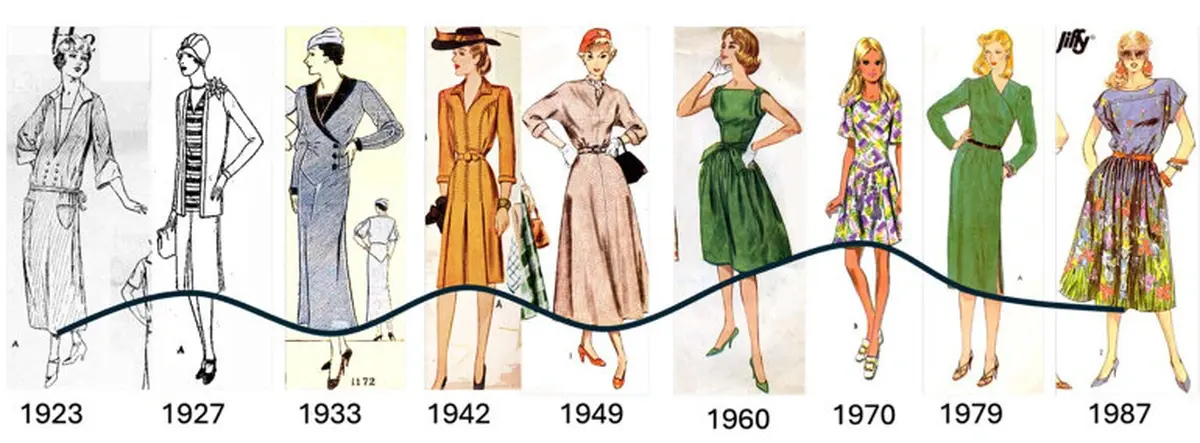
But in recent decades that pattern has become less clear. Starting in the 1980s, multiple skirt lengths were popular at the same time, and all those variations found an audience. That suggests that, rather than one dominant trend, several trends now coexist and reflect greater diversity in fashion.
“There used to be two options — short dresses and long dresses. In recent years the choices have broadened a lot: very short dresses, floor-length gowns, and midi dresses have appeared. So we see increased variety and less uniformity,” Zajdela said.
Time will tell whether the 20-year rule remains relevant. For now, don’t be in a hurry to toss that old favorite. You might end up apologizing to it later. Holding onto garments is good not just for your wardrobe but for the environment.