
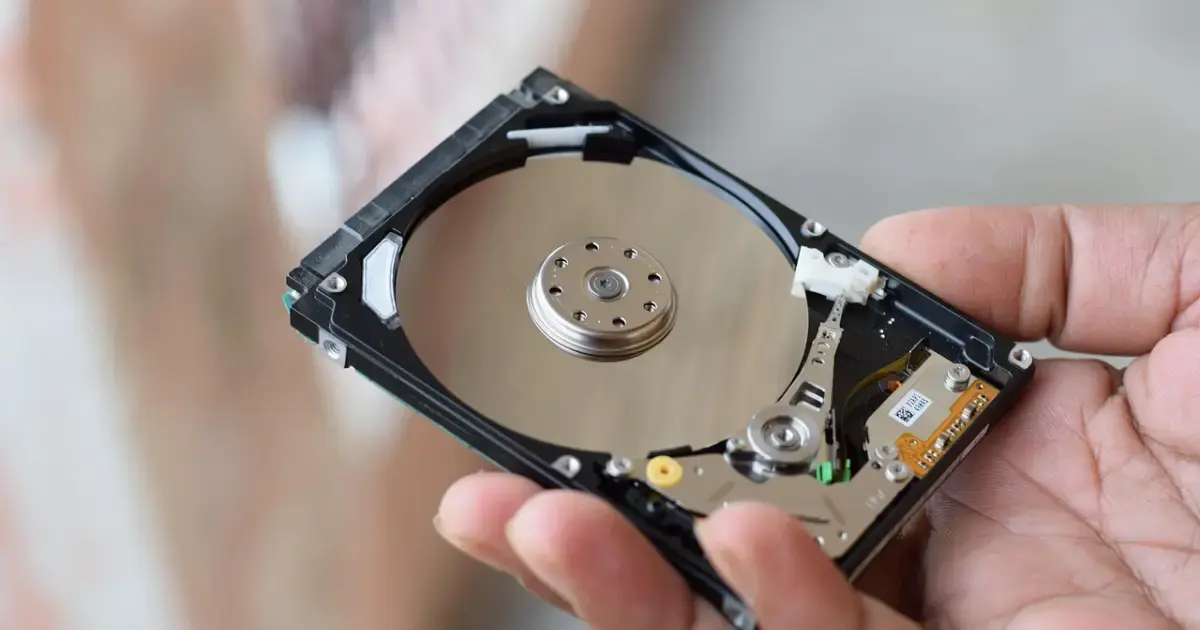
 used stone and parchment to preserve information. Modern humans have invented floppy disks, CDs, and flash drives for the same purpose. However, all known data storage mediums have a limited lifespan.
But now, scientists have developed a new method for data storage: laser engraving on glass.
What Do We Know About the Invention?
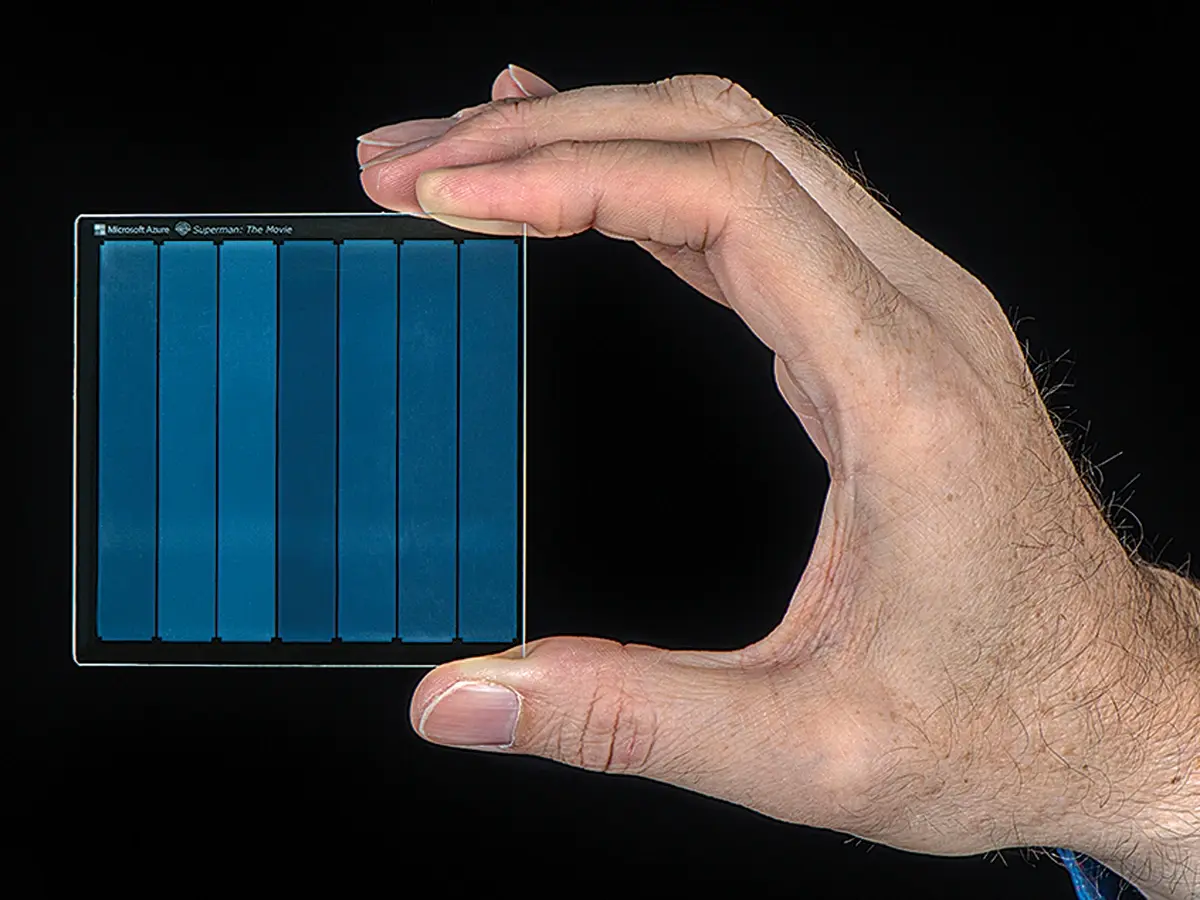
Developed by experts at Microsoft in Cambridge, these glass storage mediums could last for millennia. According to Richard Black, director of the Silica project, they possess “incredible strength and remarkable durability.”
Once the data is securely stored within the glass, it remains intact for an extended period, he added. In an article published by the journal Nature, Black and his colleagues described how the medium works. Data is transformed into bits, which are then encoded as tiny deformations, or voxels, within a piece of glass using a femtosecond laser. Black noted that several hundred layers of such voxels can be created in a glass section just 2 millimeters thick.
To create each voxel, the system uses a single laser pulse, making it highly efficient. By splitting the laser into four independent beams that record data simultaneously, it can write 65.9 million bits per second.
As noted in a supporting article by Chinese researchers, “a piece of melted quartz glass measuring 12 square centimeters and 2 millimeters thick can store 4.84 TB of data.” That’s roughly equivalent to the information contained in two million printed books.
The team also developed a method for creating voxels in borosilicate glass, a material commonly used in Pyrex products. “It’s significantly more accessible, much cheaper, and easier to produce,” Black said.
After the voxels are recorded, they can be read by scanning the glass with a camera under an automated microscope. The resulting images are then processed and decoded using a machine learning system, as reported by The Guardian.
“All stages, including writing, reading, and decoding, are fully automated, ensuring reliable operation with minimal effort,” the researchers wrote.
They emphasized that the laser-created voxels can be stored at room temperature for over 10,000 years.
However, according to Black, this technology is unlikely to find use in small offices. The system is designed for large cloud companies.
Expert Opinion
Melissa Terras, a professor of digital cultural heritage at the University of Edinburgh who was not involved in the research, praised Black’s team for this achievement.
“Any method of data storage that allows for long-term management of digital information is of great interest, especially if the medium is inert and requires no special maintenance,” Professor Terras said.
However, it remains unclear whether the instructions and for reading data from glass will be accessible to future generations. There is also the issue that significant investments will be needed for the widespread implementation of this invention, the expert noted.
Photo: pixabay.com