
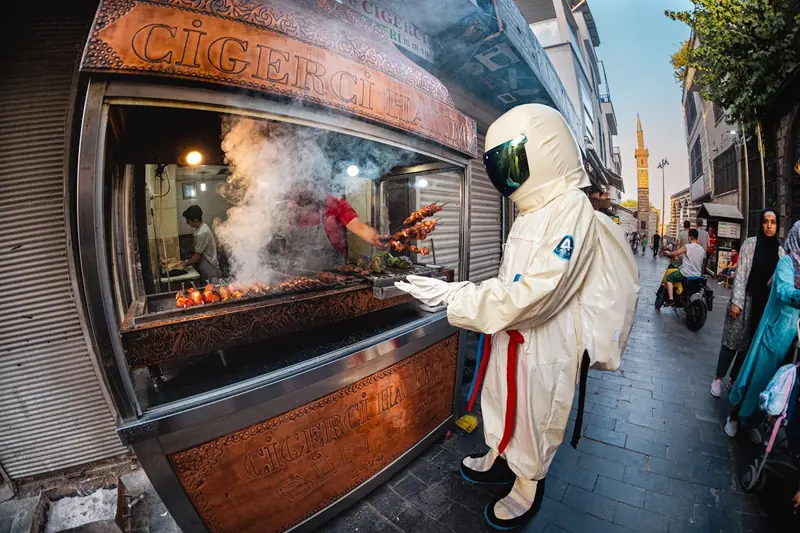
In space, astronauts face many challenges. Some are life-threatening; others are just odd. One of the odder ones is how food tastes. Astronauts often describe meals eaten in microgravity as bland and unappetizing.
A team of dietitians from the Royal Melbourne Institute of Technology (RMIT, Australia) and International Flavors & Fragrances (IFF, Netherlands) investigated what might be behind these taste changes in microgravity. The researchers say the issue matters because some astronauts struggle to eat enough calories.
How the Research Was Conducted
Previous studies suggested the problem starts with microgravity shifting bodily fluids, which causes facial and nasal swelling. That swelling usually eased as the body adjusted to the new environment. But some astronauts reported that their food-related issues stuck around even after the swelling went down.
Grace Louk from RMIT, who led the study, and her colleagues also looked at how astronauts’ mental state changes their perception of smells and tastes. The team hypothesized that stress could be a factor in altered perception of familiar foods.
For the study, the researchers simulated conditions aboard the International Space Station (ISS) and placed participants in that environment. The simulated setting included objects to mimic floating in microgravity, “devices that created a sense of chaos and confinement,” as well as background noise similar to the constant loud sounds on the ISS.
The researchers gave volunteers samples of three scents: vanilla, almond, and lemon. Participants rated the intensity of each aroma on a scale from 1 to 5, first in a normal room and then in the simulated ISS environment.
Volunteers reported that lemon smelled about the same in both environments. The almond and vanilla scents, however, seemed stronger in the simulated ISS conditions. The team suspected a key factor was benzaldehyde—a volatile aromatic compound present in almond and vanilla but absent in lemon.
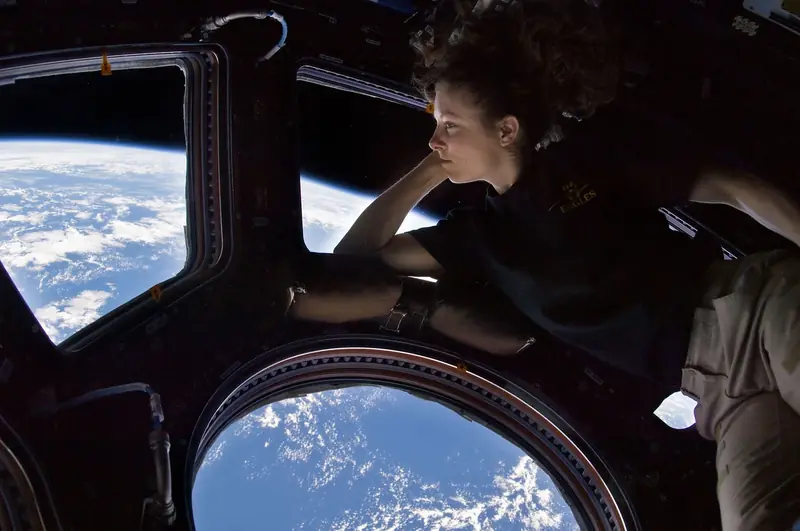
What the Scientists Concluded
The study doesn’t fully explain why taste and smell remain dulled after swelling subsides, but it supports the idea that odor perception depends on context. “It’s possible that some volatile compounds with common scent profiles (like sweet) are more likely to be influenced by context compared to others,” the authors said as they considered ways to mitigate the problem.
If that’s true, identifying compounds that keep their appealing taste and aroma in ISS conditions—or that even become more appealing—could help create personalized nutrition plans for astronauts.
The team also suggests that isolation and the resulting stress may drive changes in food preferences.
The findings could have applications on Earth. “This research could help personalize the diets of people in social isolation (particularly in nursing homes) and improve their nutrition,” said co-author Julia Lou.
The study’s findings were published in the International Journal of Food Science + Technology.