
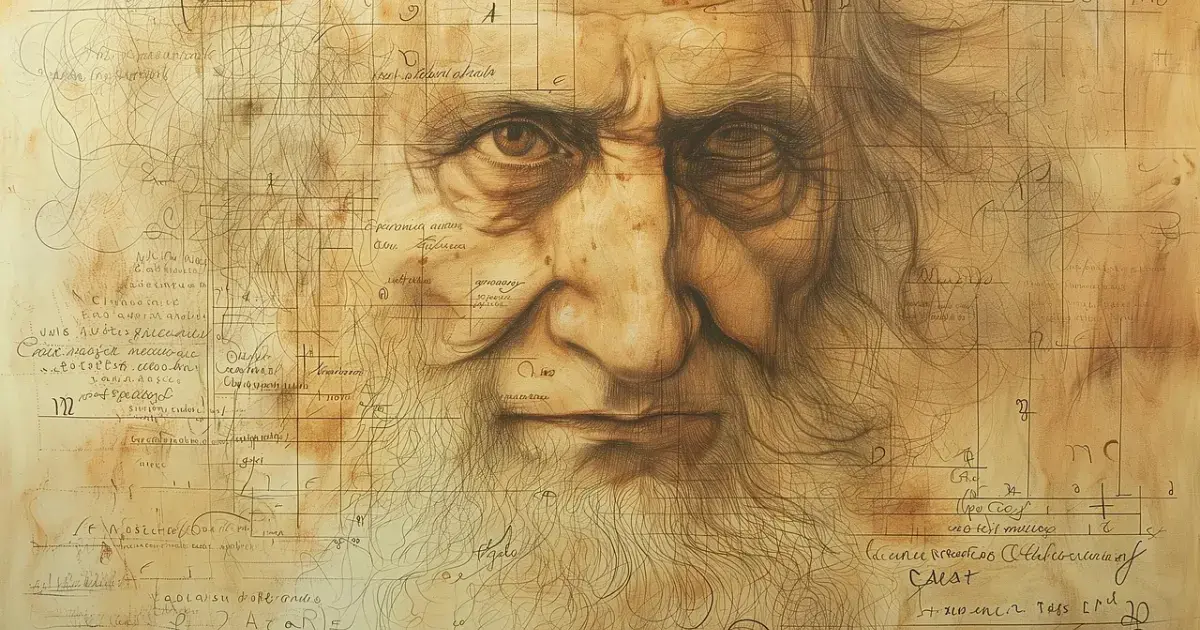
 An international team from the genome project, led by scientists from the University of Florence, has brought together experts from various fields, including forensics. The researchers announced that they successfully extracted DNA from the renowned artist, scientist, and inventor’s drawing titled “The Holy Infant.”
While the results are not definitive and require further validation, the DNA collection method used has already been recognized as a breakthrough in the study of art from past eras.
What Did the Scientists Report?
Thus, researchers from leading scientific institutions around the world may have extracted DNA from Leonardo da Vinci’s drawing and other objects he touched during his lifetime. If this is indeed the case, the discovery will mark a significant milestone in a decade-long effort to uncover the genome of this legendary figure.
Cultural heritage objects, such as drawings, manuscripts, or archival documents, are not only sources of historical information; they may also contain biological data.
It is known that Leonardo da Vinci painted using both brushes and his fingers. During the creative process, some of his DNA could have transferred onto the canvas and possibly remained preserved to this day. Researchers believe this data is crucial in light of artomics—a new field that reveals more information about the artist, his environment, and the history of his works through cutting-edge scientific methods.
Artworks are generally extremely fragile, making them difficult to study without invasive methods that could damage the artifacts. Meanwhile, traces of DNA on any object are often contaminated during storage by owners or even during preparation for laboratory analysis. This complicates the task of separating biological signals from biological noise, as reported by IFLScience.
However, the project team found a way to overcome these obstacles by developing a new, minimally invasive sampling method for extracting DNA from cultural heritage objects. In a preprint article about the research, the scientists claim they potentially extracted samples of Leonardo da Vinci’s DNA from the drawing “The Holy Infant,” created between 1472 and 1476.
In the 2000s, this work was acquired by the late art dealer Fred Klein. Most experts attribute this piece to the Great Leonardo due to the characteristic left-handed shading typical of the artist. However, not all specialists agree, suggesting that the drawing may have been created by one of his students.
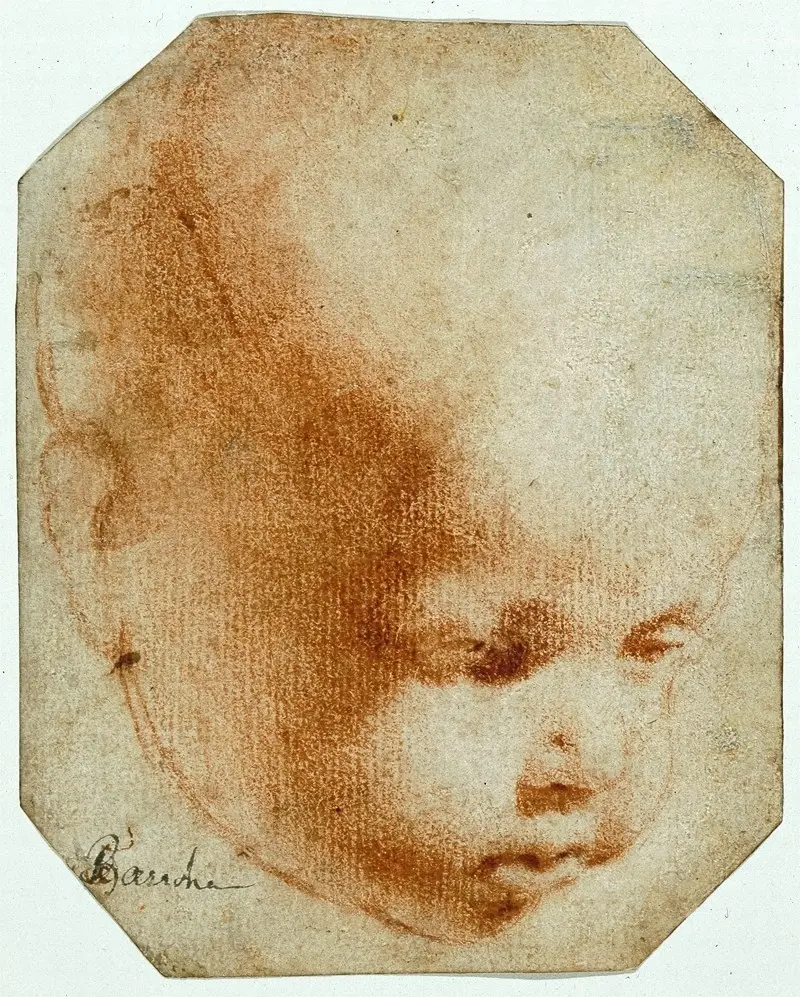
Using swabs similar to those used for COVID-19 testing, researchers collected DNA samples from the drawing. Traces were also extracted from a letter that was likely written in the 1400s by Leonardo da Vinci’s cousin.
Y-chromosome sequencing of the DNA collected from the drawing and the letter showed that the samples share a common ancestor in Tuscany—the region of Italy where the artist was born. Therefore, it is possible that the DNA indeed belonged to him. However, this conclusion is not definitive.
Unfortunately, confirming this fact is challenging, as the artist’s grave was destroyed during the French Revolution, making it impossible to locate his remains. Moreover, Leonardo da Vinci had no direct descendants.
The team also extracted DNA belonging to a mixture of fungi, bacteria, plants, and viruses that have accumulated on the drawing over the centuries. Data about these organisms is certainly valuable. They can shed light on the nature of the materials the artist used while working on “The Holy Infant.” Additionally, this information can help better understand how the artwork has been preserved, conserved, and interacted with various people over time.
Photo: pexels.com
