
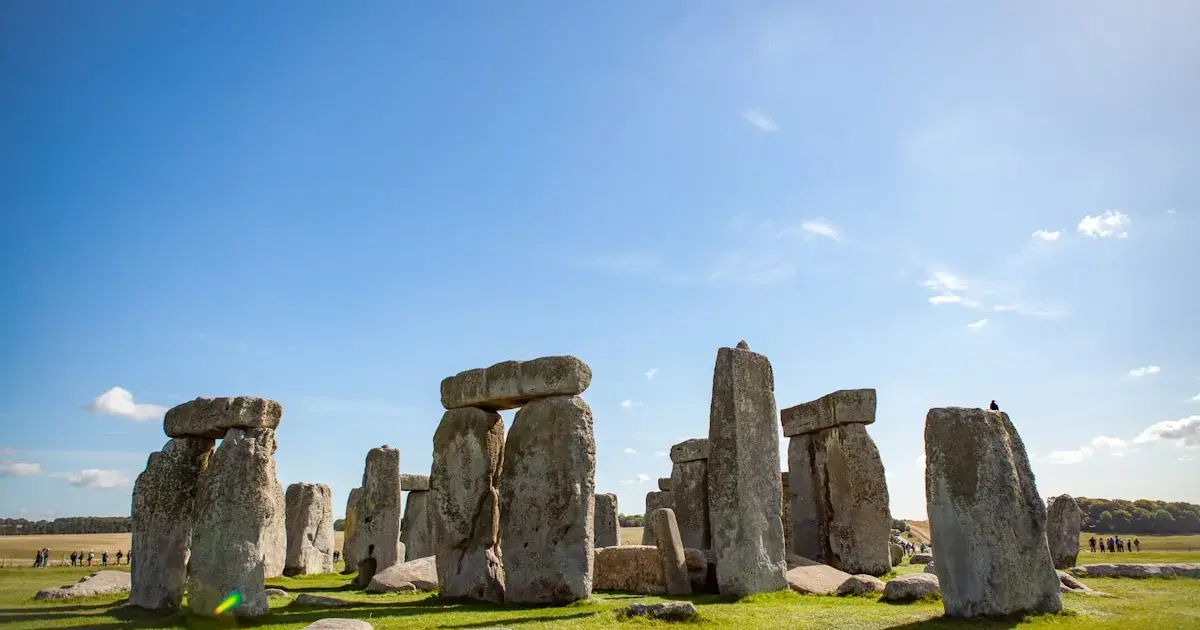
 Around 20 enormous pits, arranged in a circular formation, were dug during the late Neolithic period and are more than 4,000 years old.
According to a team of archaeologists, these mysterious pits, dug by Neolithic people near Durrington, were originally excavated and then filled back in. Despite that, archaeologists were able to discover and study the structure using a combination of cutting-edge scientific methods.
The pits ring the ancient Durrington Walls and the Woodhenge site. The pits, averaging 10 meters wide and 5 meters deep, likely served both ritual and protective functions. While the architects of Stonehenge looked to the heavens when constructing their grand monument, the creators of the Durrington circle were probably more interested in the underworld. Researchers believe the circle may symbolize a belief in a subterranean realm and also act to protect the Stonehenge territory.
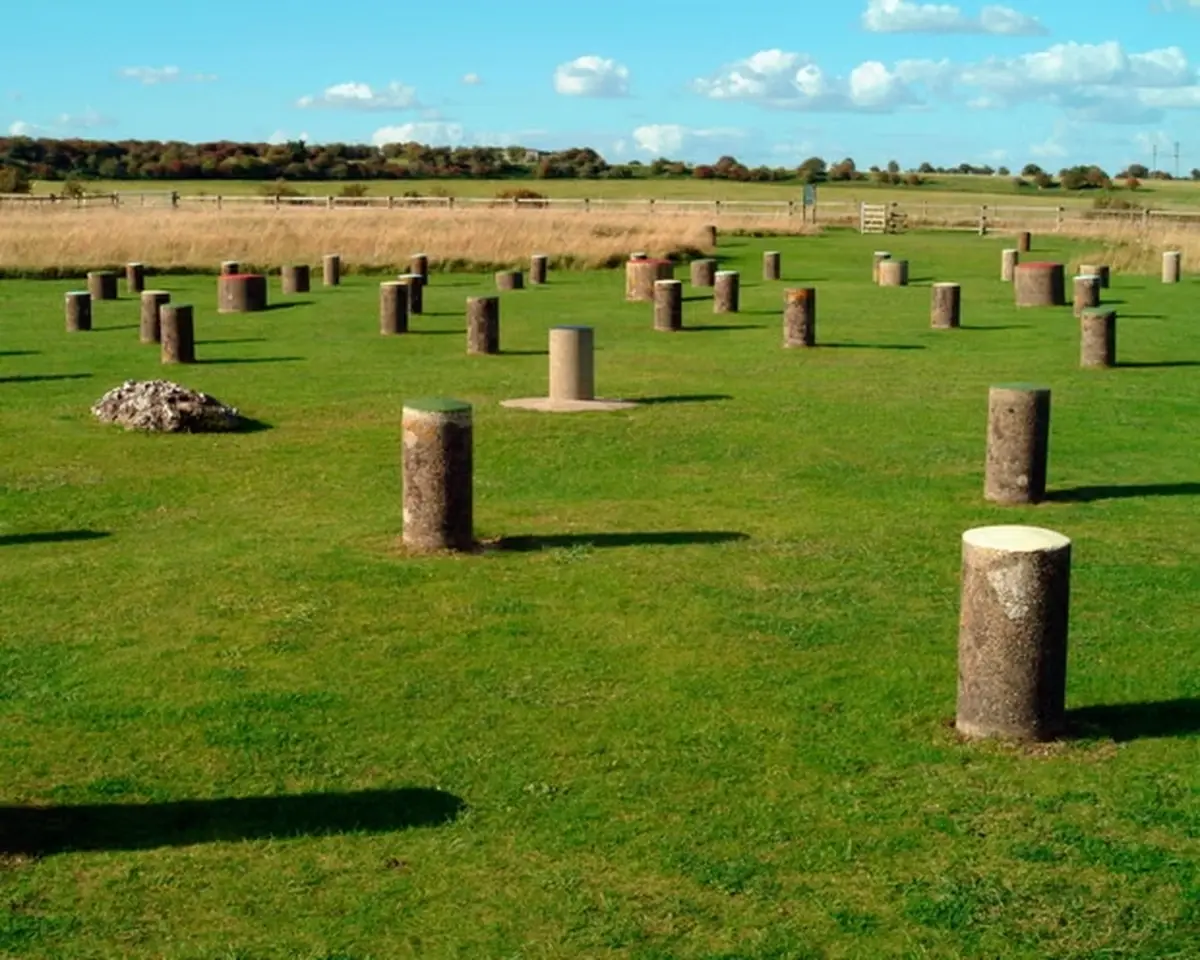
Woodhenge site with the circle of pits
Archaeologists say the ancient builders needed persistence, strength, and engineering skill to excavate the pits in chalky soil.
The existence of the circle of pits was first discovered by researchers in 2020, who described it as the largest prehistoric structure ever found in Britain. However, it was only recently that archaeologists were able to thoroughly investigate the site with state-of-the-art technology, as reported by The Guardian.
Archaeologists suggest the structure could be an early sign of numerical counting. The large scale of the circle implies that its creators had to track their location during construction: the structure is too vast to have been built randomly without calculations.
An article titled “The Dangers of Pits,” published in the journal Internet Archaeology, details the research conducted over five years.
Professor Vincent Gaffney from the School of Archaeology and Forensic Science at the University of Bradford, who led the new study, believes the pits form an extraordinary structure. “The exceptional size of the quarries required a new strategy for their investigation without the need for large-scale and very expensive excavations. Since no single technology can answer all questions, several types of geophysical equipment were used to determine the size and shape of the pits,” said Professor Gaffney.
Using electrical resistivity tomography, the team determined the depth of the pits, while ground-penetrating radar and magnetometry helped reveal their shape. Core samples of the sediment were extracted and analyzed using optically stimulated luminescence, allowing the team to date the soil to its last exposure to sunlight. The team also employed the sedDNA method, which helps extract DNA from animals and plants in the soil.
Researchers found recurring patterns in the soil across different parts of this vast area. “This could not have occurred naturally. It simply cannot be,” Gaffney asserts.
The exact reasons for the pits’ creation remain unknown. However, Professor Gaffney suggested they might be linked to a belief in an underworld. “Now that we are confident that the pits are a structure, we have a monumental site that captures the cosmology of the people of that time in a way we have never seen before. And if this was going to happen anywhere in Britain, it happened right near Stonehenge.”
Photo: Unsplash
