
Pests
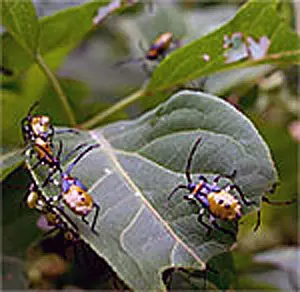
Today, many gardeners rely on folk remedies. Recently I visited every hardware and garden store in Tallinn looking for iron vitriol. There’s a real shortage of chemical plant-protection products: no iron or copper vitriol in Tallinn, and some shopkeepers don’t even know these substances. Infusions and decoctions probably won’t replace copper and iron vitriol, but with so many threats to our plants we should use every tool available.
People have a huge store of knowledge about plant protection, but there’s no single consolidated guide. I’ll try to fill that gap and give readers practical information. For brevity I won’t cite sources, but much of this comes from my own practice.
In greenhouses, preventive measures are crucial: rotate crops, sterilize or replace soil, destroy weeds around the greenhouse, clean up plant debris thoroughly, and disinfect the greenhouse and tools in the fall.
Using generations’ experience and adding your own helps secure a good harvest. The scent of mint and elderberry repels the currant borer moth and keeps weevils away from raspberries and strawberries. If you don’t have mint or elderberry, spray berry bushes with a coniferous solution (30–50 ml of coniferous concentrate per 10 liters of water). Ants dislike the smell of parsley, tomatoes, garlic, and onion bulbs. Nasturtiums and marigolds, which pests generally ignore, help protect vegetables from certain worms (nematodes). Wireworms hate cloves, while the May beetle, aphids, and mites flee from the scent of hemp. Planting potatoes alongside legumes (beans, peas, lentils) can drive wireworms and moles away from the area.
Many bacteria and microbes that cause rot and other diseases dislike the smell of geraniums, chrysanthemums, horseradish, nasturtiums, radishes, peppers, and wormwood. Phytoncides from fresh conifer needles — juniper, pine, cedar, and spruce — are particularly lethal to bacteria and microbes.
Sucking and chewing insects die when bushes are sprayed with decoctions or infusions of certain plants. Use mustard, tomato and potato tops, citrus peels, and garlic infusions against sucking pests like aphids, thrips, and spider mites. For chewing pests, use extracts, infusions, and decoctions of wormwood, yarrow, belladonna, henbane, elderberry, burdock, milkweed, tomato tops, tobacco, and peppers. For flea beetles and small bugs, dust with powders made from dried leaves and stems of tobacco, tomatoes, chamomile, and tansy. Deter mice and voles with powders made from bog rosemary and crow’s-foot; they also cannot stand black root. Kill bud mites in spring and September by applying a garlic suspension (50–100 g per 10 liters of water).
You will learn methods for preparing infusions and decoctions shortly.
1. Medicine for the Garden
As you probably know, Alexander Fleming discovered penicillin in 1929. Since then, antibiotics have saved millions of lives. Veterinarians use them widely. But what about gardeners?
Vegetable grower A. Shogin has been using an unusual preparation for years to combat many plant diseases. He collects food scraps — bread crusts, potato peels, and the like — in a basin, lightly moistens them, and covers them with plastic so they don’t dry out. After two weeks the mass is covered in a thick layer of mold; he mixes it thoroughly, soaks the mass with a fermented infusion made from carrot, beet, and radish tops, mixes again, and then strains the liquid.
Spray cucumbers with this liquid and they stay disease-free and keep fruiting. Powdery mildew disappears from currants and gooseberries, pears and apples suffer much less scab, and adding this mixture to planting holes helps prevent clubroot.
The original write-up didn’t include exact dosages, so some experimentation is required, but the basics become easier after reading the rest of this piece. Fermented two-week infusions of tomato tops, nettles, and dandelions feed plants and help disinfect soil. Water cucumber and tomato plantings with these solutions to eliminate many diseases and pests.
To prepare the solution, fill any container to the top with leaves and stems of one plant, cover with water, and let it ferment for about two weeks until the green mass decomposes (dried material works too). Strain the solution, dilute it tenfold with water, and use it to water the plants — it feeds and disinfects simultaneously.
2. Ancient Advice
(from a book published in 1779 during the reign of Catherine the Great)
How to Drive Away Ants.
Mix ashes from leather shavings, lime, and soot, and sprinkle them where ants are most prevalent.
Or place several narrow-necked bottles with a little honey where ants gather; they will swarm in, and you can then exterminate them. Repeat frequently.
To prevent birds from pecking seeds.
Soak seeds shortly before planting in garlic juice; this keeps birds, mice, ants, and other insects from harming them, and helps the plants thrive.
How to Exterminate Mice and Moles.
Crush garlic and onion together with camphor, stuff the mixture into the holes, and seal them tightly; the creatures will disappear.
Alternatively, stuff a bunch of green hemp into their holes and cover with soil. When it rots it produces a terrible stench that drives them away or forces them to flee.
3. Pests
A good method is to spray the garden before the growing season with a 10% table-salt solution. This measure can significantly reduce the number of pests.
Aphids, caterpillars, spider mites
Let me share some widely used methods for dealing with these pests.
3.1 Treat plants with a solution of soap, PS paste, or lye when insects appear. This is the simplest method, though it may be less effective against mites.
3.2 Chop 50 g of aloe, pour it into 1 liter of water, let it steep for a day, and spray the plants.
3.3 Pour 10 g of dried orange, mandarin, or lemon peels into 1 liter of boiling water. Or fill a half-liter jar with peels, cover with 1 liter of water, soak for a day, boil 15–20 minutes, strain, and dilute to 10 liters of water.
3.4 Soak 1 kg of finely chopped dried black nightshade (dried since autumn) in 10 liters of water for 12 hours, then strain.
3.5 Fill a bucket halfway with onion skins, pour in 10 liters of hot water, let it steep for a day, strain, dilute by half with water, and spray.
3.6 Pour 200 g of dried onion skins into 2 liters of hot water, let steep for two days, then strain and dilute with water (2 parts water to 1 part infusion).
3.7 Put 0.4 kg of chopped tomato tops in 10 liters of water and simmer on low heat for 30 minutes. After cooling, strain, add twice the amount of water and soap (50 g per 10 liters of final solution), and spray.
3.8 Crush 100 g of garlic (thinings and flower stalks) or 50 g of garlic cloves in an enamel bucket, fill it with water, steep for 12 hours, then strain the infusion. Spray at least three times at five-day intervals.
3.9 Infuse 1.2 kg of chopped potato tops in 10 liters of water for three hours, then strain and use.
3.10 Infuse 300 g of horse sorrel roots in 10 liters of water for three hours, then strain and use.
3.11 Infuse 400 g of dandelion leaves in 10 liters of water for three hours, then strain and use.
3.12 Infuse 1 kg of tobacco in 10 liters of warmed water for one day. Dilute 1 liter of this infusion in 5 liters of water before use.
3.13 To combat cabbage white caterpillars, cutworms, and moths, make a burdock infusion: place chopped leaves in a bucket, fill with water to the top, let steep for three days, strain, and spray the cabbage.
3.14 Deter small caterpillars with a decoction of pepper pods: chop pods finely, simmer on low heat for about an hour, cool, let steep in a glass container for two days, then dilute with water (about 50 g of decoction per 10 liters of water). Use roughly 100 g of pods to make the decoction.
Notes:
1. Adhere strictly to recommended concentrations for infusions and decoctions; excessive strength can cause leaf burns.
2. Add 40 g of liquid or household soap, or a tablespoon of laundry powder such as “Novost” or “Lotus,” to a bucket of any infusion as a wetting agent.
3. Use infusions the day they are prepared. Spray as needed, once a week.
4. Wear goggles and protect your nose and mouth with a gauze mask while working with these preparations to avoid irritation of the mucous membranes.
5. Prepare plant treatments with fresh infusions and spray preferably in the evening. Evening spraying is often more effective, helps prevent burns, and reduces the risk to bees.
Apple Blossom Weevils (weevils or snout beetles)
The simplest way, especially in a small garden, to eliminate beetles early in spring is to exploit one of the weevil’s habits. When disturbed, the beetle curls its legs and plays dead. If this happens on a branch it falls to the ground. Early in the morning, when it’s still cool, the beetles are sluggish: when they fall they don’t fly away, and once on the ground they don’t immediately crawl or take off. Spread a cloth or light shields under the trees, shake the branches, collect the beetles, and destroy them.
Shake the trees until the buds are exposed. If you miss this task, don’t forget the second opportunity. After apple trees bloom, dried brown buds are easy to spot and often harbor larvae. Collect and destroy these buds quickly: within a week or so after the apple trees bloom the beetles will emerge from their pupae.
4. Diseases
Preventing many diseases is easier than curing them. I strongly recommend the “Medicine for the Garden” preparations.
Treat powdery mildew on cucumbers with a potassium permanganate solution (5 g per 10 liters of water). As a folk remedy, make a cow-dung infusion: fill a quarter of an enamel bucket with fresh cow dung, top with water, stir several times over 4–5 hours, then strain. For the first spraying, dilute the infusion half-and-half with water. If the leaves show no burns, repeat the spraying after three days without further dilution.
For powdery mildew on gooseberries, use one of these two methods that have worked for many years:
1. Spray three times at weekly intervals with a solution of calcined soda (50 g per 10 liters of water plus a spoonful of neutral laundry detergent).
2. Spray three times at weekly intervals with a buttermilk or kefir solution (1 liter per 10 liters of water).
In both cases, do the first spraying immediately after flowering.
Various spots, molds, rots, streaks, scab, and late blight
These and other fungal diseases are much easier to prevent than to cure. The best chemical remedies are copper sulfate (20 g per 10 liters of water with a wetting agent), copper oxychloride (40 g per 10 liters of water), or a 1% Bordeaux mixture. However, as noted earlier, chemical supplies may be scarce, so use folk methods and preventive measures where possible.