
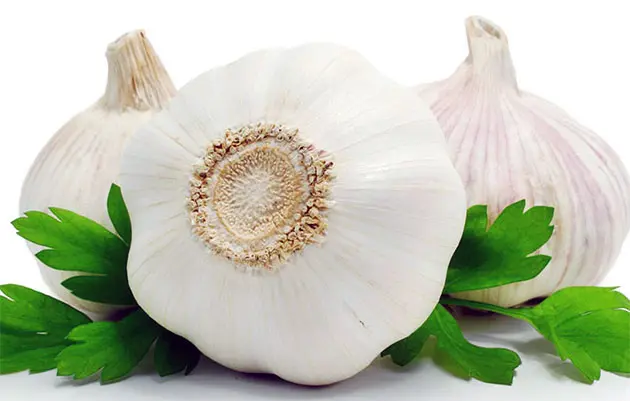
Garlic is a humble garden plant that’s been used as a seasoning for as long as humans can remember. Its history, like that of onions, is so ancient it’s hard to pin down its origins. Lately it feels rediscovered, standing out as a kind of medicinal “giant,” but its strong, pungent aroma keeps many people away.
Our ancestors ate garlic often and with enthusiasm. The ancient Greek physician Dioscorides wrote that “garlic cleanses the arteries.” The Romans said “it cures coughs and pneumonia.” About a thousand years ago, a Persian compendium on medicinal plants claimed garlic protected against “blood clotting.”
Modern medical research not only supports these old beliefs but widens our understanding of garlic’s healing potential. Garlic is used for everything from the common cold to the early signs of aging.
Its antimicrobial properties are well-known.
The characteristic smell and taste of garlic come from its essential oil, which contains organic sulfur compounds. Those compounds are toxic to microorganisms and are responsible for many of garlic’s medicinal effects.
Garlic also contains flavonoids that relax spasms in blood vessels, lower blood pressure, and help reduce cholesterol. It is rich in potassium, calcium, sodium, magnesium, and phosphorus.
Garlic paste and juice are used to treat wounds, ulcers, and burns, and they are applied in dentistry, gynecology, and otolaryngology. During World War II, when antibiotics were scarce, garlic often came to the rescue in medicine—it was used against pathogens that cause tuberculosis, cholera, typhoid, and paratyphoid, as well as staphylococci and streptococci. Garlic paste, juice, or inhalations are used to treat acute respiratory illnesses, whooping cough, pharyngitis, angina, and both catarrhal and purulent middle ear infections. By suppressing harmful microorganisms, garlic shows anti-inflammatory and wound-healing properties.
Scientific medicine has confirmed the old belief that garlic cleanses the arteries. Its biologically active substances neutralize fatty compounds that contribute to atherosclerosis.
For treating heart disease with atherosclerotic changes, herbalists recommend patients consume up to 20 cloves (about 60 grams) of garlic daily, often as an extract. To get the desired effect, follow this regimen for three months. Most patients (83 percent) report feeling significantly healthier after such a course, and nearly all show improvements in signs of heart disease.
Garlic is a well-known remedy for colds. Its curative properties improve breathing, soothe coughs, help treat bronchitis, and even slow the division and growth of cancer cells, a finding reported by Japanese researchers.
Garlic acts as an antimicrobial during inflammatory processes in lung tissue, even when inflammation is complicated by pus formation. It also disinfects the digestive tract.
In Greece, garlic has been used for thousands of years to fight hypertension. Traditional medicine has long recognized this. Dr. M.S. Alexander Sishin concluded that 40 percent of patients with kidney-related high blood pressure can be treated with this remedy.
To put it in numbers: among 100,000 patients with hypertension not related to heart disease, 39 die annually in the U.S., 35 in Italy, and only 14 in Spain, a country known for its garlic consumption.
Garlic is also known for its anti-parasitic effects (it can expel pinworms through enemas).
Chewing garlic for a few minutes effectively cleanses the mouth of harmful microbes. It also strengthens the gums, reduces inflammation, and lowers the incidence of cavities.
Garlic cloves contain adenosine, which slows the formation of blood clots and dilates coronary vessels, making garlic useful in treating vascular thrombosis and angina.
Garlic lowers blood sugar levels and increases glycogen production in the liver, making it a helpful aid for diabetes. It is also used in cases of lead poisoning.
Countries where people eat large amounts of garlic tend to have lower cancer rates. Observations by Soviet researchers showed that garlic preparations are particularly effective in treating cancer. Garlic is also beneficial for people living in areas contaminated by radioactive emissions.
Garlic is a powerful natural remedy. The strong odor it leaves in the mouth can be neutralized by chewing fresh parsley roots or leaves, celery leaves, anise seeds, or coffee beans.