
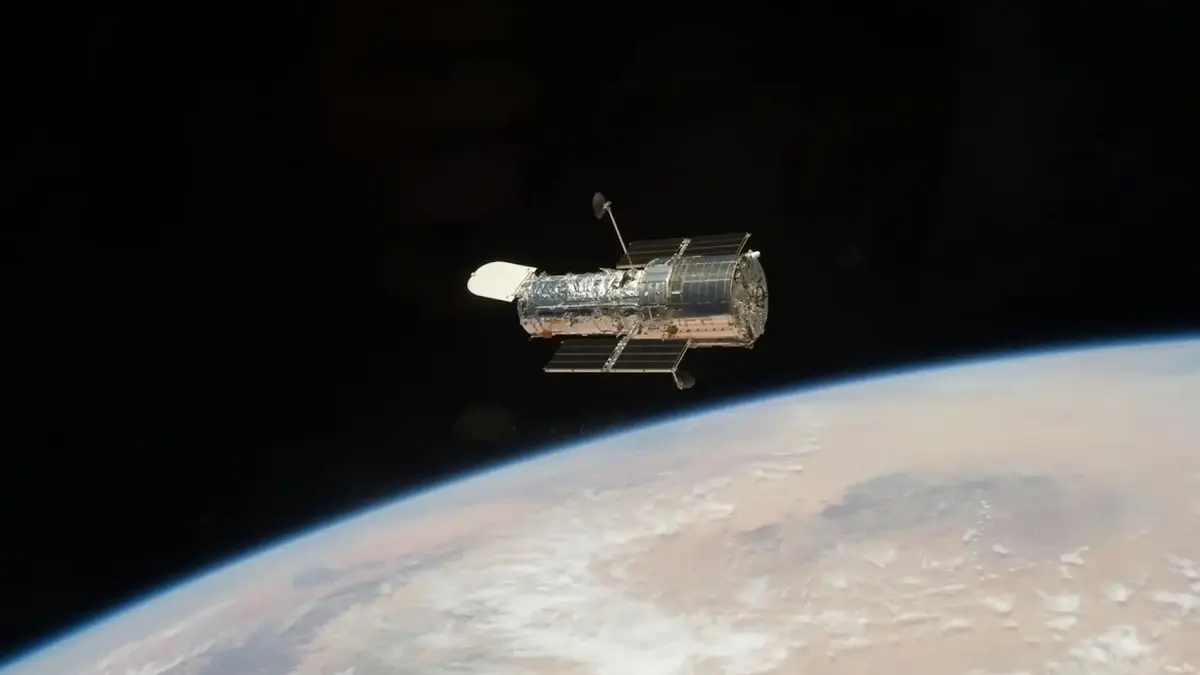
 For 35 years of tireless operation, the Hubble Space Telescope (HST) has conducted over 1.3 million observations, traveling more than 6 billion kilometers.
But all good things must come to an end, as the National Aeronautics and Space Administration () sadly reminds us. The Hubble observatory was not designed for eternal orbit around our planet. The atmospheric drag encountered as the telescope passes through the thin outer layers of Earth’s atmosphere brings it closer to the moment when it can no longer maintain its orbit and will eventually crash into Earth.
No Room for Error
In a new study, a team of NASA scientists overseeing Hubble’s operations examined when and how the telescope’s mission will conclude. The researchers specifically assessed the risks associated with its potential fall to Earth.
Since its launch in 1990, the optical telescope with its mirror system has been continuously orbiting in low Earth orbit at a speed of 28,163 kilometers per hour.
Thanks to its precise observations, Hubble has played a crucial role in determining the rate of the universe’s expansion and the discovery of dark energy. Before the telescope’s launch, scientists were unsure how old the universe was. However, with the help of HST, they determined it to be 13.8 billion years old. In addition to groundbreaking discoveries, Hubble has regularly captured stunning images of space.
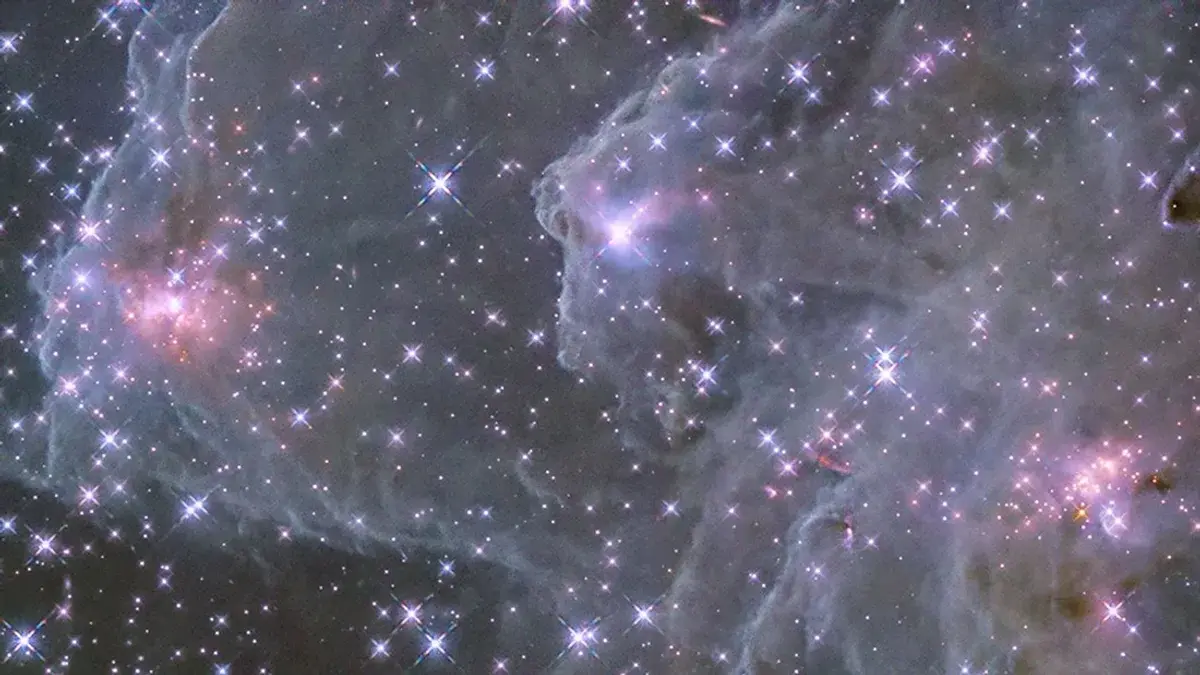
Image of the Sh2-284 Nebula Captured by the Hubble Telescope
In their report, the researchers noted that the initial plan for bringing Hubble back to Earth involved using a space shuttle. However, “no one expected the telescope to outlast the shuttle program.”
It is expected that in the coming years, the orbit of the space telescope will gradually decline, as reported by IFLScience.
Accurately predicting Hubble’s fall and assessing the potential risks of this event for the population of our planet are currently critical tasks for NASA. Scientists need to determine whether debris from the telescope could reach Earth’s surface and what the implications would be.
The study indicated that at best, HST will remain in orbit until 2040, and at worst, until 2029. The most likely scenario anticipates a return in 2033.
“With nominally forecasted solar activity and the average projected surface area, the Hubble telescope is expected to enter the Earth’s atmosphere in 2033, leaving a trail of debris stretching approximately 350 to 800 kilometers along its flight path,” the scientists reported.
“Although the exact entry point into the atmosphere and the area of contact have not been determined, the probability of fatalities ranges from 1 in 330 on average across the entire orbital inclination area that the Hubble telescope will cross,” the authors of the forecast stated.
While the risks are relatively low by NASA’s standards, they are deemed unacceptable. The team explained: “The worst-case scenario could occur if HST debris falls in Macau, where the high population density is expected to result in two to four casualties. There could be one casualty if debris falls in Hong Kong or Singapore.”
NASA scientists will conduct further research on geomagnetic conditions and other factors related to Hubble’s return to , taking into account the projected population in risk zones. A legendary telescope like Hubble cannot afford to tarnish its reputation by endangering innocent lives.
The results of the study have been published on NASA’s technical reports server.
Photo: NASA