
When Cosmic Communication Meets Bee Mathematics
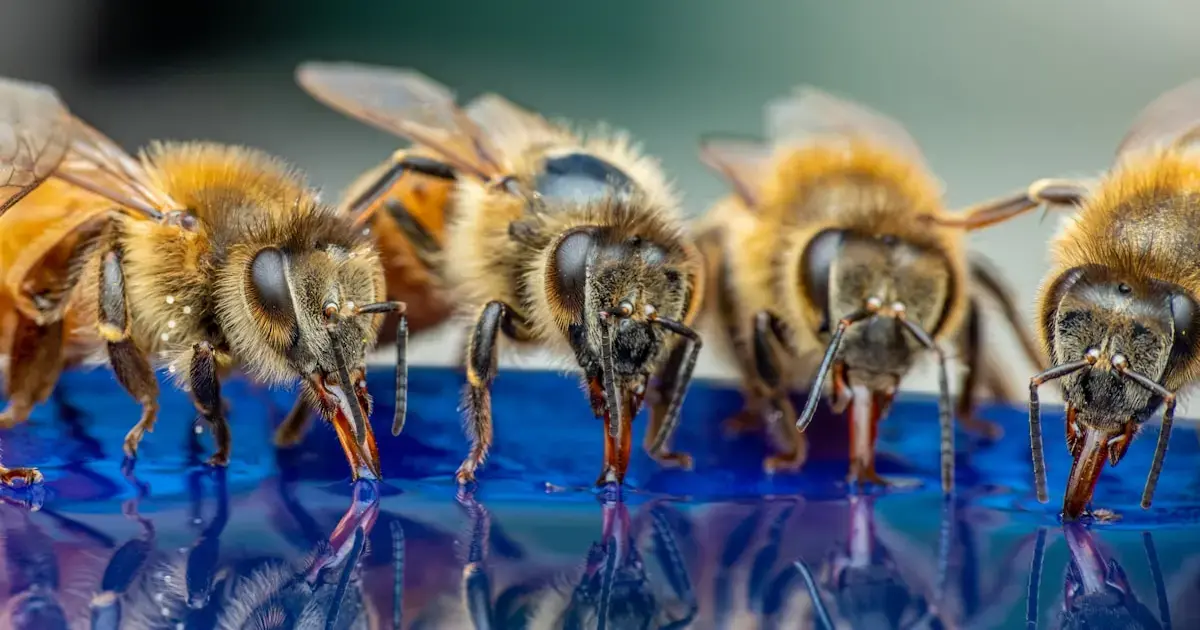
Imagine the moment humanity receives its first signal from extraterrestrial civilizations. The joy, the excitement, and one major problem: how do we communicate with aliens if we don’t know their language? Australian scientists have found an unexpected solution, drawing inspiration from honeybees.
Research into the mathematical abilities of bees has shown that these tiny creatures could hold the key to understanding how to engage in dialogue with minds from other stars.
Bees: Earth’s Closest “Aliens”
At first glance, it may be hard to find common traits between bees and humans. , six legs, and a radically different social structure—these insects truly are among the most “alien” beings on the planet. Dr. Adrian Dyer from Monash University explains, “Since bees and humans have been separated by about 600 million years of evolutionary time, we have developed very different physiology, brain size, and culture.”
Despite these vast differences, both species have developed complex methods of communication and cooperation. Most importantly, both humans and bees possess mathematical abilities.
The Mathematical Talents of Insects
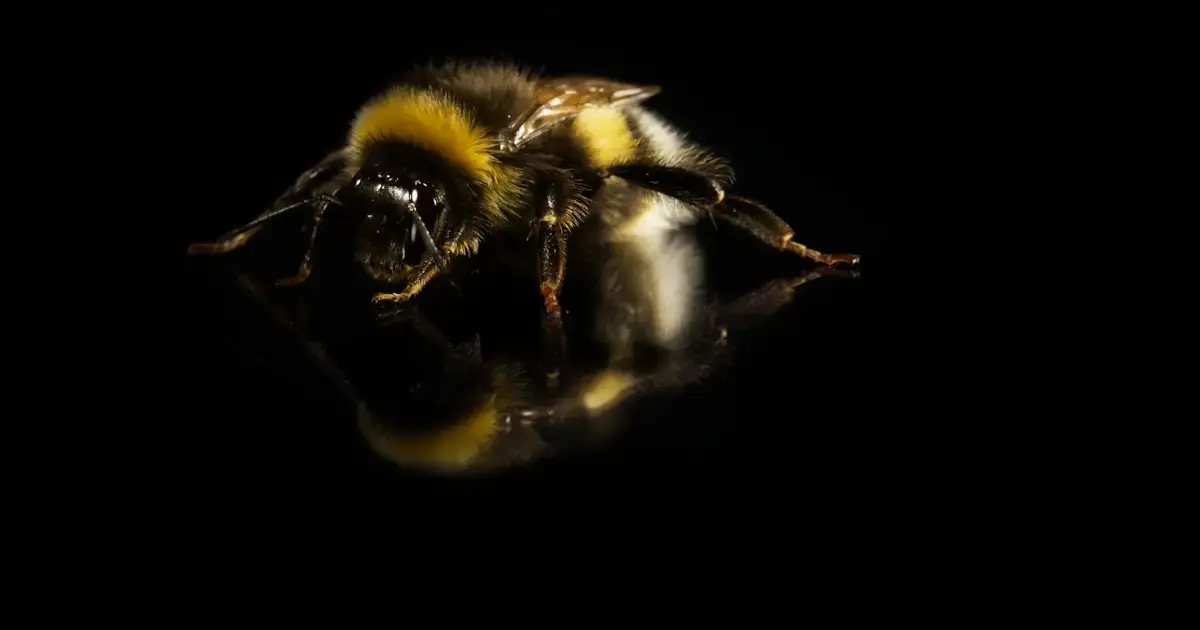
In previous experiments, the research team conducted a series of mathematical tests for bees. in exchange for a reward of sugar water.
The mathematical abilities of bees turned out to be impressive. During the experiments, bees demonstrated the ability to add and subtract, understand the concepts of “even-odd,” grasp the idea of “zero,” and connect abstract symbols with quantities.
These findings laid the groundwork for the theory that mathematics, as a foundation for communication with extraterrestrial civilizations, could be a viable tool.
From “Golden Records” to Bee Lessons
The idea of using mathematics to communicate with aliens is not new. In 1974, a radio message was sent into space from the Arecibo Observatory, consisting of 1,679 zeros and ones to convey numbers from 1 to 10 and the atomic numbers of DNA elements.
In 1977, the famous “Golden Records” containing mathematical values were placed aboard the Voyager 1 and Voyager 2 spacecraft. These messages for extraterrestrial civilizations are still traveling through space.
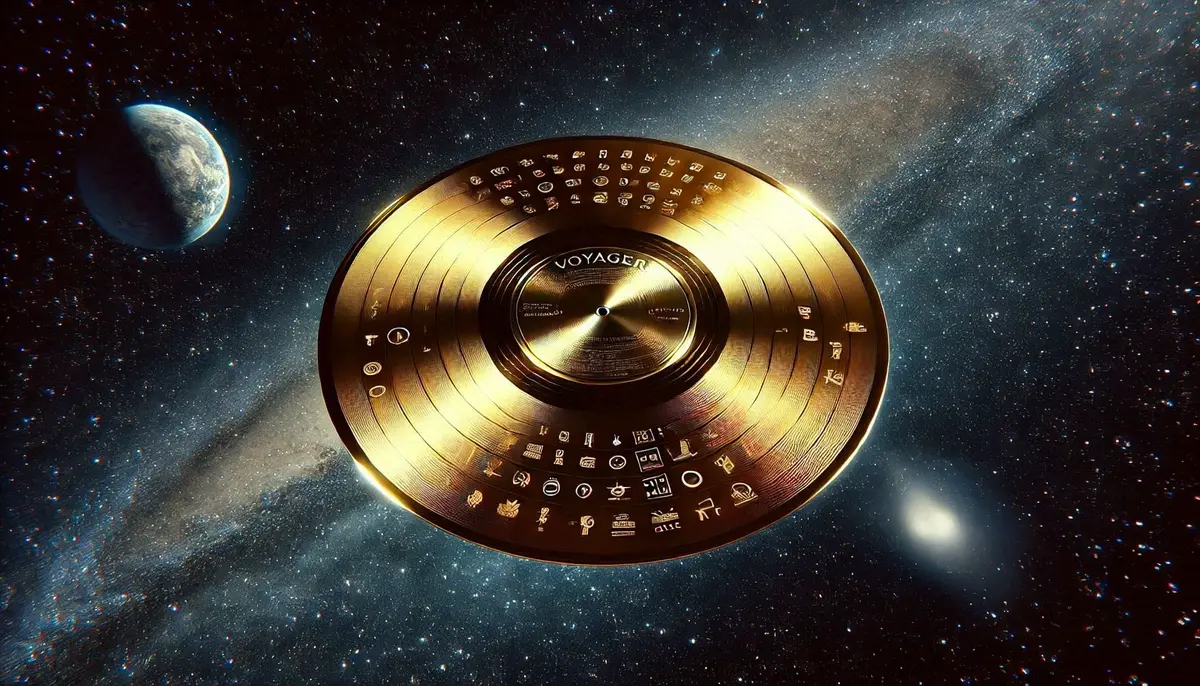
However, scientists were unsure whether aliens would understand these concepts. This is where bees come into play.
Bees as Evidence: Mathematics is Truly Universal
“When we tested bees on mathematical tasks, and they were able to develop an understanding to solve the problems presented, it was compelling evidence that an alien species could have similar abilities,” says Dr. Dyer.
The evolution of mathematical abilities in such different species supports the idea that mathematics is not solely a human invention. “Now we have a solid foundation to think about how to attempt to communicate with extraterrestrial intelligence,” emphasizes the researcher.
What Would a Universal Cosmic Language Look Like?
A universal language for communicating with aliens might resemble the mathematics we use every day. “At a basic level, binary-coded information would be a starting point, and then we learn to build a mutually understandable linguistic framework with another species,” explains Dr. Dyer.
The Challenge of Cosmic Distances
The closest star to the Sun is located 4.4 light-years away. It takes at least 10 years to send a message and receive a response. This makes it impractical to learn an alien language from scratch.
The first step is binary code (zeros and ones), and then gradually, a more complex system of symbols for numerical concepts must be built.
What This Means for the Search for Extraterrestrial Life
If such different species as humans and bees have independently developed mathematical thinking, it supports the idea that mathematics as a universal means of communication really works. The messages on the “Voyagers” have a real chance of being understood.
Who would have thought that tiny bees could aid in the search for extraterrestrial life? Research into the mathematical abilities of insects not only reveals the talents of these creatures but also teaches us a lesson: if such diverse forms of life can share fundamental concepts, then there is more in common in the universe than it seems.
As we gaze at the starry sky, tiny bees have already given us part of the answer. Mathematics could become a bridge to our cosmic neighbors. And this bridge starts simply: 1 + 1 = 2.
Photo: Unsplash