
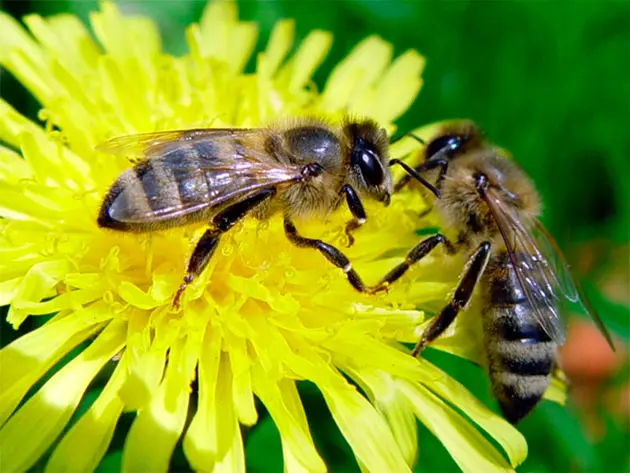
Bees are invaluable allies for melon growers. They boost yields of watermelons, melons, and pumpkins, so it’s common to see beehives in melon fields, especially in Uzbekistan. The natural conditions in Uzbekistan favor vegetable and melon crops: summers are long, hot, and dry, with a growing season of 180 to 220 days. Rainfall is scarce. Nectar-producing plants bloom from March to October, providing a continuous food source. Before melon crops bloom, bees already forage on other early-blooming, nectar-rich plants. In March, fruit trees such as apricot, plum, apple, and peach begin to flower, offering good nectar and pollen yields. Soon after, plants like sea buckthorn, acacia, and honey locust also provide nectar. Beehives are moved to follow the blooms.
By late May to early June, watermelons, melons, and pumpkins start to flower. In nectar production, they rival alfalfa. Melon crops are especially attractive to bees because they contain abundant nectar, and local bees have proboscises adapted for extracting it. In addition to nectar, these crops also provide pollen. In return, bees help the plants set fruit. Without pollinating insects, watermelons, melons, and pumpkins won’t set fruit, which is important for amateur growers to know.
From our experience, bees eagerly visit melon, pumpkin, and watermelon flowers, spending a long time on the plants and transferring pollen from male flowers to the stigmas of female flowers. When melon crops are in full bloom, there is often little else for the bees to forage on. That’s why beekeepers transport their hives to melon fields.
Sometimes beekeepers complain that when they bring hives to melon fields in summer, the bees fly only short distances—up to about 50 meters—and don’t visit the flowers. What can be done? Beekeepers often feed their bees flavored syrup, but that rarely expands the bees’ foraging radius. In hot climates, a nearby water source is crucial for cooling the hive and maintaining humidity. Bees spread the water they bring across the comb, and as it evaporates it cools the hive and raises the air humidity. Bees fly out less frequently for pollen but much more often for water—sometimes up to 100 trips. Set up a watering station for the bees if there is no reliable water source nearby, and add water periodically. Don’t forget to provide water, especially during the hot, dry summer months when colonies suffer from thirst in open fields. Each colony needs about 0.5 liters of water per day.
Bees are most active in the morning, when flowers are rich in nectar and pollen. Calm, windless weather with temperatures between 25 and 30°C (77 to 86°F) and relative humidity of 35 to 40% is ideal. In the heat, the number of working bees drops, sometimes disappearing from the plants altogether, while wild insects may continue to gather nectar. By 11 a.m., pollinator activity sharply declines.
We observed that bees work intensively on watermelon and melon flowers from 8 to 10 a.m., and on pumpkin flowers for about an hour longer. During those times pollen has the highest viability and stigmas are most receptive to fertilization. The closer the beehives are to the fields, the more bees visit the plants.
High bee density near the hives increases fruit set and reduces fruit drop. Bees effectively visit melon flowers at distances of 300 to 500 meters from their hives.
Why do some growers overlook the need to create good conditions between pollinators and vegetable or melon crops? One reason is a decline in agricultural practices and a reluctance among vegetable growers to understand the biological processes at work. Running a successful homestead requires attention to those biological connections. For example, a gardening cooperative could create a pollination service by establishing its own hive or renting honeybees for a fee. That would improve yields for cucumbers, watermelons, and melons.
Consider forming a committee for migratory beekeeping so bees can be brought to areas where crops need pollination. Coordinate the migration plan with growers and plant protection representatives. Use colony strength and individual pollination capacity as criteria for payment. A generous yield increase could justify additional compensation.
Renting bees for pollination benefits both beekeepers and melon growers: beekeepers gain financial incentive, and growers get higher yields.