
Many of us only know the dictionary definition: fasting is abstaining from rich foods—especially meat and dairy—according to church rules. But with renewed interest in religion and church rituals, people want to know more: how long do fasts last, what’s their purpose, and what can you eat?
In many religions, fasting means abstaining from rich foods, intimate marital relations, and other worldly pleasures.
Fasting is an ancient practice. Our ancestors saw a link between giving up rich foods and spiritual growth. During fasting periods, churches take on a distinct atmosphere that encourages believers to repent, confess sins, and seek spiritual renewal. Abstaining from rich foods is not an end in itself; fasting is a way to strengthen the spirit, pursue moral purification, and restore oneself.
Christianity doesn’t impose strict fasting; it generally asks believers to refrain from meat and dairy at certain times. True fasting is less about denying food and more about avoiding evil. As scripture says, it is not what enters the mouth that defiles a person, but what comes out of the heart.
Now, let’s discuss the fasts themselves, starting with the longer ones. The Great Lent lasts six weeks and is followed by Holy Week. Together they cover seven weeks leading up to Easter.
The Apostles’ Fast begins eight weeks after Easter and ends on the eve of the feast for the apostles Peter and Paul (July 12).
On August 14, the Dormition Fast begins and lasts until August 28. It culminates in the Dormition of the Most Holy Theotokos, marking the end of her earthly life.
The last of the extended fasts starts on the Feast of the Apostle Philip (Philippovka) on November 28 and continues until Christmas (January 7).
The Orthodox Church prescribes one-day fasts on Wednesdays and Fridays throughout the year, except during continuous weeks and the Christmas season (January 7–17). Notable fasting days include September 11 (the Beheading of St. John the Baptist) and September 27 (the Exaltation of the Holy Cross).
Church rules say there is no fasting on the feasts of Christmas and Epiphany if they fall on a Wednesday or Friday. Strict fasting occurs on January 6 and January 18, the eves of Christmas and Epiphany. If those eves fall on a Saturday or Sunday, food prepared with oil is permitted. On the Feast of the Presentation (February 15), the Transfiguration (August 19), the Nativity of the Theotokos (September 21), the Entrance into the Temple (December 4), the Dormition (August 28), the Nativity of St. John the Baptist (July 7), Ivan Kupala Day, and the feasts of the apostles Peter and Paul (July 12) and John the Theologian (October 9), if they fall on a Wednesday or Friday, fish dishes are allowed.
From Easter until Pentecost (Green Sunday), fish may be eaten on Wednesdays and Fridays.
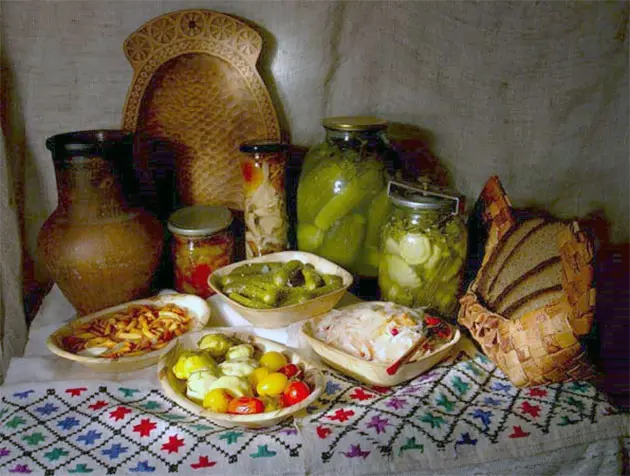
During fasting periods, meat, dairy products, cheese, eggs, and fish are not consumed.
Pregnant women, nursing mothers, and young children are exempt from fasting. With the blessing of a spiritual advisor, fasting can be relaxed for the sick and the elderly.
The church’s revival is tied to the purification of the human soul. Let fasting be a tool for moral improvement. The church does not compel everyone to fast; it invites believers to test their willpower, refrain from evil thoughts, and open their hearts to goodness and love—for God and for others.