
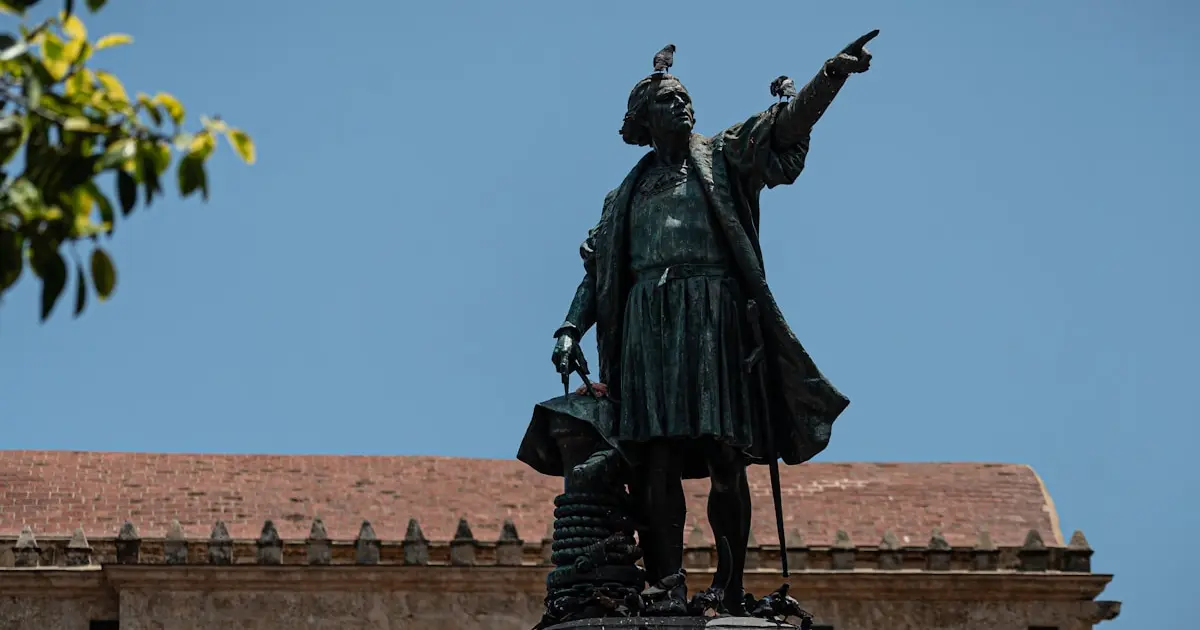
When one of the caravels in Christopher Columbus’s fleet, the “Santa Maria,” sank, the crew of another caravel, the “Niña,” refused to obey him. Columbus decided to report this to the King and Queen of Spain. But in those days there were no radios, and the coastal villages where he could have landed didn’t have post offices capable of sending letters overseas.
So the great navigator turned to… ocean currents. He wrote his report on parchment, placed it inside a coconut shell, sealed it with resin, then put the shell into a sturdy empty barrel and ordered the barrel tossed overboard. The barrel drifted slowly toward Spain on the ocean waves…
It almost reached its destination. The current carried it to Gibraltar, just a stone’s throw from Spain. But no one saw it. It lay among the rocks for more than 350 years.
Perhaps it would still be resting on that deserted shore if the captain of the brig “Griften” hadn’t decided to hunt in those waters. As he returned to the ship, the wind picked up. The sailors threw some stones into the dinghy for ballast. Among the ballast was the barnacle-encrusted barrel from Columbus’s caravel.
In earlier times, sailors often used ocean currents to send messages sealed in bottles. In England, there was even a post called the royal bottle opener for a long time.
