
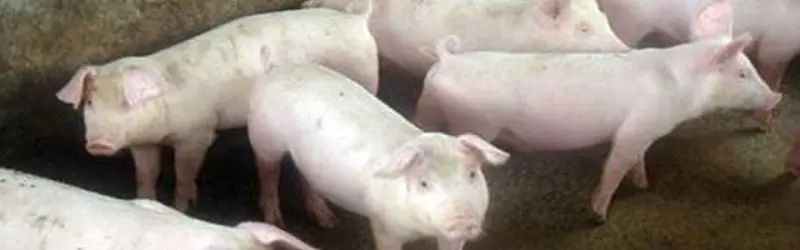
I am passionately engaged in pig farming. Over the past few years, I’ve experimented with various feeding methods and developed my own system for raising piglets—by three months, they weigh 88 pounds, and by seven months, they reach 242 pounds.
My pigsty has two sections with outdoor pens. I built it using a mix of construction materials—logs and planks. The floors are concrete (about 12 inches wide), with tarred planks laid in two rows on top. The walls are double-layered and insulated with foam. The roof is wooden and slanted, covered with roofing felt and slate. The pigsty faces south, with windows and doors on that side. I also set up the outdoor pens with plank floors.
In the first section, I keep adult pigs, while the second section houses weaners or a sow with her piglets, along with a boar. I prefer raising boars for meat, although I don’t shy away from sows either.
The main feed on my farm consists of food scraps, which I sort into meat, fish, bread, and vegetable waste. From most of those scraps, I prepare a fermented feed—adding 10 to 15 grams of yeast (activated first) to the mixture. In summer, I mix the fermented scraps with finely chopped nettles and leaves of the maral root: for every kilogram of scraps, I add 0.4 kilograms of fresh nettles and 0.1 kilograms of maral root leaves. To this mixture I add table salt (up to 30 grams per day), sifted bone ash (up to 20 grams), and trace elements.
I feed the pigs three times a day: at 8 AM, 2 PM, and 8 PM. After feeding, I let them out into the pens. In summer, there are always troughs with drinking water and green grass, and adult pigs eat 17 to 22 pounds of green grass a day. While the animals are outside, I clean the stalls and sprinkle the floors with fine sawdust. In hot weather, I set up a large metal tub (about 55 x 27 inches) filled with water for bathing, using it for about 5 to 7 large baths, and I add 1 to 2 grams of potassium permanganate. Once a week, I wash the pigs with a brush and pour warm water over them from a watering can. During washes I feed them garden and vegetable scraps—fallen apples and pears, overripe cucumbers and tomatoes, small potatoes, and fruit pulp.
I start preparing feed in June. I dry nettle, pigweed, and maral root leaves for winter and mix them into the feed. After the first frosts, I collect rowan berries and store them frozen for winter. During winter, I feed hay at a rate of 1 to 4.4 pounds per head per day in the feed mixture, and I add one drop of vitamin D3 oil concentrate per piglet each day. I also grow Jerusalem artichokes, yielding 11 to 15 pounds of tubers per bush.
In addition to other crops, I plant 100 to 150 cow parsnip plants and harvest 1,320 to 1,760 pounds of root vegetables in the fall, not counting the green mass. I sow 5 to 7 beds of carrots and harvest 154 to 242 pounds. A valuable addition to the feed mixture is maral root. This perennial plant, with its large leaves, can grow up to 6.5 feet tall. Its greens boost the animals’ vitality and are as nutritious as clover and alfalfa. Pigs can experience stress—during weaning from the sow, when moving to an unfamiliar environment, from noise, and other factors—and maral root helps regulate the nervous system’s response.
Feeding the green mass of maral root along with a decoction is an excellent preventive measure against various diseases, particularly those tied to stress. I prepare the water decoction by boiling 6 to 10 grams of dried, crushed roots in a cup of boiling water, covering it, simmering on low heat for 20 to 30 minutes, then letting it steep for an hour. I add the decoction to the feed or drinking water at a rate of a quarter cup per pig per day. After two weeks of treatment, I take a ten-day break. A week before slaughter, I remove maral root from their diet. For stress relief, I also use a valerian infusion. Unlike maral root, valerian has a calming effect. I give the valerian infusion between courses of maral root. I prepare the infusion by pouring 8 to 10 grams of dried, crushed valerian roots with 2 cups of boiling water, covering it tightly, and letting it cool. The daily dose is 3.4 ounces of infusion per pig.
Some might say, “It’s too much trouble; raising pigs would be easier if there were plenty of feed.” Often you see pork on the market that looks good, but there’s hardly any meat on it and a lot of fat. When you ask the seller what they fed the pig, the answer is usually just potatoes and commercial feed. That approach is relatively cheap if you have a known backyard plot, but you need to consider what you want to get from your pig. If you want more meat and less fat, my system may not be the best, but it can serve as a useful guide for many people interested in the rewarding work of pig farming.
