
You can fatten pigs without commercial feed. Early in the spring, I gather dandelion roots, cattails, young nettle shoots, and duckweed. I mix in a small amount of soaked breadcrumbs—about one‑tenth—into the greens. I also feed them finely chopped, soaked zucchini, pumpkin, and overripe cucumbers. I feed them boiled potatoes, mixed beforehand with corn, wheat, and peas. The piglets really love the fodder beets that I grow in my garden. I provide water an hour after feeding. In general, I give the piglets more root vegetables: carrots, turnips, sweet potatoes, and Jerusalem artichokes. Two months before slaughter, I eliminate grass from their diet; otherwise the lard turns yellow.
I use pumpkin seeds to treat piglets for worms. I prepare a decoction from crushed seeds and administer it 30 minutes to an hour before feeding. During this time, I halve their rations. I burn the manure to avoid infecting healthy animals. Wormwood flowers also help treat worms. Another remedy is to remove a bird’s stomach, peel away the thin internal membrane, dry it, and grind it to a powder. I dissolve the powder in water and give the piglets about 1 to 2 cups of the solution before meals until they recover. For worm prevention and to stimulate appetite, I give them a clove of garlic daily, along with infusions of St. John’s wort, wormwood, hops, dandelion, juniper, rowan, caraway, and onion. In cases of severe diarrhea with blood, I make decoctions and infusions from marshmallow, bergenia, green knotweed, elecampane, young oak bark, field horsetail, and cleavers.
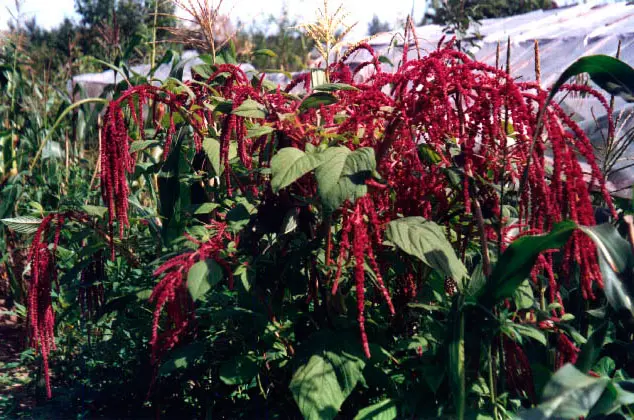
And here it is—amaranth! I acquired amaranth seeds as soon as I learned about them, and now I grow this fodder plant, which surpasses many other crops in green mass yield and nutritional value.
Fodder amaranth is an annual plant. You plant a tiny seed, and it can grow into a giant up to 10 feet tall. The seeds retain their viability for many years. In my garden, I leave some plants for seed while feeding the majority to the animals. It regrows quickly after cutting. My animals eat everything—leaving no leaf or stem behind—and even the goat happily munches the thick, dry stems. After harvesting the seeds, I tie the plants into brooms. The dry ones break easily and shed, but if you steam them they last longer. I get three times more silage mass from amaranth than from corn. It grows without irrigation or fertilizers, even in areas where weeds don’t take hold. I haven’t seen any pests on the plants.
Growing amaranth is not difficult. I sow it in the spring as soon as the soil allows. I space the rows 12 inches apart and plant the seeds 6 inches apart. The key is to prevent weeds from choking the seedlings until they gain strength; after that, the plants thrive and outcompete the weeds. The seedlings are always robust. The spring after sowing, cheerful amaranth leaves may appear in the most unexpected places in the garden. You can easily eliminate these volunteer seedlings, but don’t do it if they’re not in the way—let them stay; these plants are decorative and will beautify your garden.