
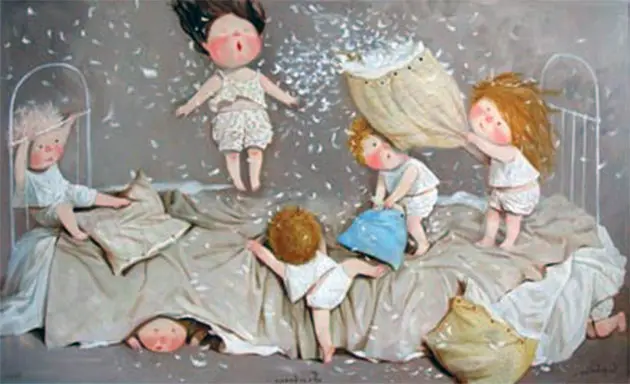
Often, well-meaning moms and dads, grandmas and grandpas try to be “perfect” caregivers for their little ones. They hold their babies close, shielding them from the dangers of the wider world. They protect them from bruises and scratches, stress and tension, and passing influences and trends. They want to give their children the best they know and can offer. They aim to teach skills that might come in handy in adulthood. They plan ahead, trying to prevent potential problems.
However, these good intentions can produce unexpected results: a child who is adored, pampered, and indulged can end up very different from what their parents imagined. A healthy, well-fed, and cared-for child may seem joyless, smile rarely, throw tantrums at the slightest provocation, and respond to toys, games, and people with more caution than curiosity, quickly losing interest in things. In short, they can become capricious, unpredictable, and sometimes unbearable. Instead of the soaring kite parents pictured, a little dragon can appear in the house…
A Bit About Guidance and Misconceptions
Gone are the days when children were seen as “blank slates” to be filled up. It’s now clear that every child is born with a basic grasp of the world and an innate desire to connect with others. Each newborn actively interacts with their surroundings, shaping their body and mind. What they need from their parents is a normal life: a home, a family, and people who understand and accept them. They require warmth, security, kindness, tenderness, and affection. A normal life also includes freedom—the ability to choose, to take initiative, to make decisions, and to be respected by others.
So for a child, living normally means feeling love and being able to love in return. It doesn’t mean parents should smother them with affection or confuse indulgence with nurturing.
How to Recognize the Limits of Love?
In a broad sense, to spoil, overindulge, or coddle a child is to pamper them. A spoiled child can seem exempt from life’s challenges—a permission slip to avoid responsibility. The favorite child starts to believe the world revolves around them. They avoid cooperating with others and fail to learn that rights come with responsibilities. Why should they care? There’s always an adult nearby eager to relieve them not just of work but even of the thought of it. A child whose abilities are never taken into account and whose desires are constantly indulged is shielded from reality and the demands life brings. That child misses the basic experiences needed to grow, mature, and gain independence — and becomes less prepared for life.
So, make sure you’re not inadvertently leaning toward a permissive parenting style with your little one:
– Is it true that you take on your child’s responsibilities (rushing to feed them at the slightest whimper, even when they haven’t signaled for it; holding the bottle for them for the first year, even after they have teeth; carefully undressing them for a bath or after a walk when they can do it themselves; dutifully picking up discarded toys instead of playing together; and when someone addresses the child, you quickly intervene and respond for them)?
– Is it true that you provide your child with special “services” and treat them like a fragile crystal (rocking them to sleep for ages and carrying them in your arms when you’ve decided it’s bedtime, even when they keep calling for you; sleeping in the same bed all night because they refuse to sleep alone or wake frequently, feeding them every time; hiding under a blanket and cheerfully exclaiming “peek-a-boo!” for an hour so someone else can sneak a spoonful of soup into their mouth; surrounding a sitting child with pillows and cushioning every move to prevent mishaps; believing that games and activities will harm their nervous system, so you give supplements and postpone developmental exercises until they are three to five years old; treating any form of deliberate toughening as torture; your motherly speeches becoming sweeter as the child grows yet somehow more incomprehensible than the child’s own babbling)?
– Is it true that you try to arrange life so your little one never has to face any trials (whispering outside the baby’s room; only going for walks on warm, dry days—ideally summer; wrapping the baby up snugly at home and outside—who knows better than you when they are cold; constantly shouting “Don’t!”, “Don’t do that!”, “Don’t touch!”, “Be careful!”, “That’s dangerous, let mommy do it”; deciding to boil bath water, wash toys, and prevent thumb-sucking and nose-picking until they are a year old; immediately picking the baby up when a stranger approaches and reassuring them with words like “I’m here,” “I’m nearby,” “I’m always with you”; fussing over any physical discomfort and complaining about everything and everyone; trying never to irritate or upset the child—always staying in their sight, never leaving them alone, abandoning your own rest and work; preparing only the tastiest morsels for the little one, and when you finally get a cup of coffee, bringing them something delightful so they don’t feel neglected)?
If you answered “yes” to even one of these questions, it can be hard to spot overindulgence when it’s your own child and your own behavior. It’s easier to see and criticize in others. Still, the responsibility for misapplied parental feelings and expectations rests with the parents. The child is usually not to blame.
The Main Motivations for Loving in Moderation
There are several reasons a child may become spoiled. Among the most significant are:
– Fewer children per family, later parenthood, and long waits to have a child due to health issues with one or both parents. This makes moms and dads place enormous importance on each child;
– Children are expensive: cribs and strollers, formula and diapers, clothes and toys, and later nannies, daycare, classes, sports, tutors, private schools, and college—parenting becomes a luxury, and naturally parents fuss;
– Longer childhoods: society treats children as children for a longer time, postponing demands for independence and responsibility. That can make kids more helpless;
– Parents enjoy pampering their little ones—it feels heartwarming, confirms their roles as “mom” or “dad,” and feeds their sense of parental worth. That can deprive the child of self-confidence and create an impression of parental omniscience and infallibility;
– Responding to every desire without distinguishing between needs and whims (“I can’t” versus “I don’t want to”) is convenient and simple, but the short-term relief of minimal effort is often costly in the long run.
Parents would do well to remember that children, from birth (and perhaps even earlier), are resilient and quick to learn. They learn fast that not knowing how to do something is a way to get others to care for them and rush to help. It’s time to rethink your approach to parenting—time to trust your children.
Practice and Poetry
A newborn undoubtedly needs parental care and attention. A special bond of attachment forms between the baby and their mom and dad. Bathed in love and parental tenderness, the child grows healthy both physically and emotionally. Remember, that bond—known as bonding—is primarily so the child knows they are loved and safe.
There’s never too much love and warmth—don’t feel you have to ration tenderness and affection. Love, like any feeling, isn’t simply good or bad. But the ways love is expressed can shape relationships. Loving parents can still spoil a child if they don’t know the limits of their selflessness or self-sacrifice. So as you nurture your child, listen to yourself: motherhood should bring deep satisfaction, not fear of the future; it should give meaning to each moment and inspire new achievements.
“Father and mother are two bright suns,” the saying goes. It’s perfectly normal—and very good—when parents love in their own ways. A mother’s love is often merciful and forgiving; a father’s love is often just and demanding. They complement each other, instilling in the child different but equally important qualities: calm, compassion, trust, independence, responsibility, and determination. The galaxy of human relationships fills with new bright stars.
Unconditional love for a child means recognizing their individuality, separateness, and independence of feeling. Love backed by respect is far stronger. Every infant has their own temperament; that’s why one baby eats calmly and falls asleep easily, while another spins like a top and sleeps fitfully. Embrace your child naturally—nature doesn’t have bad weather. A smile is a ray of sunshine, a tear is rain, a squeal is thunder. Whatever happens, keep a bright mood, patience, and consistency.
Nurturing a child means being attuned to the changes they go through, helping them recognize their body’s capabilities and how to manage them. The younger the child, the more adept you need to be at “reading” their needs and feelings and responding appropriately. Act confidently—after all, from the first days you’re in sync with your little one, feeling their energy and requests as your own, understanding your child without words, intuitively:
– The baby squirms, cries sharply and louder, moves their lips—this signals hunger;
– The baby suddenly bursts into tears and pulls their legs to their tummy, which feels hard—this indicates colic;
– The baby cries desperately, kicks their legs until their heels turn red, with a bloated belly—this signals gas;
– The baby is pale and breathing heavily but whines softly—this means they are sick;
– The little one whines for a long time, has trouble falling asleep, but their sleep is shallow—this warns of overtiredness;
– The baby whimpers, blinks their eyes, and shows no interest in anything—they want to sleep;
– The child cries insistently and fusses, tensing their legs—they are bothered by wet diapers or clothing;
– The baby suddenly screams, actively moving arms and legs, with trembling hands and chin—they are scared;
– The child fidgets endlessly, turns their head from side to side, but quiets only when they feel you nearby and see you—they are lonely and calling for interaction.
With each minute, day, and month, the child learns to recognize needs, understand desires, and navigate adult expectations. Don’t miss the moment when your connection with the child should evolve into mutual agreements and learning (“Which rattle do you like best—this one or that one?”, “Which potty will you use—this one or that one?”, “Which hat will you wear—the blue one or the red one?”). Don’t turn bonding into patronage and dependency (“Here, play with this,” “Hold this and drink quickly,” “You must dress warmly”). Teach and learn to separate your feelings from your child’s, your needs from theirs, and allow them to choose according to their capabilities from an early age. Don’t turn the kite string into a rope—or you’ll be holding the reins for life.
Establishing reasonable limits and consistently enforcing them, kindly but persistently, helps children see life as organized rather than chaotic. Order—the organization of feeding, walks, play, and relationships—means predictability, and children love predictability because it makes them feel safe.
An infant must be assured that their needs (food, sleep, fresh air, new experiences, communication, play) will be met. In parental affection they also learn what counts as a need (tasty porridge should be eaten with a spoon; sweet carrots should be chewed) and what are desires (“Let mom bring the spoon to my mouth” or “I’ll only eat grated carrots”).
Meeting a child’s needs and helping with what they cannot yet do is a parental duty. Indulging whims (“I can, but I don’t want to”) is spoiling: parenting without clear goals, rules, or effort, built on mutual weakness and coercion.
Raising and nurturing a child is a great art. Spoiling them is more like a sport or an advertisement. The results of these efforts are different: either a strong tree or a decorative potted plant. Trees reach for the sky and seek the sun. Unfortunately, many potted plants need shade and never truly thrive.
