
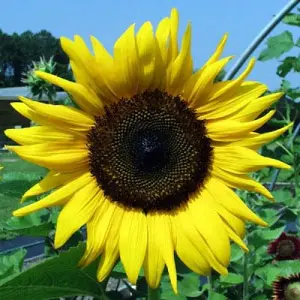
The sunflower you see in gardens today barely resembles its wild ancestors. Known in some accounts as the helianthus from Peru, the plant was transformed by decades of cultivation by farmers and scientists. It might have remained a simple ornamental if not for resourceful Russian breeders; at the end of the last century, American farmers who wanted seeds had to request them from Russia.
That sunny flower effectively returned to its homeland, looking nothing like its ancestors. The varieties developed by Soviet academician Pustovoit differ from their relatives as much as those relatives differ from their Peruvian forebears. Through selective breeding, Pustovoit changed 30 traits of the sunflower. As a result, seed oil content doubled, and the shape of the seeds, the color of the husk, the density, and the angle of the flower heads all changed.
It’s hard to find another breeder in the world who has achieved results like those.
