
28
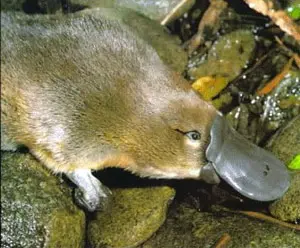
Scientists are hard to surprise. So when the skin of a dead platypus was first sent from Australia to England, British zoologists thought people on that distant, mostly unexplored continent were playing a joke: they assumed someone had taken an animal skin and glued a duck bill onto it.
However, as it later became clear, the platypus resembled a duck for more than just its bill. It lays eggs, has webbed feet, and spends much of its time in the water, foraging along the bottom.
And what’s even more astonishing is that the platypus has changed very little over millions of years. For that reason, scientists often call it a “living fossil.”