
31
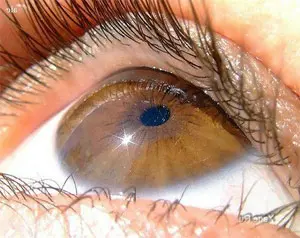
Have you ever wondered why our eyes are structured the way they are? Take bees, for example: they can see ultraviolet light. In contrast, human eyes and those of many other animals detect only visible light. That’s because the wavelengths our vision detects are more abundant on Earth’s surface than other wavelengths. So what exactly is the light we see? It’s energy that began in the sun’s core.
Think of it as X-rays and gamma rays produced deep in the sun that get broken up and shifted into ultraviolet, and eventually into the visible light we perceive. Over millions of years, Earth’s creatures adapted their eyes to those wavelengths, which range from about 0.4 to 0.8 microns.