
Furniture finishing should do two things: look good and protect the wood from dust, moisture, and vapors. In kitchens, shelves, and storage cabinets, oil-based paints and enamels are commonly used for finishing. This is the simplest method of finishing.
A cost-effective, attractive, and practical option is to use nitro and nitro-glyftal enamels, as well as alcohol-based varnishes. These finishes provide a durable shine and come in a variety of colors and shades. High-end wooden furniture is finished with high-quality polish.
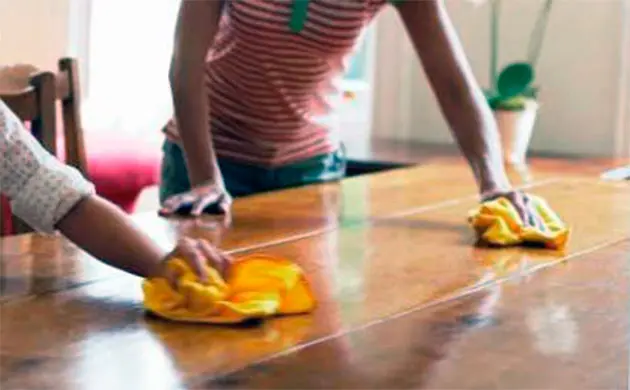
For unpolished surfaces, wipe them occasionally with warm soapy water or a weak solution of the cleaning powder “Novost.” Avoid using baking soda or laundry detergents for wiping these surfaces. Polished furniture or furniture painted with clear varnishes should never be wiped with a damp cloth.
Unpainted wooden items can be washed with soapy water and baking soda, and even scrubbed with wet, sifted clean sand. Heat the sand over a strong flame and then rinse it with clean water before using.
**Removing Stains from Polished Surfaces**
Before you try to remove a stain, identify its origin. For unknown stains, wipe them with a cloth soaked in pure gasoline. If the stain has set, repeat the process with gasoline several times. After the stain is removed, polish the cleaned area with a cloth until it shines. Sometimes the substance that left the stain will damage the underlying polish. In that case, mix equal parts alcohol (or denatured alcohol) and linseed oil. Instead of linseed oil, you can use purified turpentine. Apply the mixture to the stain with a clean cloth, let it dry, and then polish with a cloth.
If a hot object has been placed on a polished surface, you can restore the polish in a few ways. Wipe the mark with a pad dampened with a few drops of alcohol or denatured alcohol. Or make a pad from dense fabric filled with fine table salt, soak it in equal parts denatured alcohol and linseed oil, apply it to the spot, and the next day polish with a soft cloth.
To remove fly stains, wipe the area with a cloth soaked in vinegar, then polish the cleaned area with a dry, soft cloth. Remove mold stains by wiping them with kerosene. Stains on polished oak furniture (or oak-like finishes) can be treated with colorless shoe cream or turpentine mastic for parquet floors.
To prepare a polish for oak furniture: grate a tablespoon of beeswax, melt it over low heat, then remove it from the heat and stir in three tablespoons of turpentine. Apply this mixture to the wood surface. After it dries, polish with a cloth.
**Cleaning Upholstered Furniture**
Start by thoroughly beating the upholstery of soft furniture, then clean it with a brush or a vacuum. Refresh the fabric by wiping it with a brush soaked in warm soapy water; remove any soap residue with a damp cloth and dry the surface with a clean cloth.
For leather upholstery, remove stains with a paste made from equal parts pure gasoline and dry potato starch. Rub the paste into the stain and brush it off after it dries. For heavy stains, repeat the process.
To give leather upholstery a shine, mix equal parts shellac varnish and a 10% borax solution. Warm the mixture slightly, then filter it. Apply a thin, even layer of the shellac mixture to the leather surface. Once dry, a thin film—known as a shellac finish—remains on the leather and gives a beautiful shine. This mixture can be used on any leather items. If desired, tint the finish with dye for wool fabric.
**Restoring Polished Furniture**
After several years of use, the polish on furniture can dull and develop fine hairline cracks. Severely dulled polish must be removed so the surface can be refinished.
There are two methods for removing old polish: 1) scraping, which removes the polish with a sharpened steel blade called a scraper; and 2) a chemical method, using ammonia to dissolve the polish. Instead of a scraper, you can use pieces of glass with a straight, unbroken edge.
Make a homemade holder for the glass to protect your hands from cuts. Alternatively, use sandpaper or glass paper. Start with coarse sandpaper; after removing the layers of polish, switch to finer grits. For convenience, make small wooden blocks covered with felt or wool to hold the sandpaper, securing the ends with small nails. You may need to change the sandpaper several times when sanding large surfaces, such as a wardrobe.
Using the chemical method, remove layers of polish with strong ammonia, preferably 25% concentration. When working with strong ammonia, wear rubber gloves and protect your clothing from splashes. After using ammonia, ventilate the room.
Once the old polish is removed, begin applying a new one. If you’re polishing for the first time, start with the less visible side surfaces before moving to the more prominent front surfaces.
It’s easier to polish on horizontal surfaces; for example, remove cabinet doors and place them on a prepared work table. Secure the piece you are polishing. The temperature in the room where polishing is done should be no lower than 65°F.
For polishing, use shellac polish, which can be purchased at hardware stores. The polish should be high quality, so it’s better to use standard materials that meet GOST (the Russian national standard). The quality of the polish significantly affects the beauty and durability of the finish.
If the wood has an attractive grain, wipe the entire surface with a thin layer of high-quality natural linseed oil before starting the polishing process, and begin polishing after a day.
The “tool” for polishing is a pad made from wool fabric covered with knit or linen cloth. The first coat is shellac varnish diluted with denatured alcohol (one part varnish to three parts alcohol). Sprinkle the pad soaked in varnish with fine pumice powder and rub the pumice-varnish mixture thoroughly into the wood grain. After this treatment, polish with pure varnish without pumice powder, then allow it to dry.
Even standard varnish contains undissolved suspended particles that can create cloudiness. To achieve a clear shine, filter the varnish through cotton, filter paper, or felt.
During further polishing, add a few drops of natural linseed oil to the pad soaked in varnish. Make sure the varnish on the pad does not dry out, especially at the edges, because dried edges can cause scratches during polishing.
When moving the pad, keep the strokes close together or slightly overlapping. As the varnish thickens, gradually thin it with denatured alcohol. Increase the speed of movement gradually, and use quick figure-eight polishing motions.
When applying each subsequent layer of varnish, make the first two passes without oil to help bond adjacent layers. While polishing, avoid lifting the pad from the surface to prevent spots. If you must lift or reposition the pad, do so with sliding movements.
**Matte Polishing of Furniture**
Coarse-grained types of wood do not lend themselves to high-gloss polishing. Woods like oak are polished to a matte sheen using a wax polishing compound prepared as follows: finely grate 100 g of natural beeswax and melt it over low heat. Separately, warm 300 g of purified turpentine (pharmaceutical grade) by placing it in a vessel with hot water. Pour the melted wax into the warm turpentine while stirring. Allow the mixture to cool; it will form a paste-like substance used for matte polishing coarse-grained wood.
Apply the wax paste to the wood surface in a thin layer. After it dries, polish with a cloth until it becomes shiny, then finish with flannel or another soft fabric.
If using shellac varnish, add about 6% warm wax paste to the varnish and shake the mixture well. For this type of polishing, do not soak the pad in oil; instead, lightly moisten it with denatured alcohol. The shellac-wax polishing mixture produces a beautiful, durable finish.