
Dracaena
Depending on the source, Dracaena is placed in either the Dracaenaceae or the Agavaceae family. These groups include more than 150 species, commonly found in the tropical and subtropical regions of Europe, Africa, and Asia.
Dracaena develops woody stems at the top. In home conditions, Dracaena rarely flowers; when it does, it produces small greenish or white blooms and it’s best to move it outside because of the strong odor.
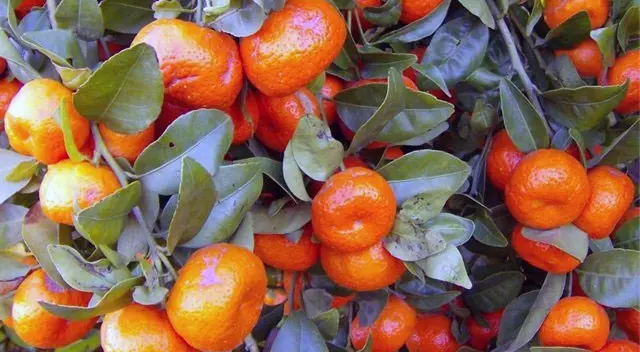
Nowadays, many people grow mandarin trees indoors. They can be propagated from seeds, by grafting, or from cuttings. A plant grown from seed typically starts bearing fruit in 10 to 15 years. However, if the tree is grafted with a bud or a live cutting, it can flower and produce fruit as early as the third or fourth year. To propagate a mandarin tree from cuttings, take shoots 4–5 mm thick and 10–12 cm long with 4–5 buds from a healthy tree. Make the bottom cut just below a bud and the top cut above the upper bud. Before planting, place the cuttings in a 0.01% solution of heteroauxin or another rooting hormone for 16–20 hours. After that, plant them in sand or compost at a depth of 2–3 cm. To encourage rooting, put the container on a windowsill near a radiator. The soil temperature should be 2–3 °C warmer than the air temperature, and maintain humidity at 85–90%. To achieve this, cover the cuttings with glass or a jar. Root formation takes about 2.5 months.
Plant mandarins in a soil mix of leaf soil, turf soil, compost, and sand in equal parts. Use a 20 cm pot for a one-year-old plant, 25 cm for a two-year-old, and 35 cm for a four-year-old. Plant so the root collar is level with the soil surface. Repot annually until the plant is three years old, then every 2–3 years. Do this in spring (March or April). For the first two weeks after repotting, water well and keep the tree in a warm, not overly bright spot. Mandarin trees typically flower in April, and the fruits set without pollination.
How you shape the crown affects when the first fruits ripen. Form the trunk to a height of about 10 cm and leave 3–4 branches. Under indoor conditions, a mandarin tree can flower within two years.
Every spring, before new growth begins, prune small branches and any with drying tips, and remove branches that grow inward toward the crown. Pinch back fast-growing shoots.
In winter, feed the plants once. From March to September, fertilize twice a month: apply 50 g each of potassium nitrate and superphosphate, and 30 g of ammonium nitrate per bucket of water.
In winter, place the mandarin tree closer to a balcony or move it to a veranda. The ideal temperature is 5–8 °C with moderate light. Keep the soil moderately moist at all times.
To keep the mandarin healthy and productive, mist it with a spray bottle: once a day in winter and 2–3 times a day in summer.
Starting in April, put the mandarin in a well-lit spot, and in summer you can move it to the garden or balcony. To prevent the root system from overheating, surround the pot with moss.
Follow this care routine and a five-year-old tree can produce up to 100 fruits, each the same size as those grown outdoors.
For indoor cultivation, the most common variety is the dwarf mandarin, developed at the Research Institute of Floriculture and Mountain Gardening in Sochi.
