
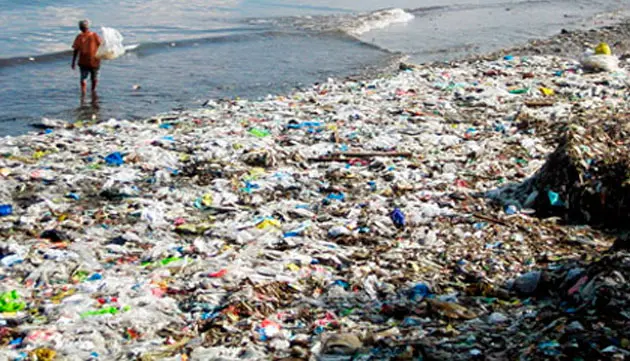
About 10 to 15 years ago, the word “ecology” was hardly known to most people. Now it appears in every newspaper and comes up constantly at conferences. Unfortunately, this isn’t just a fad. The disruption of the natural balance that existed for millennia among living things is real, and in many places there’s no going back. Large regions of the world, including parts of our own country, have lost their natural state almost permanently. So what now? It can feel hopeless. Merging modern civilization with the goal of restoring the natural environment seems near impossible, so we have to look for alternative paths.
In most developed countries, efforts focus not only on curbing industrial pollution but also on limiting mineral fertilizers and chemical pesticides. Those inputs are being replaced in some places by natural farming, which aims to produce food as free as possible from toxic substances. This approach is less intensive and usually lower-yield, so it’s still too early to roll it out widely in our country. For now, we need to get sufficiently high yields while keeping harmful substances within official “normative” limits. But in our own garden plots, nothing stops us from adopting these practices — after all, the vegetables we grow are mainly for our children, and we want them to grow up healthy.
Let’s look at ways to protect against radioactive contamination. The Chernobyl disaster dramatically raised public awareness and raised many questions about whether it’s possible to get clean products from contaminated areas.
Radioactive elements—those that emit radiation (from the Latin radius, meaning “ray”)—have always been around us: in food, in soil, and in our bodies. Many of these are natural radioactive elements formed when the planet was created; some scientists even believe that natural radiation played a role in the emergence and evolution of life.
Levels of these elements vary regionally in our country—by four to five times in some areas—and they contribute to the natural background radiation people receive. Since the first atomic bomb tests, artificial radioactive isotopes have also entered the environment and added to human exposure. This is the extra exposure we want to minimize, ideally bringing it down to the range of natural background fluctuations.
Both natural and artificial radioactive elements are minerals that appear in food and in the human body. They enter us through food chains: soil → plant → animal → human. That means there are two key barriers where we can block artificial radioactive elements: from soil to plant, and from plant to animal.
The main approach to limit the two most worrisome isotopes—strontium and cesium—relies on how they behave in soil and how plants take them up. Both act similarly to calcium and potassium in the soil-plant system.
If calcium and potassium are deficient in the soil, plants will take up their “substitutes”—strontium and cesium—more intensively. A lack of calcium also increases soil acidity, which increases the mobility of radioactive elements from the soil’s solid phase into the soil solution and then into plants.
From that we can draw two practical conclusions: maintain neutral or slightly acidic soil reaction on your plot, and ensure adequate levels of calcium and potassium in the soil.
You can determine soil acidity with a laboratory analysis, simple field tests using litmus paper, or even by observing the weeds that grow. Lots of sorrel, shepherd’s purse, creeping buttercup, and similar plants usually indicates increased soil acidity.
Reduce soil acidity by applying lime (ground lime or hydrated lime), dolomitic lime, or other liming materials. Gardening guides describe liming in detail. For the main soils of the non-chernozem zone (podzolic, sandy loam, and light to medium clay soils), a general recommendation is 20 to 50 kg of lime per hectare. Liming not only reduces the mobility of radioactive elements in the soil but also supplies calcium, a key competitor that reduces strontium uptake.
Raise potassium levels by applying potassium fertilizers. Light sandy and sandy loam soils, peat soils, and floodplain soils have the greatest need for potassium. Turf-podzolic clay and true clay soils usually have more potassium and only need it when nitrogen and phosphorus are applied. Follow recommended doses on fertilizer guides or the product labels. To strengthen potassium’s protective effect against cesium uptake, consider increasing the recommended optimal rates for yield by 30–50%. Because most domestic potassium fertilizers are potassium chloride and excess chloride can harm some crops (especially potatoes), use non-chloride sources for those crops, such as potassium sulfate or potassium-magnesium sulfate. Wood ash is a good natural potassium source; ash from various plants can reach up to 35% potassium. A newer complex ameliorative fertilizer with about 16–19% potassium, 6% calcium, ~2.5% magnesium, plus micronutrients (manganese, iron, molybdenum, zinc, and copper) also looks promising.
Liming and applying potassium fertilizers can cut the transfer of radioactive elements into plants by at least 2.5 to 3 times. The effect is especially strong on the low-organic turf-podzolic soils that many gardeners use. Rich chernozems and black soils generally need little or no additional fertilizer for this purpose because transfer into plants there is minimal.
Also be careful with mineral nitrogen fertilizers. Higher doses of mineral nitrogen often increase accumulation of radioactive elements in the edible parts of crops. Avoid overusing mineral nitrogen fertilizers even though they boost yields; excess nitrogen also leads to excess nitrates in plants. Use organic fertilizers—manure, poultry droppings, peat-manure, or peat-plant composts—to help balance nutrients.
Besides soil management, certain processing steps for vegetables and potatoes matter.
Wash potatoes thoroughly to remove soil particles before peeling, and after peeling, soak them in cold water for an hour to an hour and a half. For carrots, beets, turnips, and other root vegetables, cut off the top part (about 1 to 1.5 cm); that portion can contain up to 80% of the radioactive and other toxic elements that contaminate garden soils, especially near industrial cities. For cabbage, remove at least the top layer of leaves and avoid the core. When boiling cabbage, up to 40% of toxic substances can leach into the water, so bring it to a boil in clean water, drain that water, then add fresh water and finish cooking.
Among industrially processed foods, refined flour, starch, sugar, and refined vegetable oil generally contain the least radioactive material and sometimes none at all.
Except for certain areas around Chernobyl and the Chelyabinsk region, you don’t need to follow all these measures strictly. In most places, levels of artificial radioactive elements in food do not exceed established, scientifically based norms. Still, applying these practices will significantly reduce radioactive content in the plant products you grow and give you extra assurance that you’ve done everything reasonable to protect your family’s health.
Protective measures that reduce transfer of radioactive elements from plants into animals, and then into animal products, are also effective.
Animals provide a natural biological barrier against many harmful substances, including radioactive ones.
For example, only about 1% of radioactive cesium that a cow ingests in a day transfers into milk. Radioactive strontium in milk amounts to roughly 0.1% of what the cow consumed. Beef contains about 4% of the daily intake of cesium, while pork can contain up to 15% (lard under 1%). Strontium transfer into meat is even lower: about 0.1% in beef and 0.3% in pork. Almost all strontium that enters the animal is retained in the bones and is tightly bound; after boiling bones for four hours, only 1–2% leaches into the broth.
If chickens eat the same feed as pigs, their meat will contain about half the radioactive load, and their eggs will contain about 6 to 8 times less.
To get livestock products with minimal radioactive content, reduce contamination in their feed.
When harvesting hay, avoid grass along roadsides, forest edges, lowlands, and swamps, which tend to have higher concentrations of radioactive elements. If you must harvest from those areas, store that hay separately from hay from high, dry meadows. Feed the relatively more contaminated hay during periods when animals are less likely to pass contamination into products (for example, during certain non-lactation periods) and reserve cleaner hay for producing milk with minimal radioactive content.
Wash potatoes and other root vegetables thoroughly in running or frequently changed water. Soak root vegetables in clean water for 1.5 to 2 hours before cooking or feeding them fresh to animals.
Processing and cooking can further reduce radioactive content. In milk processing, 8–15% of strontium and cesium may transfer into cream, 1.5–2.5% into butter, while clarified butter contains none. To reduce radioactivity in meat, don’t soak it for many hours (it can lose up to 30% of nutritional value); instead, drain the first broth after boiling and continue cooking in fresh water. That simple step can cut radioactive substances at least twofold.
Those are the main recommendations for maximizing radiation safety in your diet. These measures aren’t necessary across the entire country—apply them if soil tests or local reports show elevated radioactive levels where your garden or homestead is located, or if you have specific concerns. As the saying goes, God helps those who help themselves, and since these methods generally bring benefits, it’s up to you how far you want to go.