
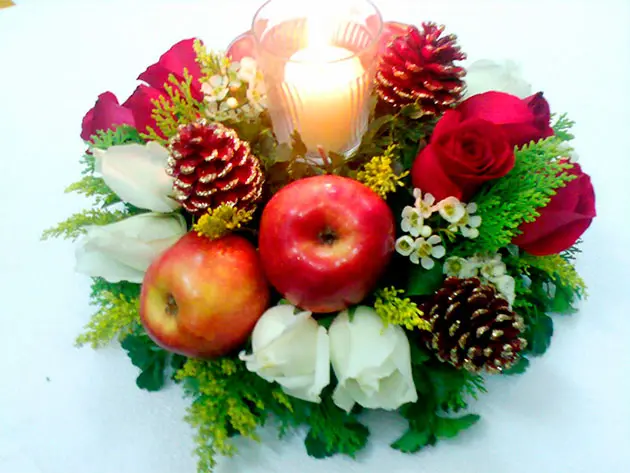
Winter bouquets create a special atmosphere, especially when a snowstorm rages outside and everything seems to freeze. Make one using fir and pine branches plus shoots from plants with vibrant berries. You can find these while strolling through the city, forest, or grove: twisted dogwood branches with yellow and orange fruits; shoots with red rose hips; spiky barberry branches strung with elongated carmine berries; rowan and hawthorn branches heavy with orange clusters; elderberry branches with glossy black beads; and physalis with their orange lanterns along the stems. Many people gather branches and fruit for bouquets as early as autumn. Stones, bark, rye ears, herbs, and pine cones also work well in winter arrangements. Even better: add dried flowers you prepared in advance.
When building a winter bouquet, avoid overcrowding it with branches and flowers. One or two branches with an interesting shape are usually enough, especially when paired with bright fruit.
As the New Year approaches, compositions of fir or pine branches with cones combined with two or three cyclamen flowers, a cluster of rowan berries, and two physalis shoots feel particularly fitting. Display those arrangements in a low ceramic or flat dark vase.
If you don’t have flowers, make an ikebana-style composition with a whimsical pine branch, a small Christmas ornament, and a bright, thick candle, also in a flat dark vase.
Plants in a winter bouquet should vary in height. Place them in solid-colored vases, preferably majolica or ceramic. If stems are branched, use a low, wide vase. A bouquet of one or two pine branches and a clematis shoot with fluffy gray fruits suits a tall red or light-green vase. White yarrow paired with liatris flowers looks stunning in black containers.
To keep flat containers stable and to make dried flowers and branches hold firmly, fill the vase with pebbles, damp sand, moss, or bundles of fine wire. You can also use modeling clay or special metal sticks.
Some plants are especially striking on their own. For example, use dried giant hogweed flower heads, quirky dogwood shoots, or clematis. Place those in tall, slender vases with narrow necks. In a winter bouquet, position tall plants in the center and surround them with leaning stems. If the bouquet includes sprawling branches, put them in the vase first, then add the other components.
Small birch-bark baskets decorated with colorful nylon ribbons and filled with dried pansies, marigolds, and branches of viburnum or rowan will brighten a room. Weave fir branches into the basket for extra texture.
Compositions on uniquely shaped dry branches—whimsically curved, with knots or growths—are lovely, too. Carve a hollow in the center or toward one end with a knife or chisel. Secure dried flowers or fruiting branches in the hollow with modeling clay, wire, or similar materials.
You can also decorate walls with arrangements mounted on shelf fungi. Bright branches with fruit or dried flowers can be attached to the fungus just like they would be to a dry branch.
Winter bouquets lift the spirit, invigorate a room, and help us endure the harshness of winter.