
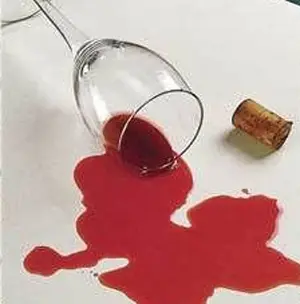
When removing stains from colored fabrics, consider the dye’s colorfastness, the risk of spreading the stain, and the potentially harmful effects of stain-removing chemicals.
The most common stains on fabrics or clothing are grease, resin, lacquer, wine, fruit, and berry stains. In the past, a universal remedy for these stains was gasoline soap, made by dissolving half a bar of bar soap in 100 grams of denatured alcohol. Grate the soap first. Put the soap–alcohol mixture in a pot of hot water and heat it while stirring continuously (do not place the alcohol-containing mixture directly over direct heat). Once the soap is completely dissolved, add a cup of aviation gasoline and a teaspoon of a detergent like OP-7 to the slightly cooled solution, stirring until it cools. Store the finished mixture in a jar with a screw-on lid.
In addition to gasoline soap, use acetone, vinegar essence, or commercial cleaners such as HG home care products for many stains.
Treat stains as soon as they occur; older stains are much harder to remove and some may never come out. When using any stain remover, always test it on an inconspicuous area first to ensure it won’t damage the fabric.
Removing Grease Stains. Dry potato starch over low heat, let it cool, then mix it with gasoline to form a paste. Rub this paste into the stain with a dry, clean cloth. Put a piece of plywood under the stained area to catch any drips.
For larger stains, to prevent spreading, cover the area with a thick layer of potato starch so it absorbs excess gasoline and keeps the stain from spreading.
Stains containing protein and sugar, such as those from sauces or ice cream, respond well to gasoline soap. Rub a small amount of gasoline soap into the stain, then dampen it with warm water, let it sit briefly, and rub again. Wipe away the soap with a damp cloth, working from the center outward.
To remove oil paint, mix a small amount of gasoline soap with an equal amount of turpentine and rub this emulsion into the stain. Once the paint dissolves, wipe the area with a cloth dampened with warm water.
Dried oil paint is more challenging to remove: rub a turpentine–soap emulsion into the stain and let it sit for several hours. Then scrape off the softened paint with gasoline soap and rinse with warm water. If the oil paint is very dry, apply petroleum jelly and leave it overnight. Once the paint softens, remove the stain.
Removing Lacquer Stains. Remove lacquer stains with a mixture of acetone and denatured alcohol in equal parts.
Removing Canned Food Stains. Stains from canned foods, particularly fish, can be treated with acetone.
Removing Sweat Stains. Mix gasoline soap with an equal amount of ammonia. Rub this mixture into heavily soiled areas (collars, cuffs, hat bands, etc.) with a stiff cloth. Rinse the cleaned area with warm water, then rinse with warm table vinegar.
Removing Water Stains. Some fabrics retain stains after rain. Steam the stained area with a hot iron through a damp cloth. You can also use a powder called “Novost.” Dissolve one teaspoon of the powder in a liter of warm water and wipe the stains with this solution. After removing the stains, refresh the fabric with rainwater or distilled water.
Removing Protein or Starch Stains (blood, milk, eggs, starch, beer, kvass, etc.) — treat with an OP-7 solution (one teaspoon per liter of warm water). For older stains, scrape them with a mixture of equal parts denatured alcohol, acetone, and ammonia. After removing the stain, wipe the cleaned area with a cloth dampened with weak vinegar.
Removing Ink Stains from Colored Fabrics. Treat these stains with caution. Vinegar essence, acetone, citric acid, and other removers can alter the fabric’s color, so always test on an inconspicuous area, like a seam or a scrap of the same fabric, before proceeding. If hot vinegar does not affect the fabric’s color, you can start removing the stain. To prevent the ink from spreading, create a protective circle around the stain. Melt paraffin and petroleum jelly in equal parts, dip a cotton ball wrapped around a matchstick into the hot mixture, and draw a protective circle around the stain, making sure the mixture penetrates the fabric. After the mixture cools, begin removing the stain by dabbing it with a cotton pad soaked in hot vinegar essence mixed with water. The stain will gradually fade. After removing the stain, immediately sprinkle the area with baking soda and rinse with water. Monitor the fabric during the process to ensure it doesn’t change color. If it does, switch to hot glycerin. When working with essence, wear rubber finger cots, which are available at pharmacies. After removing the stain and rinsing the cleaned area, press the protective paraffin circle with a hot iron through absorbent paper, changing the paper several times until all the paraffin is removed.
When removing ink stains, sprinkle potato starch under the stain to absorb excess liquid and prevent spreading. Follow the same procedure as described above.
In another method for removing ink stains, gather the stained fabric into a bundle and tightly tie it with white thread, leaving a few millimeters from the stain. Then submerge this bundle in hot vinegar essence, hot glycerin, or warm denatured alcohol and squeeze it out. Repeat this process several times until the stain is removed. If you used vinegar essence, sprinkle the cleaned area with baking soda and rinse with warm water. When using glycerin or denatured alcohol, rinse the cleaned area only with warm water.