
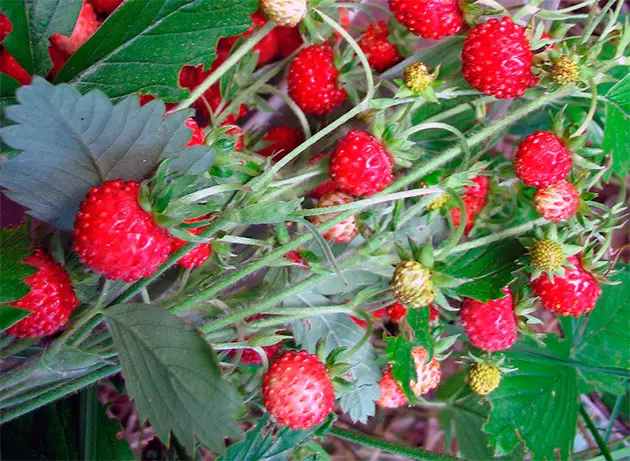
Where can you find different varieties of strawberries? Try one of these methods for propagating the plant.
Strawberries are delicious and incredibly nutritious. Of course, you can always buy seedlings, and anyone can plant the variety they like best. But how do you do it?
Many types of strawberries produce runners with rosettes during the growing season. By transplanting those rosettes to a permanent spot, you can establish new plants. The variety’s characteristics stay the same. This method is simple and accessible to everyone.
You can also propagate strawberries from the seeds of any variety or hybrid. Here’s how: take the berries you like and lay them out on a plate at home to fully ripen. There’s a little “secret” here. For planting, take seeds from the part of the berry near the calyx. Seeds from that part tend to produce plants with larger fruit. Once the selected berries are ripe, cut off their tops and put them in a cup. When a jelly-like mass forms, rinse it three times. The most viable seeds will settle at the bottom of the cup. Spread the seeds out on a cloth to dry in the sun, then transfer them to paper bags for storage. The ideal storage temperature is around 54°F (12°C).
You can also prepare seeds this way: carefully slice off the top layer of the berry and place it on paper. Dry it in the sun for a week. Sow the seeds in early winter. Disinfect the seeds by moistening the soil after sowing with a pale-pink potassium permanganate solution.
To grow seedlings, take a shallow box. For drainage, add a layer of peat or leaf mold at the bottom. Then fill the box halfway with topsoil, add sand equal to one-quarter of the volume, and mix everything together. Plant the seeds shallowly, pressing the soil down.
Cover them with a thin layer of sand. On top, place a sheet of thick paper, then add a layer of fine peat.
Leave the box outside, covered with snow. Let it stay there until the end of February or early March. After that, bring it into a greenhouse, hotbed, or a warm room. Remove the paper and peat. Water the seeds and cover them with glass to prevent moisture from evaporating.
In about three weeks, you’ll see sprouts. Once true leaves form, thin the seedlings to a distance of 0.8 inches (2 cm). When the leaves touch, transplant them again, maintaining a distance of 1.6 inches (4 cm) between plants.
By the end of May, transplant the strawberries to a nursery bed. Here, keep 4 inches (10 cm) between plants.
Weed, aerate the soil, and keep it moist. On days 6–10, feed the strawberries with a solution of mineral fertilizer (about 0.9 oz (25 g) per 2.6 gallons (10 liters) of water). Ten days after the first feeding, apply micronutrients once or twice (1 mg per 2.6 gallons (10 liters) of water).
Plants in the nursery will quickly produce runners with rosettes. To help the rosettes root better, cover them with soil. By the end of July, transplant the strawberries from the nursery to their permanent location. At that time, feed them with potassium chloride, superphosphate, and nitrate. Keep in mind that not all plants grown from seeds will produce berries you love. During the fruiting season, taste the berries from each bush to select the ones you want.